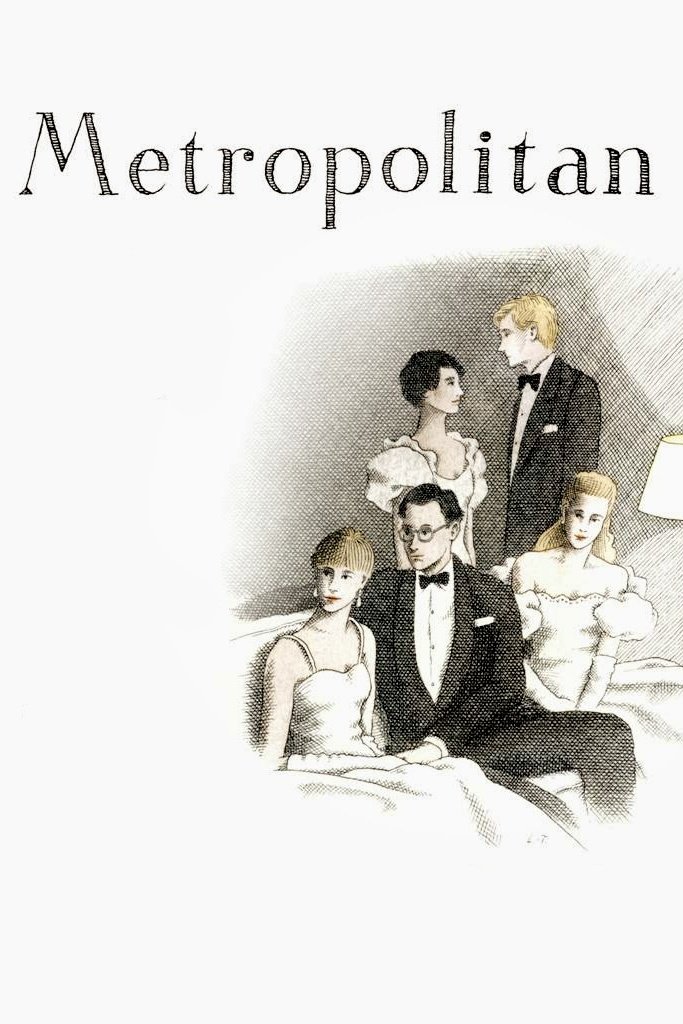
Whit Stillman's first film from 1990 offers a wryly sympathetic portrait of aristocratic college students attending nightly balls in Manhattan over Christmas. It features glittering dialogue and lovely New York scenery, likened to a Woody Allen film made by someone born rich.
Stillman proves a sharp social observer of gilded youth's follies, with superb dialogue among secondary characters outweighing the weaker central romance. The film stands out for its witty takes on class, failure and bourgeois society.
Stillman’s semi-autobiographical debut offers dry, affable humour that ribs its wealthy characters without belittling them. The film excels in its sharp characterisation of Tom, the dispossessed outsider, and his circle of endearing misfits.
This gentle first feature from Whit Stillman showcases his literary background and cinematic instincts through affectionate and witty observation of young New York socialites. The strong character drawing and unusual subject matter are handled with self-assurance, though the second half shifts into forced romantic elements.
The critic views Metropolitan as a melancholic lament for not-quite-doomed youth, a self-styled lost generation that is not truly lost but may lack purpose. He singles out the film's brittle, elegant dialogue and aperçus for praise, noting how the characters' anachronistic social world has gained new resonance over time.
The review finds the film a gentle ironic comedy of manners whose gift for quiet, scrupulous observation grows on the viewer. Stillman is noted for understanding caste, class and deportment as perfectly as Jane Austen.
Stillman redeems his pretentious Upper East Side characters by treating their quirks, flaws, and ephemeral world with affectionate custody and self-effacing humor rather than mockery. The film stands out for its precise, musical dialogue and bittersweet evocation of a vanishing debutante subculture and youthful associations.
The film offers a sardonic yet warmly affectionate portrait of an insular debutante-ball subculture through hilariously mannered conversations and quotable lines delivered by a strong ensemble. It remains a fascinating oddity thanks to Stillman’s unique voice, even if its low-key charm and lack of conventional drama limit its appeal.
Whit Stillman's debut confidently immerses viewers in an eccentric, self-aware world of privileged Manhattan youth and their party circuit. The film's chief strength is its beautifully chiselled dialogue, delivered with mannered acting and static camerawork.
The critic praises the film as a comedy of manners of a very high order, with unparochial wit and sense of fun. Stillman is commended for placing his privileged young characters in context with alertness and intelligence.
The critic calls it a strikingly original debut with sophisticated, gently mocking wit and an intriguing ensemble cast. The film succeeds with rich, sparkling dialog, distinct characters and a peek into a seldom-seen milieu.
The critic calls Metropolitan nuanced and original, highlighting its intelligence and wit as a standout from its contemporaries. It praises the elegant direction that makes its privileged characters endearing and notes the film's humor and Austen-like sensibilities.
The critic praises Whit Stillman's screenplay as a model of tact, wit and modesty that refuses to mock its upper-class characters. He singles out the self-contained cynicism and bitchy banter among the young New Yorkers at debutante parties as particularly entertaining.
Ordered by the weight we give each publication, then by score. Scores are normalised to 100; * means inferred from an unrated review. Summaries are ours, not quotations; follow the links for the reviews themselves. How we rate