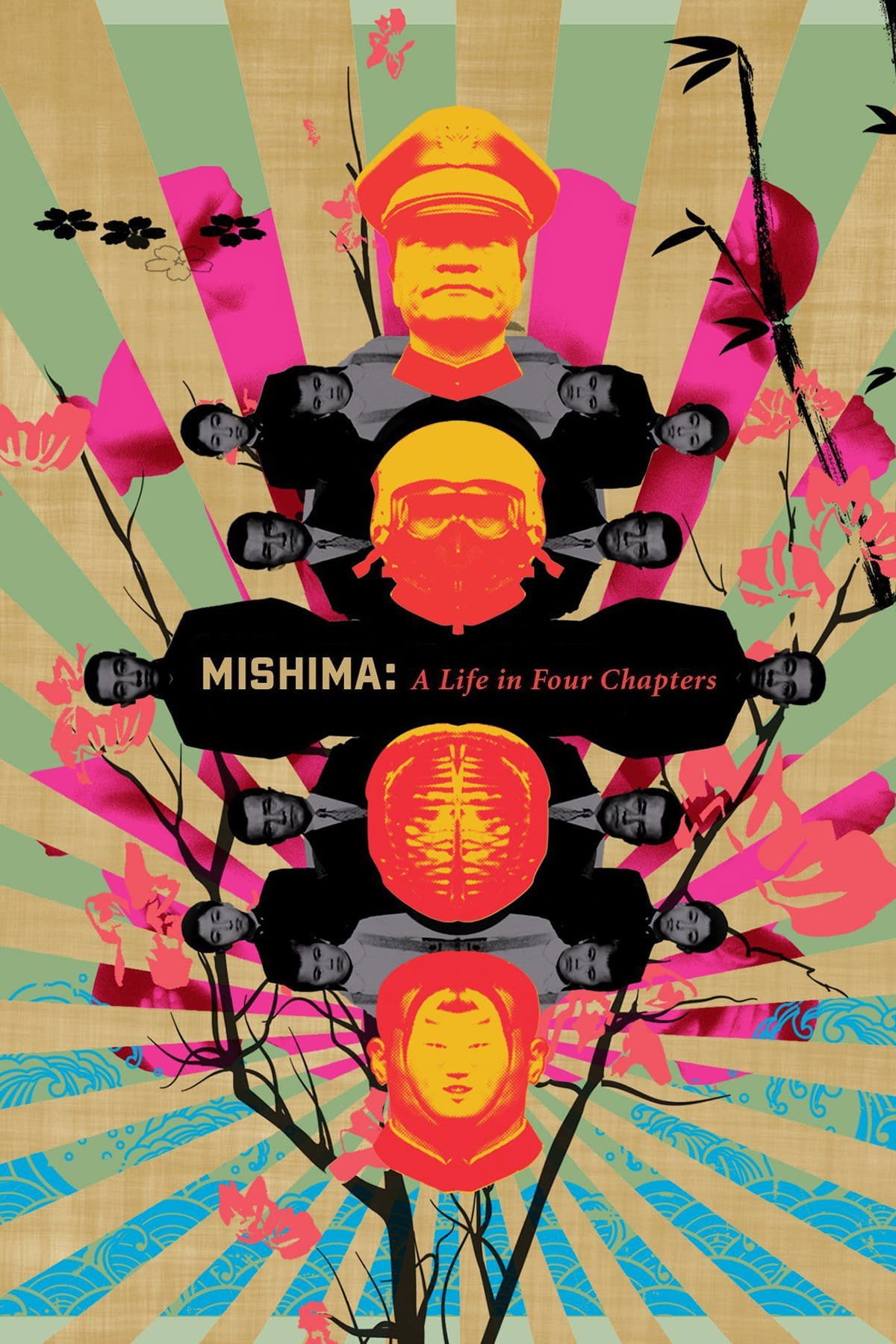
Most critics respond warmly to Paul Schrader’s unconventional portrait of Yukio Mishima, praising its interweaving of biography and theatrical adaptations of the writer’s novels. The contrast between monochrome memories and vivid colour dramatisations draws particular admiration, with the reviews finding that these shifts illuminate the connections between his writing and personal obsessions. Praise also clusters around Philip Glass’s score and Ken Ogata’s central performance, which several critics find compelling amid the elaborate staging.
The differences concern how readily that staging lets viewers understand or feel close to Mishima. The Guardian finds the film emotionally constrained, while The New York Times offers the most qualified response, describing a fragmented portrait that risks confusing anyone unfamiliar with the books. Other reservations concern slow passages, omissions and structural complexity. The spread runs from enthusiastic praise to guarded approval, with even the more reserved reviews finding something absorbing in the attempt.
T
Time Out
7 July 2009 · ★★★★★ · Tom Huddleston
100
Schrader's film reaches the peak of his search for lonely protagonists by blending straight biography with stylized depictions of Mishima's inner world and novels, making an unsavoury character compelling through wit, honour, and artistic dedication, highlighted by stunning stage recreations, Glass score, and photography.
Read the full review →A
The AV Club
2 July 2008 · A · Nathan Rabin
95
The critic calls it Schrader's magnum opus, a dreamy hypnotic meditation on the intersection of Mishima's life and art rather than a conventional biopic. It praises the elegant juxtaposition of biographical scenes with dramatizations of the author's novels, along with the cinematography that unites sound, image, ideas, and sensual rapture.
Read the full review →E
Empire
1 January 2000 · Kim Newman
90*
The critic describes it as a daringly original biopic that interweaves Mishima's life in black-and-white with colourful dramatizations of his novels, ultimately reflecting more on Schrader's own neuroses than the subject. It is praised as an exceptional, original movie that is ravishingly shot with a hauntingly brilliant Philip Glass score.
Read the full review →R
RogerEbert.com
15 December 2007 · Roger Ebert
90*
Schrader’s unconventional biopic is one of the best, using a tripartite structure of black-and-white biography, stylized novel excerpts in vivid color, and the final day of Mishima’s life to examine how the writer fused his art, obsessions, and death. The film’s clarity and intelligence make it a singular achievement despite its challenging subject.
Read the full review →S
Slant Magazine
29 May 2018 · Jake Cole
90*
The critic describes the film as an avant-garde portrait keyed to Mishima's aesthetic and spiritual evolution, using theatrical stagings of his novels to explore his shifting mindset and impulses toward self-annihilation. It singles out the film's ambitious structure and how it takes seriously the creative journey leading to his death while shining on the restored transfer.
Read the full review →T
The Times
9 July 2009 · Kevin Maher
90*
The gorgeous, artsy 1985 biopic is the best movie Paul Schrader has directed. It presents a compelling and contradictory figure through monochrome flashbacks and garish color enactments of his work, with a monumental performance from Ken Ogata.
Read the full review →N
The New Yorker
5 April 2018 · Michael Sragow
85*
Schrader’s collage is one of the most gorgeous and sophisticated portraits of an artist on film, showing how Mishima strove to unite art, life, and politics through stylized novel dramatizations and a realistic account of his final day. The movie itself is a work of art with enormous vitality.
Read the full review →L
Little White Lies
25 May 2016 · Tom Graham
80*
Schrader's innovative biopic interweaves reality, memory, and imagination to explore how Mishima's life and art were inseparable, culminating in his dramatic suicide as the ultimate artistic act. The critic praises the film's visual styles and Philip Glass score for illuminating the parallels between the author's novels and his personal obsessions.
Read the full review →V
Variety
31 December 1984 · Variety Staff
80*
Schrader’s boldly conceived film is an intelligent and consistently absorbing study that blends realistic elements of Mishima’s final day with stylized renditions of his semi-autobiographical novels. Production values are stunning and performances authoritative, though pacing lags at times and uninitiated viewers may be confused.
Read the full review →E
Evening Standard
10 April 2012
70*
The piece notes that Schrader's 1985 biopic necessarily condenses Mishima's controversial life but highlights its superb visual style, a haunting score by Philip Glass and an impressive lead performance by Ken Ogata.
Read the full review →L
Los Angeles Times
3 October 1985 · Sheila Benson
70*
The film is a beautiful, deadly serious attempt to illuminate Mishima’s enigmatic life and death through intercut biography, stylized novel excerpts, and his final day, with stunning production design by Eiko Ishioka. Structural complications and omissions leave it tantalizing but difficult to fully enter.
Read the full review →G
The Guardian
10 July 2009 · Peter Bradshaw
70*
Paul Schrader's 1985 film is an ambitious, respectful account of Yukio Mishima's life and work. It intersperses biographical episodes with stylized dramatizations of his novels and is stylish but emotionally constrained.
Read the full review →N
The New York Times
20 September 1985 · Janet Maslin
65*
The film is a splintered but tolerable attempt to portray Mishima’s narcissism and death obsession through excerpts from his novels, though it may confuse viewers unfamiliar with the source material. Maslin finds it engaging enough to potentially send audiences to the books, particularly The Temple of the Golden Pavilion.
Read the full review →C
Collider
12 July 2008 · Andre Dellamorte
85*
The review praises the film as a singular, visually striking experience and the high point of Paul Schrader's directorial career, noting its respectful yet bold approach to Japanese culture and themes through intercut biography and stylized novel adaptations.
Read the full review →P
The Playlist
5 August 2013 · B+ · The Playlist Staff
83
Schrader has referred to ‘Mishima’ as his best work as director and the motion picture is a tremendous accomplishment with arresting imagery and stylistic flourishes. It embraces the director’s favorite concepts through a portrait that blends reality and fiction aided by a moving Philip Glass score.
Read the full review →P
Paste
10 July 2008 · Tim Sheridan
80*
The review describes it as a beautiful, meticulous portrait of a tortured artist that serves as an homage to Japanese film and culture, highlighting the strong performance by Ken Ogata and Philip Glass's score in a Criterion edition context.
Read the full review →E
Eye for Film
9 July 2009 · Jeff Robson
70*
The film is a striking and fascinating one-off that looks fantastic with a magnificent Philip Glass score and a mesmerizing central performance from Ken Ogata. It is a consciously arty meditation that disorients the viewer and may prove too challenging or elusive for some tastes despite its memorable moments.
Read the full review →Ordered by the weight we give each publication, then by score. Scores are normalised to 100; * means inferred from an unrated review. Summaries are ours, not quotations; follow the links for the reviews themselves. How we rate