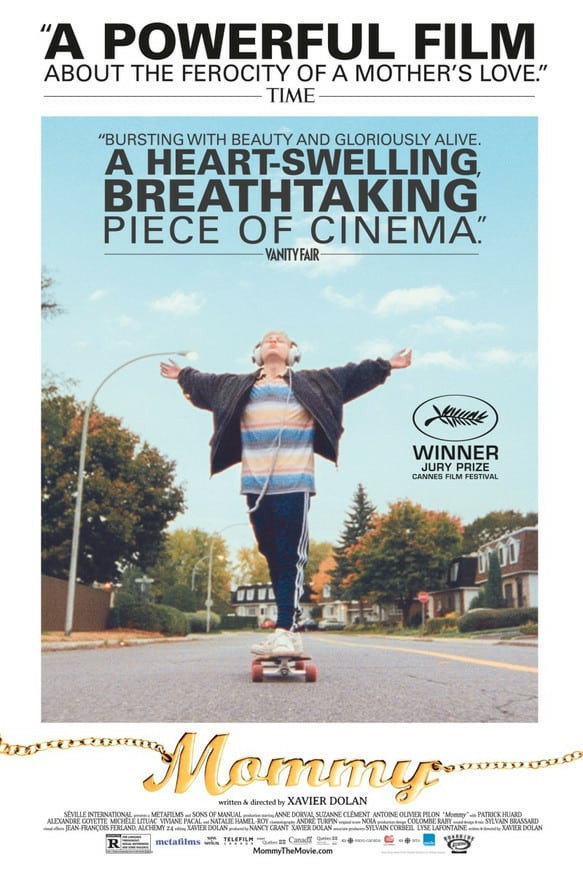
Most critics respond warmly to Xavier Dolan’s mother-and-son melodrama, praising its raw feeling and the performances that sustain its emotional extremes. Anne Dorval draws particular praise as the embattled single mother, while the combination of humour, tenderness and conflict gives the heightened drama substance for its admirers. The square frame and shifts in aspect ratio attract considerable attention, with many reviews finding that Dolan’s visual choices bring the characters’ confinement and exhilaration into focus.
The spread of opinion is wide, however, and the same intensity that moves supporters exhausts others. Reservations centre on length, repetitive confrontations and stylistic flourishes that can feel like gimmicks rather than ways into the characters. The Los Angeles Times finds Dorval compelling but the emotional swings immature and wearing; The New Yorker objects more fundamentally, arguing that the outrageous behaviour lacks psychological grounding and that the showy images offer little access to inner life.
L
Little White Lies
19 March 2015 · 4/5/5 · David Ehrlich
100
Dolan comes of age with this ecstatic, aspect ratio-bothering melodrama about a strained mother-son relationship. The film stands out for its raw emotional purity and how the director's style finally aligns perfectly with his characters.
Xavier Dolan's best film yet is an outrageous, brilliant black comedy and melodrama about a single mother and her troubled teenage son. The critic praises the tremendous acting, formal inventiveness, and the way the film mixes high-voltage craziness with heartfelt substance.
Dolan's latest is arguably his best film yet, a bold and emotionally raw portrait of a troubled mother-son relationship that showcases his maturing command of melodrama and performance.
Dolan's fifth feature strikes a strong balance between style and substance in this character study of a working-class single mother and her damaged teenage son. It is his warmest, most humane and least narcissistic film to date, with force-of-nature performances and visual flair.
The critic finds the film a wild, uncompromising cri de coeur that seethes with unchecked feeling yet knows exactly what it is doing. He singles out its square aspect ratio and defiant emotional excess as a willful, beautiful moment of cinematic rule-breaking.
The critic calls it a funny, heartbreaking and original work that shows Dolan putting himself in his mother’s shoes with a fresh, honest emotional directness. He singles out the unusual 1:1 aspect ratio and the ecstatic celebration of the two lead actresses as standout elements.
This is an altogether richer, warmer exploration of an intense bond between a mother and a son that unfolds with emotional fireworks and bittersweet reflections on love, friendship and the choices we make in life. Filled with tenderness and compassion, it may well be Dolan’s most accomplished film to date.
The critic praises the blistering, raw drama built on stellar lead performances, especially Anne Dorval's tour de force as the ballsy single mother, and notes the smart, intimate filmmaking techniques like the square aspect ratio.
A deeply personal portrait of adolescence and motherhood from a prodigious young talent, taken to operatic heights as an outrageous yet insightful mother-and-son melodrama. It becomes an aching dissection of love amid Canadian suburbia with mental illness and a rock-ballad soundtrack.
Cinema doesn’t come much more exuberant, musical and raw than this tale of a wild teen with severe ADHD and his love-hate relationship with his mother. The heartfelt emotion and belief that there’s no single definition of family stand out amid the crass and bombastic moments.
The piece notes the festival excitement around Dolan's first competition entry and highlights the director's focus on strong maternal figures and the film's narrow 1:1 aspect ratio that confines the viewer's gaze to the characters.
Mommy is the year's most hyperactive film, driven by combustible performances in a whirlwind mother-son dynamic complicated by a neighbor. The square aspect ratio and relentless intensity are novel but ultimately make the story feel circular and exhausting.
Dolan's empathy for marginalized characters receives full visual expression through striking moments and performances, though the film is uneven with overextended scenes and technical gimmickry that sometimes undercuts the emotional rush.
The critic sees the film as an excessive, unmodulated seesaw of screaming nadirs and total exhilaration that feels raw in the sense of immature rather than unflinching. He singles out Anne Dorval’s compelling maternal ferocity as a glimmer of honesty amid the exhaustion.
The review describes the film as a pseudo-transgressive artistic tantrum whose impulsively outrageous behavior lacks psychological basis or access to inner life. It singles out the blandly showy aesthetic that matches the vainly hectic action.
The critic praises the film's visual inventiveness, particularly the aspect ratio shifts, and especially the powerful, nuanced performances, above all Anne Dorval's as the fierce mother.
Dolan's stylistically bold melodrama impresses with its confidence in delivering euphoric highs and shattering lows, and draws extraordinary performances, especially from Anne Dorval as the embattled single mother.
The critic hails the film as vibrant and alive thanks to its raw performances, inventive direction, and effective use of music, while noting minor issues with length and a sci-fi prologue.
Dolan brings virtuoso style and emotional charge to the story of a mother struggling with her violent, ADHD-afflicted son, with standout praise for Anne Dorval's indomitable central performance and the film's blend of humour, tension and heartbreak.
The review highlights the intentional 1:1 aspect ratio creating suffocation, strong performances especially from Anne Dorval, and explores themes of love's inadequacies, ending with a poignant montage of hope that is both happy and devastating.
The critic praises Dolan's raw, personal melodrama for its emotional intensity and bravura filmmaking, particularly the use of slow motion and the square aspect ratio to convey constriction. However, it's dazzling yet frustrating, mirroring its volatile mother-son relationship, and ultimately saved by the director's evident love for the material.
The review notes Dolan's distinctive style and the strong, emotionally truthful performances but finds the square aspect ratio gimmick irritating and the film overlong.
The film wavers between gritty, poignant drama and a wallow in classist squalor, leaving the critic mostly annoyed despite some emotional pull. The three lead performances stand out as relatable and empathetic amid the director's showier tendencies.
Ordered by the weight we give each publication, then by score. Scores are normalised to 100; * means inferred from an unrated review. Summaries are ours, not quotations; follow the links for the reviews themselves. How we rate