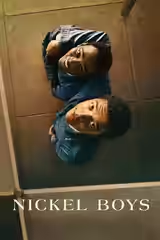
The reviews agree to an unusual degree, and they agree about one thing above all: the decision to shoot the film in the first person, so that the camera is the boys and we see the reform school through their eyes. Almost every critic treats that choice as the film’s achievement, praising it for putting the viewer inside the experience without turning the abuse into spectacle, and several credit the use of archival footage and flash-forwards alongside it. Where performances are mentioned, Aunjanue Ellis-Taylor’s is the one singled out. The spread is narrow; the great majority score it highly, with only a few reservations at the edges.
Deadline finds the point-of-view camerawork repetitive and the film overlong, more Malick than Whitehead, and The Playlist thinks the technique creates distance as the film goes on. NME notes some meandering while still recommending it. Those are the only real dissents, and even they praise the risk taken.
L
Little White Lies
18 December 2024 · 5/5/5 · Sam Bodrojan
100
The critic hails the film as a miracle and masterpiece, the defining American film of the 2020s and 2024's most harrowing and transcendent work. It singles out the first-person POV cinematography and intuitive avant-garde imagery that make the adaptation both formally rigorous and emotionally accessible.
Read the full review →R
Radio Times
★★★★★ · Patrick Cremona
100
The review describes an audacious adaptation that is an original work of heart-wrenching power. It singles out the unique point-of-view visual approach that creates a tactile, profoundly immersive experience with innovative use of archival footage and flash-forwards.
Read the full review →T
Time Out
13 December 2024 · ★★★★★ · Sophie Monks Kaufman
100
The review calls it a soulful, heartbreaking masterpiece that changes how viewers think about image construction. It singles out the first-person POV shooting and loving eye that leads with sensitivity despite the devastating story of racist injustice.
Read the full review →N
The New Yorker
6 December 2024 · Richard Brody
95*
The critic hails the film as a glorious exception that renders the novel innovatively yet faithfully, achieving an advance in narrative form through its daring point-of-view technique that fuses observation and sensation. He singles out the expressive first-person perspective that registers the cause of characters' emotions and gives cinematic form to the bearing of witness.
Read the full review →I
IndieWire
13 December 2024 · David Ehrlich
90*
Ross's visionary first-person adaptation injects radical new life into the novel, creating a staggeringly beautiful story of resilience through its immersive subjective camera work. The film blends narrative and documentary sensibilities to challenge conventional cinema while honoring the characters' experiences.
Read the full review →L
Los Angeles Times
20 December 2024 · Amy Nicholson
90*
The critic calls the film a priceless paean to the lives of victimized reform-school kids, praising how Ross turns the characters into the camera so the audience sees the world literally through their eyes and celebrates their humanity. She singles out the soul-stirring visuals, the epic banal of small moments shot with grandeur, and a mesmerizing montage, while noting minor issues with dialogue delivery.
Read the full review →G
The Guardian
28 September 2024 · Peter Bradshaw
90*
The critic calls RaMell Ross’s adaptation transcendentally moving and frightening, praising its first-person point-of-view cinematography that creates immersive subjectivity and the way it balances horror with moments of humanity and hope.
Read the full review →Ross fuses the impressionistic sensibility of his previous work with a subjective camera approach to create an organic, immersive, and essential cinematic experience. The film refuses conventional pathos in favor of a truer, more complex and powerful engagement with its characters' suffering.
Read the full review →S
Slant Magazine
28 September 2024 · Kenji Fujishima
85*
Ross fashions mesmerizing, affecting poetry out of Whitehead's prose through intensely subjective first-person point-of-view shots and imaginative use of archival footage. The film's formally adventurous technique honors the source material while creating a universal tale with personal and historical resonance.
Read the full review →The review describes the film as a shatteringly powerful movie about abuse, highlighting its audacious first-person POV technique that puts the viewer inside the protagonists’ experiences at the brutal reform school.
Read the full review →A
The AV Club
12 December 2024 · B+ · Tomris Laffly
83
Ross ventures into fiction with a poetic and visionary adaptation that finds its resilient spirit in intimate details and first-person perspectives. The film extends the director's documentary approach to create a defiantly unconventional art film that challenges notions of cinema.
Read the full review →E
Empire
1 January 2025 · Kambole Campbell
The critic calls Nickel Boys a triumph for its unorthodox first-person POV approach that brings a new dimension to the source material. They single out the revolutionary cinematography for empathetically framing the horrors of the Jim Crow era as observed by its victims.
Read the full review →E
Evening Standard
1 January 2025 · Nick Howells
The critic hails Nickel Boys as potentially the film of the year for its staggering and astonishing qualities. They single out the mesmerising, unfamiliar camerawork and point-of-view technique that puts the Black experience front and centre.
Read the full review →S
Screen Daily
27 September 2024 · festival review
The review deems it a rare work of artistic daring destined for wide acclaim, with tenderness at its core that delivers the emotional blow amid societal evil. It singles out the bold experiment in sound, fractured visuals and strict POV rules that make the film intensely personal.
Read the full review →S
Sight and Sound
20 December 2024
The review praises Ross's radically inventive second feature for its lyrical adaptation that locks the audience into the characters' literal point of view. It singles out the sensory, supremely beautiful imagery and form that prioritises emotional and political identification over observation.
Read the full review →H
The Hollywood Reporter
31 August 2024 · festival review · Lovia Gyarkye
Ross's arresting narrative debut turns Whitehead's novel into a deeply personal vision of Black boyhood and community amid the horrors of a reform school. The film's intimate subjective point of view and attention to everyday details create an overwhelming sense of lived experience and risk that pays off.
Read the full review →N
The New York Times
12 December 2024 · Critic’s Pick · Manohla Dargis
The critic praises the film's visually inventive and boldly expressionistic adaptation of Colson Whitehead's novel, highlighting its focus on two boys at an abusive reform school in Jim Crow-era Florida. She singles out the way Ross uses moments, images, and a soft beautiful light to cradle the characters while staying true to the source with his own narrative and visual style.
Read the full review →/
/Film
11 December 2024 · 10/10 · Chris Evangelista
100
The critic hails it as a breathtaking, unique film unlike any other, praising its distinct cinematic language that feels like actual memory. They single out the stunning final shot and the physical reaction it elicits.
Read the full review →S
The Skinny
19 December 2024 · ★★★★★ · Carmen Paddock
100
Ross's confident directorial debut adapts the novel with innovative first-person POV that explores themes of dehumanization and trauma through surreal and sensory elements, delivering a haunting tribute with strong performances, particularly from Ellis-Taylor.
Read the full review →C
Collider
26 November 2024 · 9/10 · Ross Bonaime
90
The critic praises RaMell Ross's adaptation of Colson Whitehead's novel as one of the best films of 2024 for its brilliant first-person perspective that immerses viewers in the boys' experiences. The innovative cinematic technique is highlighted as a standout achievement that elevates the storytelling.
Read the full review →D
Den of Geek
13 December 2024 · Joe George
90*
The critic praises Ross's innovative first-person POV technique that immerses viewers in the characters' experiences of racial injustice and trauma at the reform school, making it a profound addition to cinematic language while emphasizing human emotion over gimmickry.
Read the full review →P
Paste
9 October 2024 · 8.4/10 · Jesse Hassenger
84
The review commends the film's immersive point-of-view style as a unique and effective way to convey subjectivity and empathy without turning suffering into spectacle. It notes the experimental approach creates indelible images and a close approximation of literary perspective.
Read the full review →N
NME
28 February 2025 · Hollie Geraghty
80*
The film uses first-person perspective to immerse viewers in the boys' experiences, subverting expectations of violent depictions by focusing on sensory details and humanity, resulting in a visually stunning portrayal of segregation and injustice despite some meandering narrative.
Read the full review →W
The Wrap
31 August 2024 · festival review
80*
The critic praises RaMell Ross's unique cinematic sensibility for delivering a sensory, gut-wrenching take on the story of injustice that avoids typical trauma porn tropes. They single out the strong performances, particularly Aunjanue Ellis-Taylor's moving monologue, calling the film a hard yet necessary watch.
Read the full review →D
Deadline
31 August 2024 · festival review · Pete Hammond
55*
The critic views the film as a flawed but artistic adaptation that feels more like a Terrence Malick work than a faithful Colson Whitehead one, with repetitive POV camerawork that can distract from the story. They praise the important subject matter, strong performances, and the risks taken while noting it as overlong.
Read the full review →P
The Playlist
4 September 2024 · B-/C+ · Gregory Ellwood
The review finds the first-person perspective creates visual brilliance and intimacy early on but ultimately diminishes the proceedings and creates distance. It singles out the innovative framing for praise while noting it overpowers the intent.
Read the full review →Ordered by the weight we give each publication, then by score. Scores are normalised to 100; * means inferred from an unrated review. Summaries are ours, not quotations; follow the links for the reviews themselves. How we rate