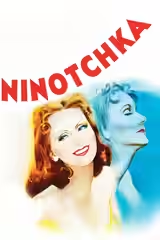
The reviews lean warmly positive: six of the seven are in favour and none against. The praise clusters on Garbo. Critics agree that her turn from stern commissar to champagne-drinking lover carries the film, and more than one singles out the café scene in which she finally laughs as the moment it comes alive. Lubitsch’s direction is credited with keeping the political satire light and urbane, and the screenplay, with Wilder among its writers, is praised for its wit.
The reservations are mild and mostly about tone. The New Yorker finds the Moscow scenes close to burlesque and the ending conventional. Time Out, the one mixed voice, thinks the Lubitsch touch has grown cruder by the late 1930s and calls the film consistently amusing rather than the delight its reputation suggests. The later reviews treat its cartoon of Soviet life as a period curiosity rather than a flaw. The spread is narrow.