Lubitsch takes the sternest face in Hollywood and spends 110 minutes finding out what makes it laugh. The script by Brackett, Wilder and Reisch is as quick as any of the decade; the politics are soft, and the last half hour coasts.
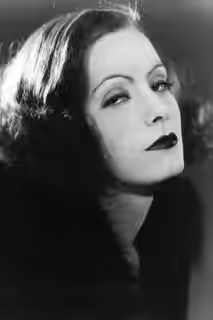
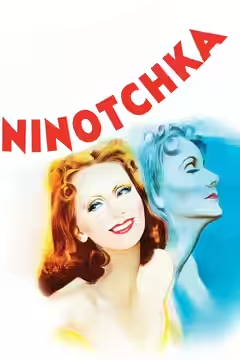
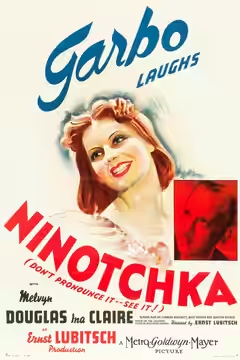
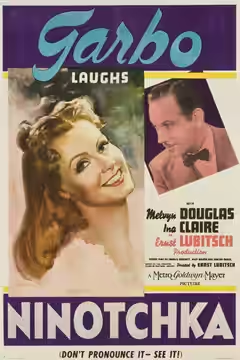
Greta Garbo had spent a decade dying beautifully. Anna Karenina, Camille, the queen who gave up her throne: the studio had built her into the saddest face in Hollywood, then in 1939 handed her to Ernst Lubitsch and sold the result on two words and an exclamation mark. Garbo laughs. It is cheap marketing and an exact description. Ninotchka is 110 minutes of the sharpest hand at light comedy then working finding out what it would take to make that face crack.
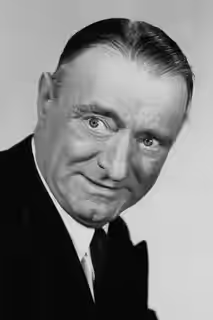
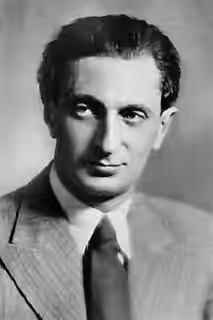
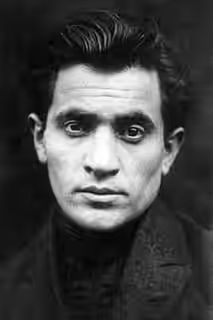
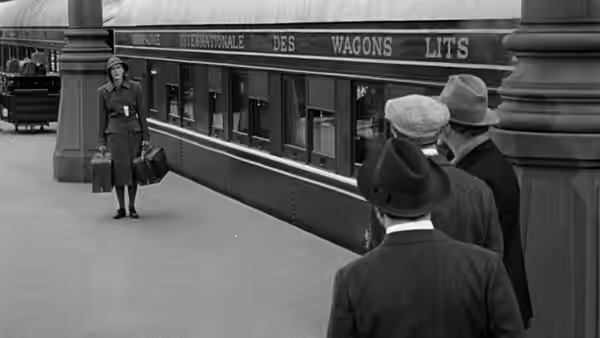
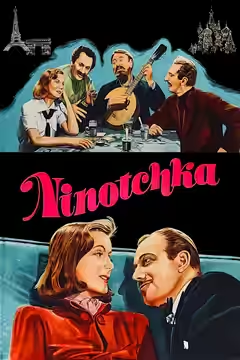
The plot is the sale of some jewels. Three Soviet envoys, Iranoff, Buljanoff and Kopalski (Sig Ruman, Felix Bressart, Alexander Granach), arrive in Paris to turn the confiscated stones of the Grand Duchess Swana (Ina Claire) into currency, and within an afternoon they have discovered the Royal Suite, room service and the cigarette girls. Swana’s lover, Count Leon d’Algout (Melvyn Douglas), ties the sale up in court. Moscow sends Ninotchka (Garbo) to sort it out. The film is excellent for an hour and a quarter and merely good after that, and we recommend it with that caveat and one smaller one about its politics.
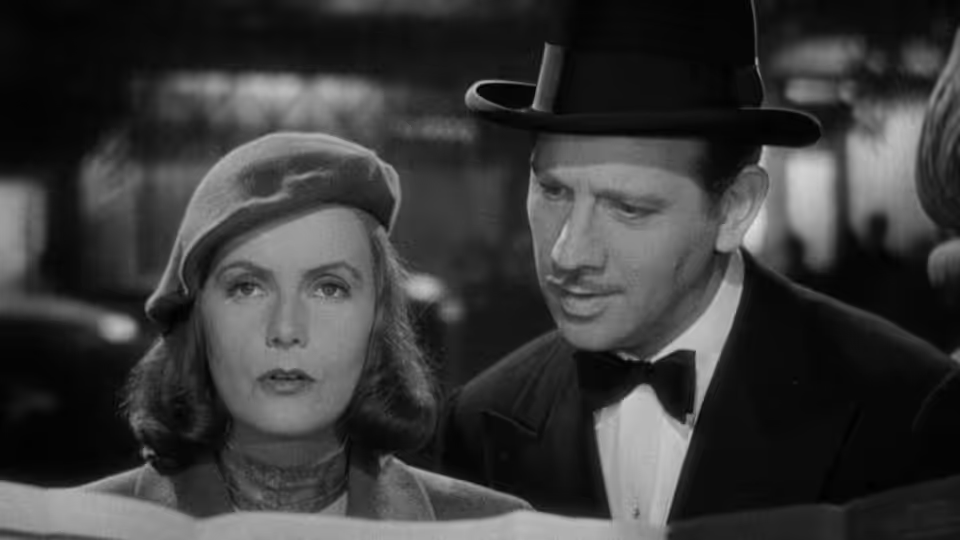
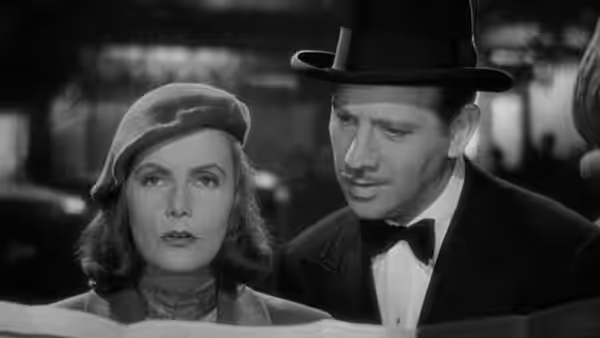
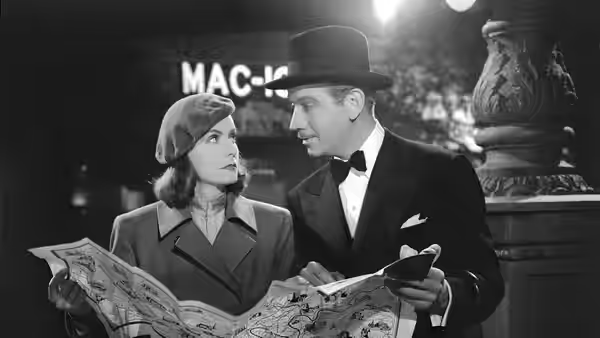
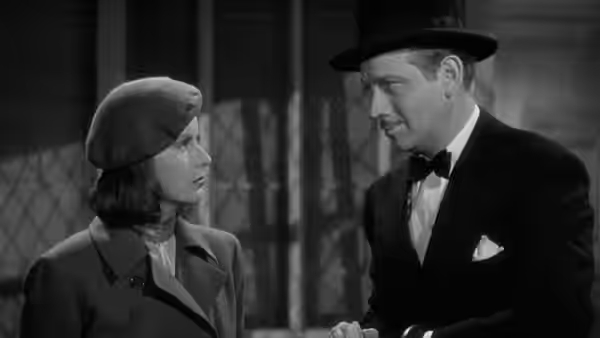
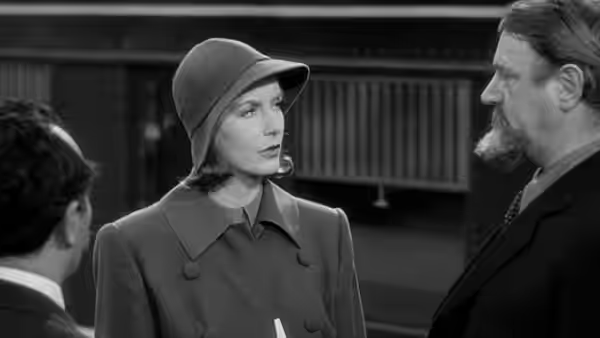
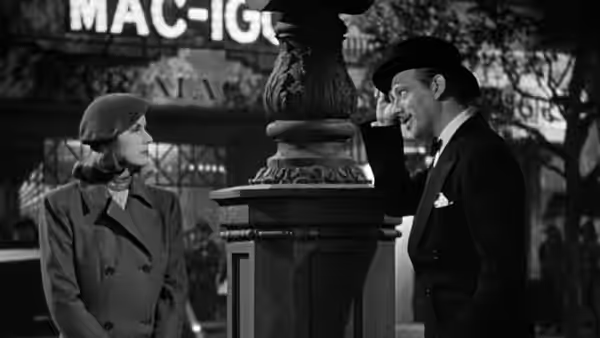
For the first forty minutes Garbo does almost nothing with her face, and it is some of the best comic acting of the decade. She asks a porter why he wants to carry her bags. She tells Leon to suppress his flirting. She looks at a hat in a shop window as though it were evidence. Walter Reisch, Charles Brackett and Billy Wilder give her lines about mass trials and tractor output, and she says them straight, and the joke is that she means every word. Then comes the café. Leon tries a joke, tries another, and falls off his chair, and she laughs. So did we, and then we found we were more moved than a pratfall has any right to make anyone, because the film had held her still for so long that the laugh felt like a door opening rather than a gag landing.
William H. Daniels, who lit Garbo through most of her Hollywood career, shoots her hard and flat when she arrives and softer as Paris gets to her, and the change is gradual. Adrian puts her in a dark, square-shouldered suit that looks issued rather than bought, and puts Claire in gowns that look worth more than the jewels. The hat, when it comes, is exactly as silly as it needs to be. Werner R. Heymann’s score is Parisian in the way a postcard is Parisian, and knows it. Gene Ruggiero cuts without fuss and lets people finish their sentences, which in a Lubitsch film is most of the job.
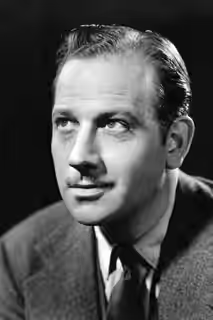
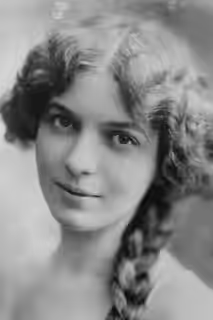
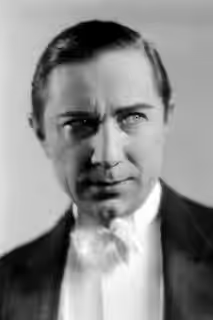
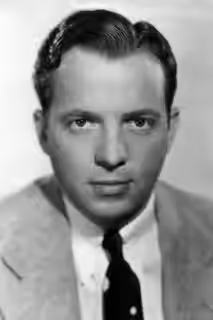
Douglas plays Leon as a man who has never worked a day and is delighted to have found something he cannot buy. Claire’s Swana is the sharpest thing in the film, a woman who has lost a country and kept her manners, and her one long scene with Garbo has a bite the romance does not. Ruman, Bressart and Granach are lovable, and the film loves them a little too easily; their conversion to capitalism takes a minute and a bottle. Bela Lugosi turns up as Commissar Razinin, glares at everyone and leaves.
The politics are soft in both directions. The jokes about the purges, and there are several, are funny in the way jokes about something you have not seen are funny, and watched now they sit oddly. The film’s whole case for the West is that it has champagne, and its one visit to a Moscow flat is staged as a sketch. Some critics have found Lubitsch coarser here than in his early-thirties films, and they have a point. Once the jewels have done their work the story has to find a reason to keep going, and the reason it finds is the usual one.
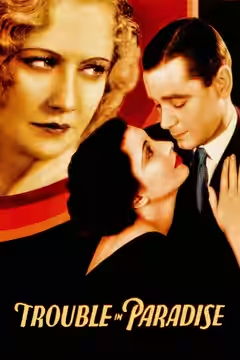
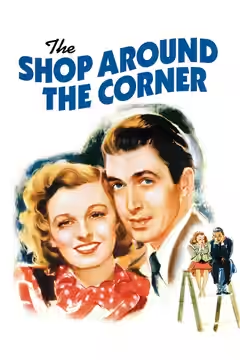
Set against his own films, Trouble in Paradise is quicker and colder and The Shop Around the Corner, the following year, is kinder. Ninotchka is the one people remember, because of Garbo, and that is fair. Watch it with someone who has never seen her, and during the café scene watch their face rather than the screen.