Critics’ reviews

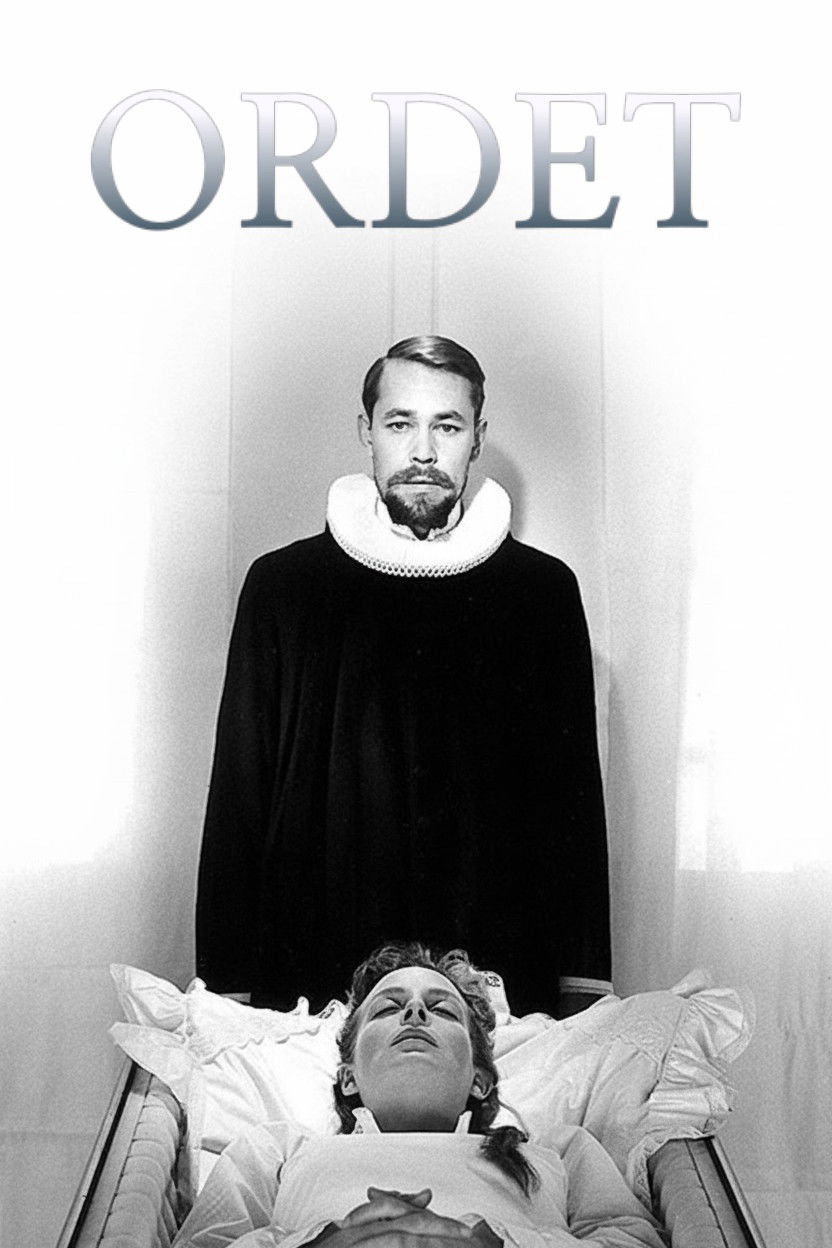
Ordet (1955)

9 reviews from 9 publications. Critics’ score 81: 8 positive, 0 mixed, 1 negative.

Back to our review of Ordet

81
Positive
8
Mixed
0
Negative
1

Most critics respond strongly to Ordet, with eight of the nine reviews praising its treatment of faith and its emotional force. Praise centres on Dreyer’s controlled direction: gliding camera movements, long takes, black-and-white lighting and tangible interiors make the religious disputes absorbing. The reviews repeatedly connect that formal restraint to powerful feeling, finding room for human frailty within the film’s spiritual concerns. Several describe a hypnotic experience rather than an immediately inviting one.

The main division concerns the deliberate pace and theatrical style: most find them compelling, but not everyone is persuaded. The Guardian admires the eerie atmosphere while finding the theatricality a limitation. The Times is the lone negative voice, acknowledging the film’s beauty and commitment but finding the pacing ponderous, the themes simplistic and the female characters reduced to plot devices. The spread is therefore wide, though the disagreement is concentrated in one sharply dissenting review.

RogerEbert.com
8 March 2008 · Roger Ebert
90*

The critic finds the film difficult to enter at first but ultimately inescapable and profoundly moving, praising its deliberate pacing, religious depth, and transcendent climax. He singles out the godlike camera movements and celestial black-and-white lighting.

Read the full review →
Sight and Sound
10 January 2025
90*

The critic celebrates Ordet as one of cinema’s supreme spiritual achievements, praising its blend of fleshy human emotion and transcendent faith. The piece highlights Dreyer’s humanist approach to individual spirituality over rigid religiosity.

Read the full review →
The New Yorker
28 January 2014 · Richard Brody
90*

The critic highlights the film's philosophical worldview and stripped-down aesthetic of still yet furious clarity that reveals transcendent essence. He singles out its radical Christianity and the miraculous preservation of existence through cinema.

Read the full review →
The New York Times
16 December 1957
90*

The critic calls it a visual sermon of scalding spiritual intensity that uncoils like a majestic snail and is hypnotic rather than entertaining. He singles out the rigid but powerful blend of speeches and faces along with the stained-glass-window-like photography.

Read the full review →
Time Out
5 March 2012 · Dave Calhoun
90*

The review calls the film powerfully moving and mysterious, singling out its extraordinary final coup de cinéma as a bold, unforgettable climax that redefines the drama. It praises the austere yet spiritually resonant direction and technical mastery.

Read the full review →
The AV Club
29 March 2002 · Keith Phipps
85*

The critic describes Ordet as a work of great spiritual generosity that uses long takes and tangible interiors to explore characters' differing positions on faith. Its tragedy and concluding miracle become moving in ways that are impossible to foresee.

Read the full review →
The Telegraph
85*

Ordet is a magnificently cinematic version of the play about the possibility of a modern miracle and revival of faith. Its hypnotic gliding takes crown Dreyer's pursuit of total rhythm, making the climactic resurrection scene a miracle of cinema.

Read the full review →
The Guardian
8 March 2012 · Peter Bradshaw
70*

A gripping and eerie tragedy of the supernatural and an unmissable re-release, though it falls a millimetre short of Dreyer's best due to its theatrical style. The film benefits from an undercurrent of sexual tension and has a hypnotic stare.

Read the full review →
The Times
9 March 2012 · Wendy Ide
40*

An acknowledged classic and one of the boldest films on faith and religious passion, but the ponderous pacing makes it a slog with simplistic themes and female characters as mere plot devices. Admired for its beauty and commitment but little to like.

Read the full review →

Ordered by the weight we give each publication, then by score. Scores are normalised to 100; * means inferred from an unrated review. Summaries are ours, not quotations; follow the links for the reviews themselves. How we rate