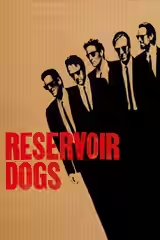
Most critics like it. The praise settles on the dialogue, the pop-culture banter that makes criminals sound like men killing time in a café, and on the cast: Harvey Keitel, Steve Buscemi and Michael Madsen are named again and again. The reviews also agree it is an unusually assured first film, with a scrambled chronology that holds together. Nearly all warn about the violence, and most treat it as part of the point rather than a fault.
The reservations gather around substance. A run of American reviews from its first release find it showy but thin: Variety calls it nihilistic and hard to love, The New Yorker a lively picture about nothing, and the Los Angeles Times all energy and no feeling. Slant, writing much later, takes issue with its enjoyment of its own brutality. The spread is wide, from full marks to negative, and the later British reviews are noticeably warmer than the first-run American ones.
R
Radio Times
★★★★★ · David Parkinson
100
The critic highlights the film's runaway success despite its low budget and cult aspirations, along with its sharp, pop-culture-referencing dialogue. Standout performances from Michael Madsen as the sadistic Mr Blonde and Steve Buscemi as the exasperated Mr Pink make it brash, abrasive, and a must-see.
Read the full review →E
Empire
1 January 2000 · John Naughton
90*
Tarantino's debut is a perfect, auteur-level crime film that stands out for its pop-culture dialogue diversions, knowing structure, and compelling performances drawn from a sharp script, rather than realism or conventional heist plotting.
Read the full review →E
Evening Standard
10 April 2012 · Alexander Walker
90*
The critic highlights how the film revitalized criminal dialogue with banal, pop-culture-infused banter and made crime look cool through its stylish, pop-video generation visuals and slow-motion credits sequence. He praises its subverted expectations, elliptical style, and influence as the most influential work of its time, noting the cathartic violence and black comedy.
Read the full review →I
The Independent
8 January 1993 · Adam Mars-Jones
80*
The critic calls Reservoir Dogs a gruelling but exhilarating first film and a remarkable achievement, praising its headlong approach to violence that insists on the simultaneous presence of perpetrator and victim, giving the suffering meaning and lending the film a kind of nihilistic integrity and almost moral weight.
Read the full review →H
The Hollywood Reporter
23 January 1992 · festival review · Duane Byrge
75*
The critic describes Reservoir Dogs as brutally violent and intense, likely to shock audiences at Sundance, but commends its masterful storytelling and strong performances by the cast. He singles out the writing and the actors' portrayals for particular praise.
Read the full review →S
Slant Magazine
21 January 2025 · Chuck Bowen
70*
The critic sees it as indicating a remarkably fully formed cinematic sensibility that fetishizes coolness, objects, and genre situations while revealing vulnerability. It praises the extraordinary performances and vitality but critiques the infantile glee in violence and failure to fully challenge troubling elements like racism.
Read the full review →G
The Guardian
7 January 1993
70*
The critic finds the film an extraordinarily impressive debut marked by strong performances, particularly from Harvey Keitel, but warns that its extreme violence makes it unsuitable for many viewers. It is praised as a riveting treatise on betrayal set in a hopeless urban wasteland, with influences from Scorsese and others but its own distinct voice.
Read the full review →N
The New York Times
23 October 1992 · Vincent Canby
70*
The critic praises the debut feature as a modestly budgeted crime movie with dazzling cinematic pyrotechnics and over-the-top dramatic energy, adding Quentin Tarantino to a list of promising new directors. It highlights the film's brutal violence while noting its effective structure and dialogue.
Read the full review →T
The Telegraph
24 June 2018 · Simon Heffer
70*
The critic views the film as a morality tale demonstrating that crime does not pay, with the bad guys mostly ending up dead. He praises its focus on character exploration and dialogue as a tour de force rather than action or thrills, while acknowledging the exceptional violence and profanity as part of its grim depiction of American low life.
Read the full review →R
RogerEbert.com
26 October 1992 · Roger Ebert
65*
Ebert finds the film an exercise in style with a talented cast and kinetic direction but criticizes the screenplay for excessive talk and lack of depth in characters. He likes it but wants more from the promising debut.
Read the full review →L
Los Angeles Times
30 October 1992 · Kenneth Turan
55*
Turan sees it as a brash, showy but insubstantial comic opera of violence, praising the dialogue, cast, and energy but noting it's one-dimensional and overly focused on violence without emotional depth.
Read the full review →N
The New Yorker
12 October 1992 · Terrence Rafferty
40*
Rafferty views it as a lively but ultimately thin picture about nothing, a stylized parody of heist films with playful nihilism but lacking emotional weight and substance.
Read the full review →V
Variety
27 January 1992 · Todd McCarthy
30*
The critic describes it as an intense, bloody crime drama with snappy dialogue and a terrific cast that demonstrates a smart new filmmaker at work. However, it is ultimately nihilistic, about nothing more than macho guys and their guns, making the pic impressive but impossible to love.
Read the full review →D
Den of Geek
27 October 2008 · ★★★★ · Mark Pickavance
80
The critic calls it a great movie with classic Tarantino touches like non-linear chronology and extreme violence, praising performances by Buscemi and Keitel, but notes it's slightly overshadowed by Pulp Fiction. The Blu-ray offers good image and sound quality.
Read the full review →Ordered by the weight we give each publication, then by score. Scores are normalised to 100; * means inferred from an unrated review. Summaries are ours, not quotations; follow the links for the reviews themselves. How we rate