Critics’ reviews

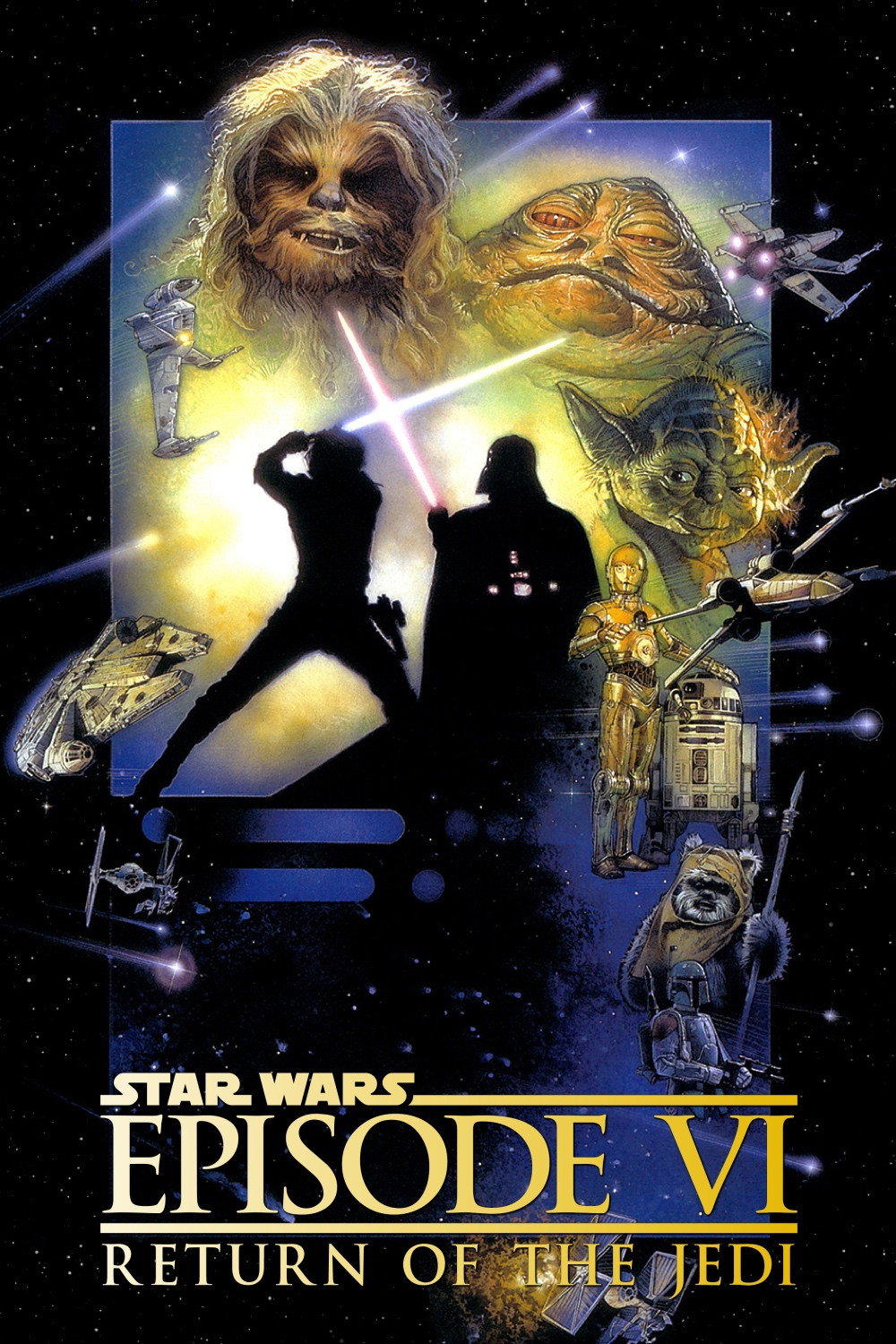
Return of the Jedi (1983)

10 reviews from 10 publications. Critics’ score 54: 2 positive, 2 mixed, 3 negative.

Back to our review of Return of the Jedi

54
Positive
2
Mixed
2
Negative
3

The reviews are divided on Return of the Jedi, though praise repeatedly centres on its special effects, creatures and action sequences. Jabba and the speeder bike chase draw particular approval, while the more enthusiastic critics find a satisfying conclusion to the trilogy that retains its sense of fun. The Los Angeles Times sees inventiveness and maturity alongside that entertainment value. Even some less persuaded reviews admire the technical work, without finding the storytelling equally convincing.

Reservations cluster around uneven pacing, thin plotting and the emphasis on the Ewoks, whose appeal is often associated with younger viewers. The spread is wide: what supporters find satisfying, detractors regard as a tired repetition of earlier adventures. The New York Times finds little narrative momentum and considers the battles tiresome, while The New Yorker disputes even the film’s visual imagination and finds it emotionally empty. There is no firm agreement that spectacle compensates for the weaknesses.

Los Angeles Times
25 May 1983 · Sheila Benson
90*

The film is fully satisfying and gives honest value, with a sense of closing the circle. It bursts with new inventiveness and maturity while retaining its sense of fun.

Read the full review →
Radio Times
★★★★ · John Ferguson
80

This is called essential viewing as the trilogy's strong conclusion, with a strong opening Jabba sequence and effective Vader climax. The critic notes the plot's stop-start nature and that Ewoks particularly appeal to younger audiences.

Read the full review →
Empire
1 January 2000 · Christopher Hemblade
65*

The critic views it as the weakest entry in the original trilogy, anodyne compared to The Empire Strikes Back with excessive focus on the Ewoks. They praise the superior special effects including the speeder bike chase and the satisfying dramatic redemption of Darth Vader.

Read the full review →
Time Out
★★★ · SGr
60

The review notes the film's confusing narrative shifts and questions whether Lucas should explore new territory. It praises the impressive effects, creatures like Jabba, and appeal to younger viewers despite tonal inconsistencies.

Read the full review →
The New York Times
25 May 1983 · Vincent Canby
30*

The film brings the trilogy to a dead stop and is by far the dimmest adventure of the lot. The narrative line is virtually nonexistent and the battle scenes become tiresome.

Read the full review →
The Telegraph
3 June 1983 · Patrick Gibbs
30*

The third Star Wars film fails to match the originality of its predecessors and comes across as a whole as slight. The dialogue and performances in the romantic subplot between Leia and Solo are especially weak and laughable.

Read the full review →
The New Yorker
23 May 1983 · Pauline Kael
20*

The film is an impersonal and rather junky piece of moviemaking that bangs away at the viewer. It lacks emotional weight and visual imagination, making it a fun-machine movie that is slovenly at heart.

Read the full review →
RogerEbert.com
25 May 1983 · Roger Ebert

The film is magnificent fun and a complete entertainment, a feast for the eyes. It stands out for its wonderful density of imagination and the extra level of detail in its characters and creatures.

Read the full review →
Sight and Sound
1 July 1983 · Philip Strick

The critic finds the film a dazzling conclusion to the trilogy with peak-condition effects and action set pieces. Self-effacing direction by Marquand allows Lucas's vision to shine through in a satisfying resolution.

Read the full review →
The Hollywood Reporter
· Arthur Knight

The review finds that the film shows signs of the franchise's machinery wearing down and inventiveness thinning, with the story relying more on action and comic-book elements than depth. It singles out the production values, special effects, settings, and cinematography for strong praise as hugely impressive.

Read the full review →

Ordered by the weight we give each publication, then by score. Scores are normalised to 100; * means inferred from an unrated review. Summaries are ours, not quotations; follow the links for the reviews themselves. How we rate