Critics’ reviews

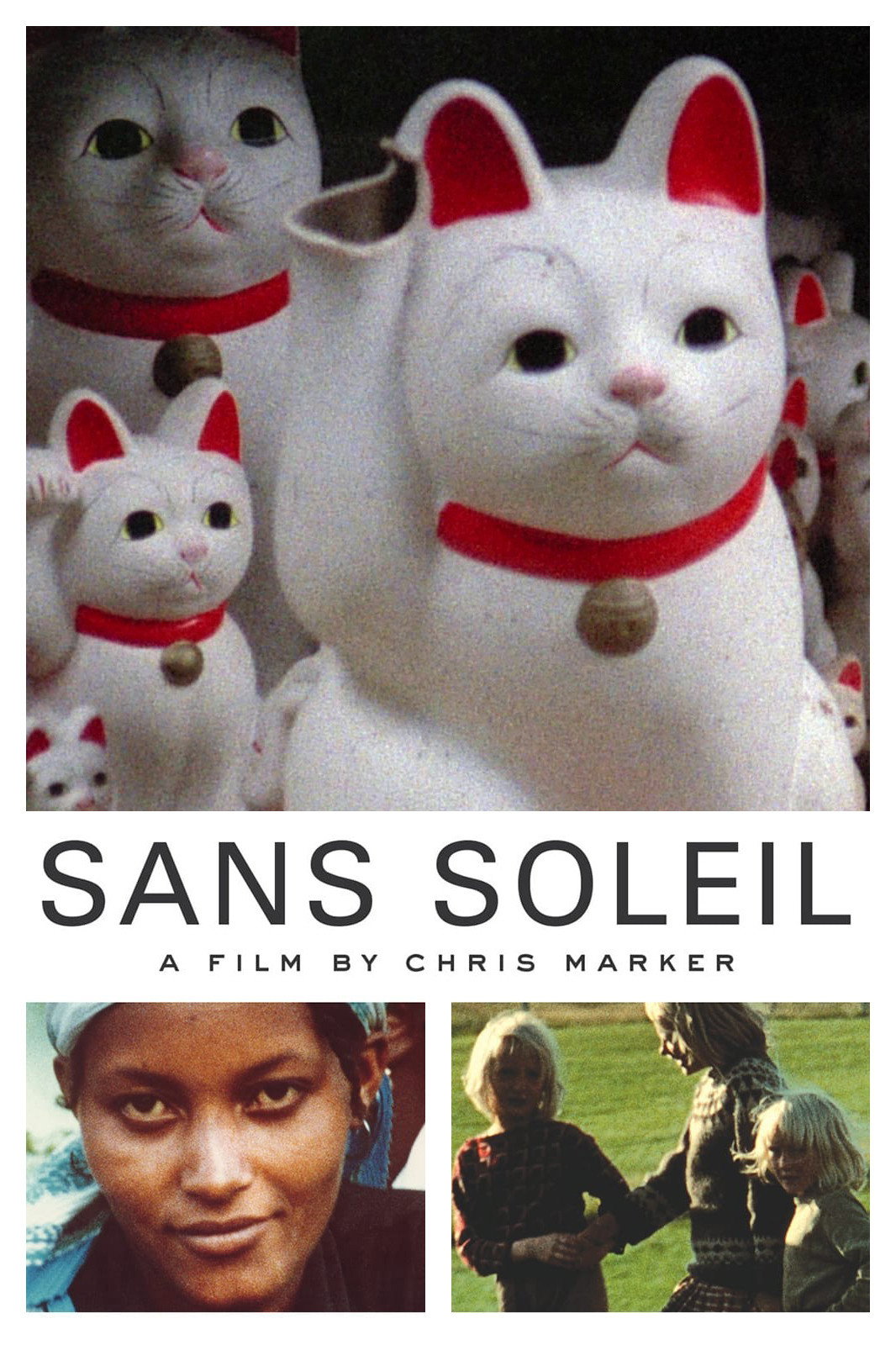
Sans Soleil (1983)

10 reviews from 10 publications. Critics’ score 78: 8 positive, 1 mixed, 1 negative.

Back to our review of Sans Soleil

78
Positive
8
Mixed
1
Negative
1

Most critics admire Sans Soleil as an essay film whose wandering structure gives its thoughts on memory, time and filmed images unusual freedom. Praise centres on Chris Marker’s visual collage, the unexpected connections between distant places, and his curiosity about everyday life. The Tokyo passages draw particular approval, while the letters read over the footage give the journeys an intimate shape. For its strongest supporters, the lack of a conventional narrative is part of what makes the film absorbing.

The spread is wide, with narration and philosophical reflection dividing the reviews most sharply. Some find the commentary illuminating; others find it slow, redundant or prone to generalisations. The Independent admires the dreamlike imagery and emotional resonance despite finding much pretentious. The New York Times is the clear dissenter, judging the narration uninformative and the perspective patronising, more concerned with the filmmaker’s reactions than the lives before his camera.

Empire
1 January 2000 · David Parkinson
90*

The film is an extraordinary, quicksilver investigation into memory, the limits of the filmed image, and human experience that challenges the viewer with its non-narrative barrage of ideas across global locations.

Read the full review →
Sight and Sound
· Tim Lucas
90*

The review positions Sans Soleil as one of Marker’s two best-known films, an essay of disconnected documentary footage from Japan and Africa tied together by a narrator reading probing correspondence. It highlights the film’s mysterious non-linearity and its exploration of time and memory, comparing it favourably to La Jetée.

Read the full review →
Slant Magazine
7 February 2012 · Jaime N. Christley
90*

The review hails Sans Soleil as a 1983 masterpiece whose distinctive images, non-intuitive cutting across time and space, and otherworldly sound field make it immediately recognizable and influential on later essay films. It praises the film's collage of ideas, philosophical musing without pretension, and the Criterion release's faithful presentation of Marker's low-tech genius.

Read the full review →
The AV Club
23 August 2013 · A.A. Dowd
90*

The critic calls Sans Soleil a glorious, grandest work of the essay-film form by Chris Marker, a rambling yet ambitious meditation on memory structured as imaginary letters from a globe-trotting cameraman. The piece singles out its boundless curiosity about people, places, and cinema history, including memorable passages on Tokyo and Vertigo locations, as a standout strength over its political hints.

Read the full review →
Time Out
10 September 2012 · TR
90*

The critic describes the film as the work of cinema’s greatest essayist, in which Marker sums up a lifetime of travels, speculations and passions through letters read over footage from his journeys. It singles out the intimate portrait of Tokyo, from neighbourhood festivals to robots.

Read the full review →
The Times
14 November 2002
75*

Sans Soleil is a typically ruminative travelogue offering idiosyncratic thoughts on time, memory and perception through a globetrotting jigsaw of images from various cultures. Despite its narration, it is often riveting as an absorbing piece of non-narrative cinema.

Read the full review →
The Guardian
15 November 2002
70*

The re-released film is a poetic cine-meditation on time, place and memory that visits humanity as if from another planet, juxtaposing customs from various locations. The effect can be perplexing or redundant, but the visual collage is never dull and the commentary provides essential insights.

Read the full review →
The Independent
15 November 2002
65*

The critic finds much of the film pretentious and slow-going, with grating generalizations, but praises its surreal Tokyo sequences, dreamlike imagery, and eventual emotional resonance as a meditation on memory, animals, and the East.

Read the full review →
The New York Times
26 October 1983 · Vincent Canby
30*

The critic finds the film a self-absorbed disappointment that examines the director's own reactions more than contemporary life. It is criticized for its insistent, uninformative narration and patronizing tourist-like approach, though some sequences show a leisurely curiosity about other cultures.

Read the full review →
Collider
16 March 2023 · Aidan Bryant
90*

The critic praises Chris Marker's 1983 essay film as a radical, rule-breaking work that shatters conventional documentary norms through its collage of global footage, fictional letters, and philosophical reflections on memory, images, and history. They single out its visually compelling sequences and prescient deconstruction of filmmaking and memory as what makes it special and enduring 40 years later.

Read the full review →

Ordered by the weight we give each publication, then by score. Scores are normalised to 100; * means inferred from an unrated review. Summaries are ours, not quotations; follow the links for the reviews themselves. How we rate