Radhika Apte gives Sister Midnight enough comic force to carry it through some uneven storytelling. Karan Kandhari’s dark comedy is worth the occasional frustration, though its visual invention sometimes distracts from the woman we came to watch.
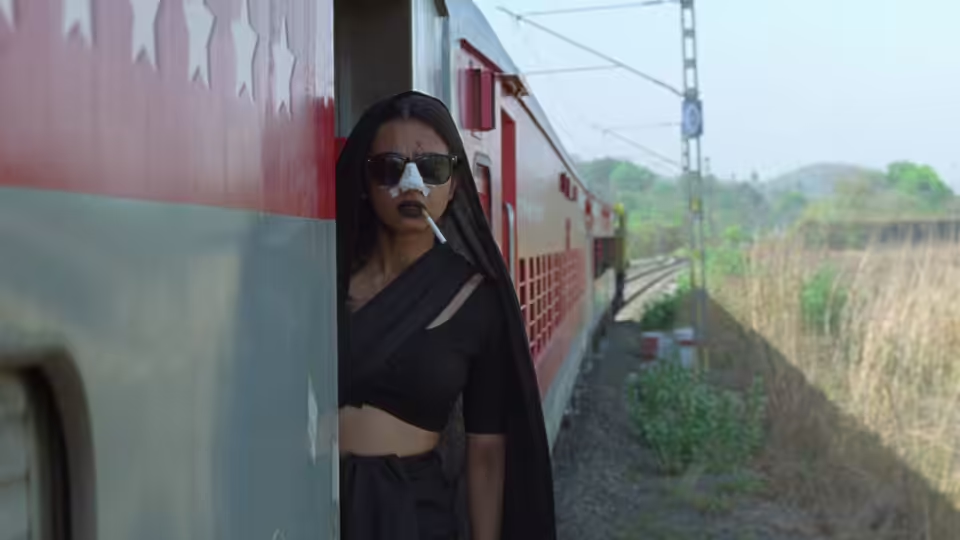
Sister Midnight is worth seeing for Radhika Apte, and sufficiently interesting around her that this need not sound like a consolation. Karan Kandhari’s dark comedy gives its central character, Uma, room to be awkward, unreasonable and difficult to explain. We are allowed to enjoy her without having every eccentricity translated into a lesson about identity. The difficulty comes when the film’s appetite for another strange image starts to take precedence over our interest in what she might do next.
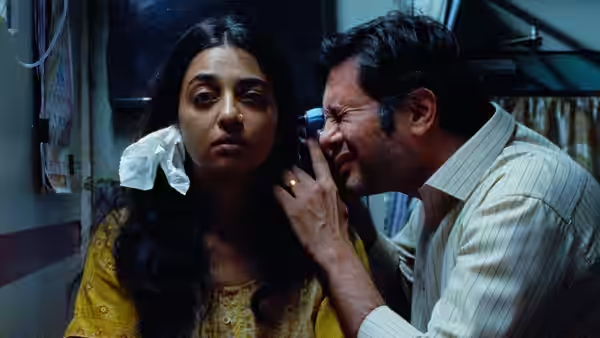
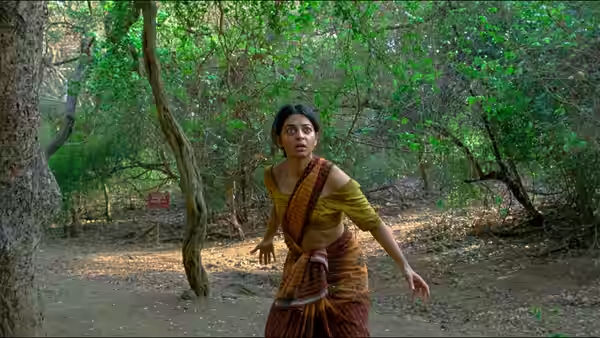
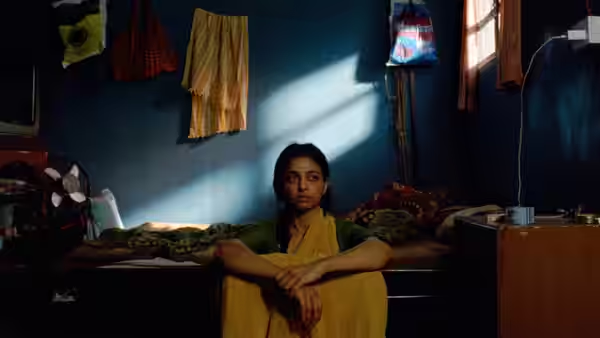
Apte’s largely wordless performance makes that interest unusually durable. She communicates through physical awkwardness and an expressive face, finding comedy in the effort of getting through an encounter rather than waiting for a neatly written punchline. We laughed at Uma’s bodily ineptitude, then felt protective of her; Apte makes the embarrassment register alongside the joke. That mixture matters because a character this unruly could easily become a succession of amusing poses, and Apte keeps suggesting feelings that cannot be tidied away once the laugh has passed.
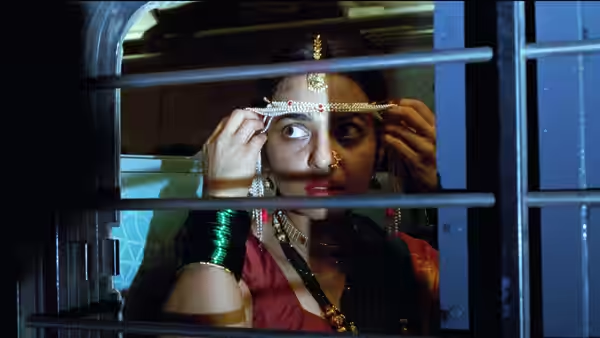
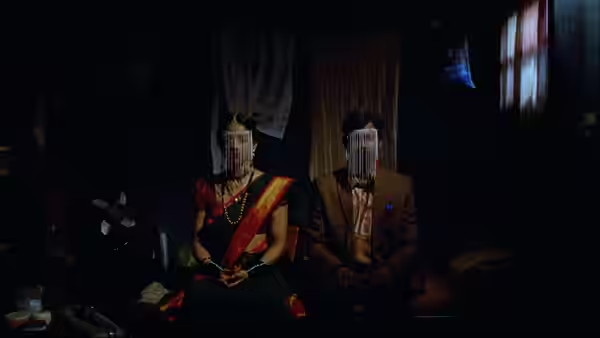
Sverre Sørdal’s cinematography gives the Mumbai setting a vivid presence, particularly in the urban nightscapes, where colour becomes part of the pleasure of watching. The carefully composed images encourage us to look beyond the performer without making her seem incidental. Shruti Gupte’s production design contributes to that visual fullness, although the sheer quantity of things inviting our attention can become a distraction. At its strongest, the picture-making gives Uma somewhere persuasive to exist; elsewhere, we become too conscious of being offered another image to appreciate.
The sound is more successful at sustaining the film’s unruly energy. Paul Banks receives the music credit, and the eclectic soundtrack suits a comedy that would rather risk a jolt than settle into a reassuring rhythm. Napoleon Stratogiannakis’s editing has the harder task of giving continuity to an episodic story whose pleasures often arrive separately. Individual passages hold our attention, but the movement between them does not always make Uma’s behaviour feel consistent, and surprise gradually becomes something we expect on schedule.
The second half takes a turn we will not describe, and Kandhari deserves credit for committing to it rather than politely signalling eccentricity throughout. Our reservation is that the change sometimes makes Uma harder to understand without making her more interesting. Chhaya Kadam supplies a welcome human presence as Sheetal, while Apte remains the strongest reason to follow the film through its less convincing stretches. The later passages need more of that attention to people, particularly when the visual ideas threaten to occupy all the available space.
As dark comedy, this works best when it lets an uncomfortable feeling survive the joke. Its sympathy for an outsider is persuasive because Apte gives that outsider a difficult, funny physical life, and Kandhari does not insist on making her agreeable. The storytelling is less assured, with an underpowered final stretch and more invention than it can always use. Give it an evening if physical comedy and deliberate strangeness appeal; expect to care more about Uma than about where the film takes her.