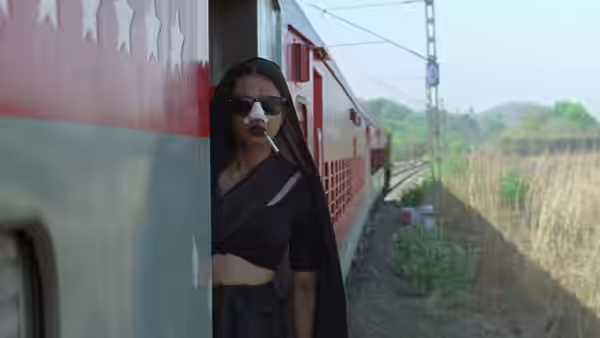
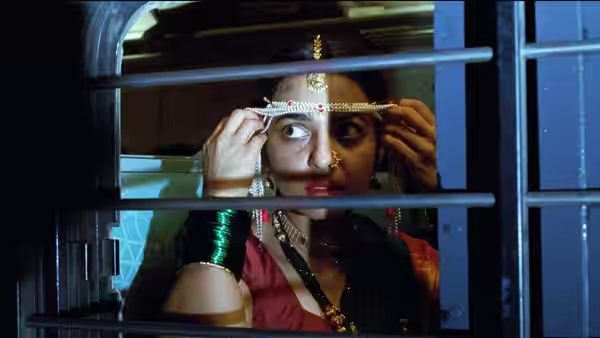
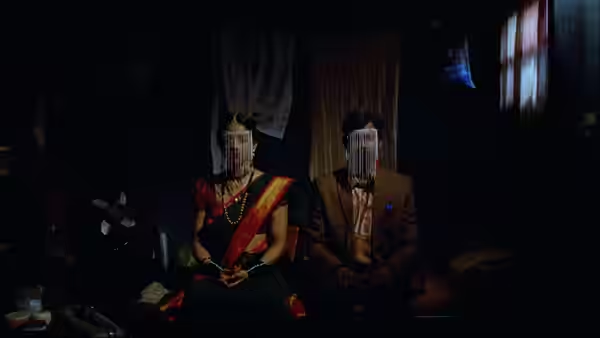
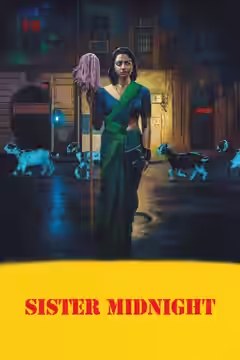
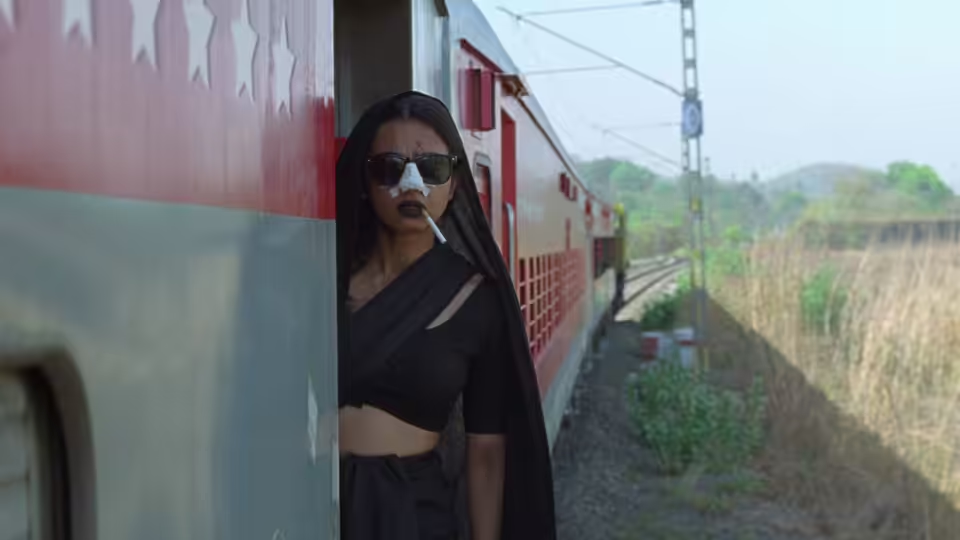
Uma (Radhika Apte) stands beside a train, wearing sunglasses and smoking
Film review

Sister Midnight

2025 · Directed by Karan Kandhari · 1h 47m

In a sentenceRadhika Apte can make awkwardness funny without giving it a speech

In Mumbai, Uma (Radhika Apte) struggles to find a way of being herself amid experiences that become increasingly difficult to explain. Gopal (Ashok Pathak) and Sheetal (Chhaya Kadam) belong to the human world around her, while Uma’s own behaviour pushes against the expectations placed on her. Much of her response comes through movement and expression rather than conversation. Her attempts to negotiate ordinary life lead into physical mishaps and encounters with the absurd. The story follows her frustration and unruliness into a dark comedy concerned with identity and the position of an outsider.

Plays from YouTube when you press play; nothing loads from them until then.

Fi1m review

Radhika Apte gives Sister Midnight enough comic force to carry it through some uneven storytelling. Karan Kandhari’s dark comedy is worth the occasional frustration, though its visual invention sometimes distracts from the woman we came to watch.

Sister Midnight is worth seeing for Radhika Apte, and sufficiently interesting around her that this need not sound like a consolation. Karan Kandhari’s dark comedy gives its central character, Uma, room to be awkward, unreasonable and difficult to explain. We are allowed to enjoy her without having every eccentricity translated into a lesson about identity. The difficulty comes when the film’s appetite for another strange image starts to take precedence over our interest in what she might do next.

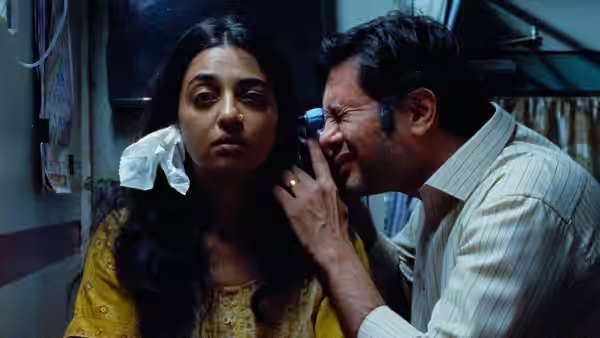
Apte’s largely wordless performance makes that interest unusually durable. She communicates through physical awkwardness and an expressive face, finding comedy in the effort of getting through an encounter rather than waiting for a neatly written punchline. We laughed at Uma’s bodily ineptitude, then felt protective of her; Apte makes the embarrassment register alongside the joke. That mixture matters because a character this unruly could easily become a succession of amusing poses, and Apte keeps suggesting feelings that cannot be tidied away once the laugh has passed.

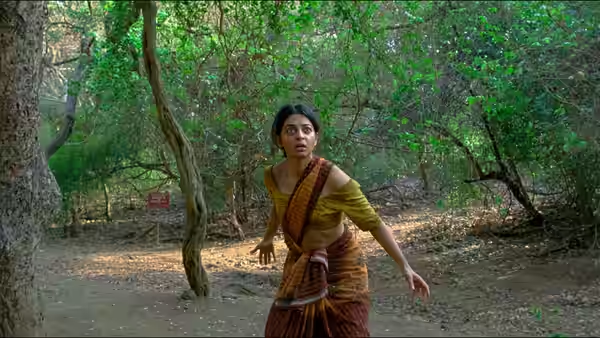
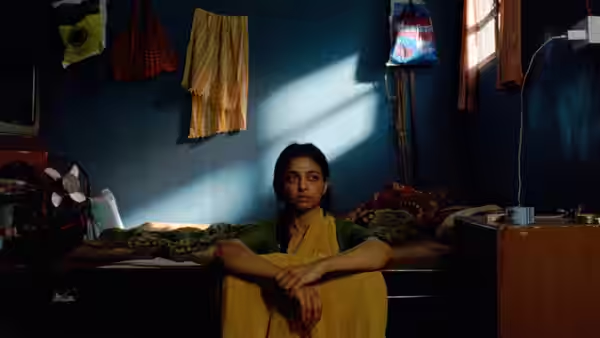
Sverre Sørdal’s cinematography gives the Mumbai setting a vivid presence, particularly in the urban nightscapes, where colour becomes part of the pleasure of watching. The carefully composed images encourage us to look beyond the performer without making her seem incidental. Shruti Gupte’s production design contributes to that visual fullness, although the sheer quantity of things inviting our attention can become a distraction. At its strongest, the picture-making gives Uma somewhere persuasive to exist; elsewhere, we become too conscious of being offered another image to appreciate.

The sound is more successful at sustaining the film’s unruly energy. Paul Banks receives the music credit, and the eclectic soundtrack suits a comedy that would rather risk a jolt than settle into a reassuring rhythm. Napoleon Stratogiannakis’s editing has the harder task of giving continuity to an episodic story whose pleasures often arrive separately. Individual passages hold our attention, but the movement between them does not always make Uma’s behaviour feel consistent, and surprise gradually becomes something we expect on schedule.

The second half takes a turn we will not describe, and Kandhari deserves credit for committing to it rather than politely signalling eccentricity throughout. Our reservation is that the change sometimes makes Uma harder to understand without making her more interesting. Chhaya Kadam supplies a welcome human presence as Sheetal, while Apte remains the strongest reason to follow the film through its less convincing stretches. The later passages need more of that attention to people, particularly when the visual ideas threaten to occupy all the available space.

As dark comedy, this works best when it lets an uncomfortable feeling survive the joke. Its sympathy for an outsider is persuasive because Apte gives that outsider a difficult, funny physical life, and Kandhari does not insist on making her agreeable. The storytelling is less assured, with an underpowered final stretch and more invention than it can always use. Give it an evening if physical comedy and deliberate strangeness appeal; expect to care more about Uma than about where the film takes her.

Critical consensus AI synthesised

73
Positive
8
Mixed
5
Negative
0

Most critics respond warmly to Sister Midnight’s strange dark comedy, with praise clustering around Radhika Apte’s expressive, often largely wordless performance as Uma. The reviews repeatedly credit her physical acting with making the film funny and emotionally engaging, even when its storytelling becomes unpredictable. Its carefully composed images, vivid colour and urban nightscapes also draw approval, alongside an appetite for absurdity that many critics find refreshing.

Reservations centre on cohesion: several critics find the film overstuffed or episodic, with striking images receiving more attention than character and ideas. The spread runs from enthusiastic to mixed, with no outright negative assessments among these reviews. Vulture sees the tonal shifts as growing naturally from character, while Variety finds the changes of genre emotionally and tonally incongruous. That disagreement captures the main divide: how far the film’s inventiveness sustains its emotional force.

Vulture
19 May 2025 · Bilge Ebiri
85*

Ebiri finds the film colorful, moving, and deeply odd, praising how its tonal shifts arise naturally from character. He especially singles out Radhika Apte’s expressive performance and the emotional depth she gives Uma.

Read the full review →
IndieWire
23 May 2025 · B+ · Proma Khosla
83

Khosla praises the film as a confident, original dark comedy with a humorous and human heart. She singles out Radhika Apte’s commanding, largely wordless performance and the expressive cinematography.

Read the full review →
Little White Lies
11 March 2025 · 3/4/4 · Anton Bitel
80

Bitel finds the film a droll, strange delight that resists conventional narrative expectations. He praises its playful horror references and its celebration of marginalised oddballs.

Read the full review →
The Guardian
16 March 2025 · ★★★★ · Wendy Ide
80

Ide finds the film wildly audacious, macabre and immensely entertaining, despite noting that not every creative risk pays off. She particularly praises Radhika Apte’s endlessly expressive physical performance as Uma.

Read the full review →
Time Out
7 November 2024 · ★★★★ · Hanna Flint
80

The review presents the film as a feral, feminist fable with a delectable, vampiric edge. It singles out the film’s bite as a key strength.

Read the full review →
Screen Daily
19 May 2024 · festival review · Wendy Ide
75*

The accessible text presents the film positively, calling Radhika Apte sensational. It singles out her performance in the dark Mumbai-set comedy.

Read the full review →

Straight answers AI written, from our review

Is Sister Midnight worth watching?
Sister Midnight is worth watching for Radhika Apte’s expressive physical comedy, and we score it 76 out of 100. We recommend it if awkward humour and deliberate strangeness appeal, though the episodic storytelling and underpowered final stretch make Uma more engaging than the story around her.
How long is Sister Midnight, and what is it rated?
Sister Midnight runs 1h 47m. It is a comedy and drama film.
Where can I watch Sister Midnight in Ecuador?
Sister Midnight is not on any streaming or rental service in Ecuador at the moment. It is available in 3 other countries; change your country at the top of the page to see where. Availability is checked daily.
How violent or frightening is Sister Midnight, and is it suitable for children?
Sister Midnight carries a UK 15 certificate, so it is not suitable for children under 15. Its dark comedy includes physical mishaps and increasingly strange behaviour, but we cannot give a specific warning about violence or frightening material from those details alone; the certificate remains the clearest guide for younger viewers.
How does Sister Midnight compare to The Lunchbox?
Sister Midnight is the stranger, more physically comic choice beside The Lunchbox, a restrained romance that also attends to loneliness and awkward connection in Mumbai. We favour Sister Midnight for unruly humour and Apte’s expressive performance, despite uneven storytelling; The Lunchbox is the better fit for tenderness, though its careful handling can feel overcautious.
What should I watch after Sister Midnight?
After Sister Midnight, try The Lunchbox (2013, Fi1m 75): For another Mumbai story attentive to loneliness and the awkwardness of connection. Then Daisies (1966, Fi1m 85): For unruly women, physical mischief and little patience with respectable behaviour.

Cast

If you liked this, try…

  1. The Lunchbox (2013, Fi1m 75)For another Mumbai story attentive to loneliness and the awkwardness of connection.

  2. A Girl Walks Home Alone at Night (2014) · not reviewed yetAnother nocturnal outsider film where music and strangeness make persuasive companions.

  3. Daisies (1966, Fi1m 85)For unruly women, physical mischief and little patience with respectable behaviour.

  4. The Match Factory Girl (1990) · not reviewed yetA quieter, colder account of frustration, told with equally economical expressions.

  5. House (1977) · not reviewed yetFor the appetite for visual invention, with considerably fewer restraints.