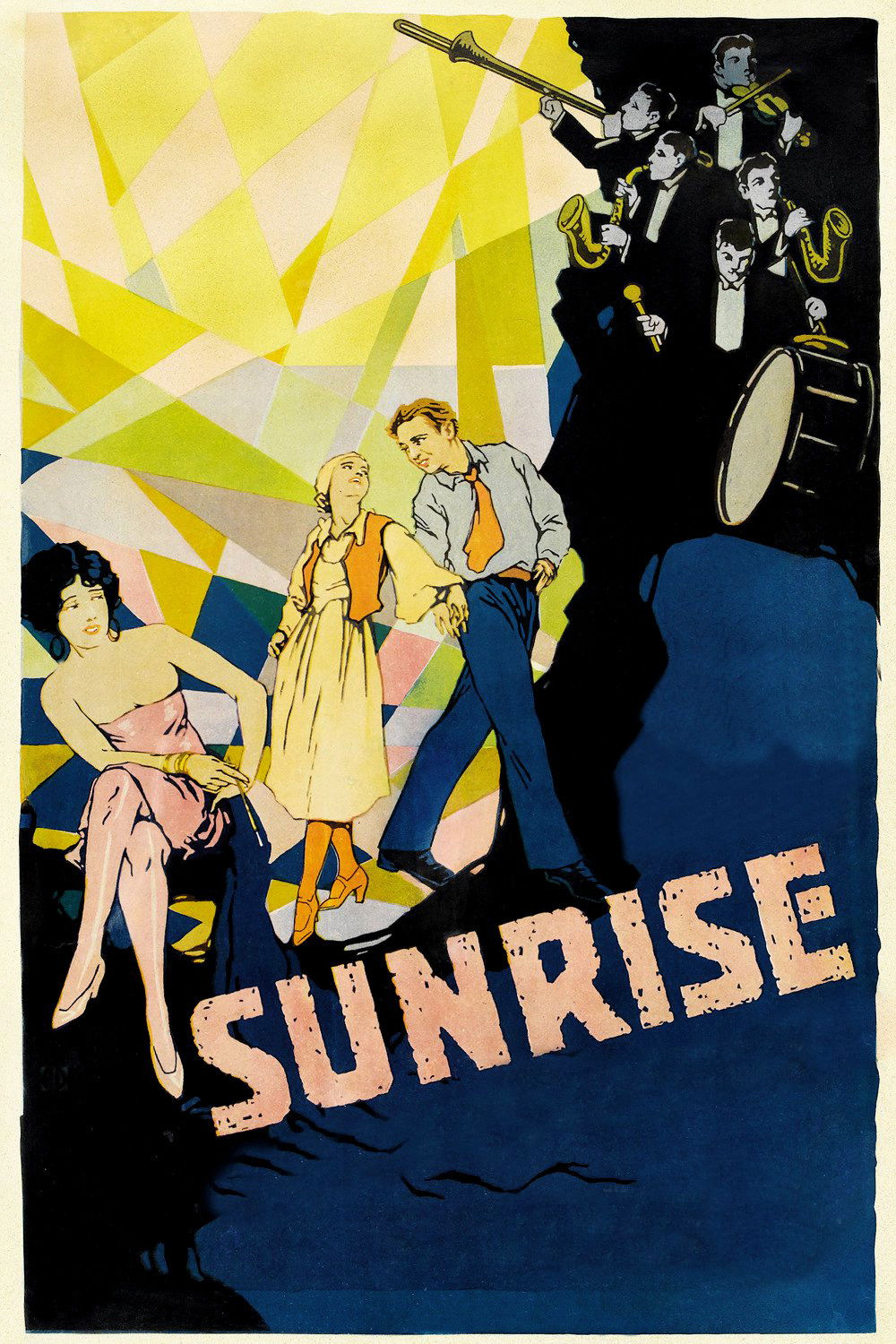
Most critics respond warmly to Sunrise, with praise concentrated on Murnau’s visual storytelling and the emotional force he draws from a simple marital fable. The reviews repeatedly single out fluid camera movements, double exposures, expressive lighting and the contrast between village and city settings. These techniques make the images dreamlike without distancing most critics from the couple’s troubles. Several also praise the delicate performances, while music and synchronised effects receive attention for supporting the drama.
The spread is wide, but the disagreement is concentrated in one review rather than shared reservations among the majority. The New Yorker finds the artistic ambition overbearing, the sets unremarkable and the acting unconvincing, sometimes grotesque. Where that review sees intellectual strain at the expense of entertainment, most critics find feeling and inventiveness. The story’s simplicity is widely acknowledged, but generally treated as something the filmmaking makes moving rather than a serious weakness.
The review calls the film pure cinema that is emotionally uplifting and sublimely refreshing. It singles out the wonder of its imagery, visual storytelling, perspective design and stunning photography.
Read the full review →R
RogerEbert.com
11 April 2004 · Roger Ebert
95*
The critic praises Murnau's groundbreaking visual style and camera freedom in this silent masterpiece, highlighting its dreamlike quality and emotional depth despite a simple fable-like story. The innovative techniques and haunting imagery elevate it beyond melodrama into a profound cinematic experience.
Read the full review →E
Evening Standard
10 April 2012 · Antonia Quirke
90*
The critic calls the film electric and overwhelmingly passionate and sexual, describing it as an unforgettable classic tale of rural lovers and urban loss told in a fluid, rhapsodic style with stylised expressionistic sets.
Read the full review →F
Film Comment
· Robin Wood
90*
The critic presents Sunrise as a profound affirmation of the redemptive power of heterosexual marriage and human wholeness, achieved through intense personal and mythic vision despite the film's stylized Expressionist elements. He singles out the emotional intensity of the couple's reconciliation and the triumphant final sunrise image for particular praise.
Read the full review →L
Los Angeles Times
11 January 1998 · Bill Desowitz
90*
The critic celebrates the film as potentially the greatest ever made, praising its innovative visual pyrotechnics, erotic sequences, and synchronized music and effects that demonstrate cinema's future potential. Its influence on later filmmakers and fresh depiction of human frailty are highlighted despite initial commercial failure.
Read the full review →S
Slant Magazine
24 January 2014 · Bill Weber
90*
Murnau’s Hollywood masterpiece is presented in close-to-ideal context and the best possible digital quality. The critic singles out the film’s visual inventiveness, dreamlike images, and commitment to varied tones in its mythic story of marital crisis and reconciliation.
Read the full review →G
The Guardian
31 January 2004 · Jonathan Rosenbaum
90*
The critic calls Sunrise a 1927 masterpiece and one of the films that introduce viewers to cinema as art. He singles out its synthesis of painting, music and literature into visual music, along with innovative camera work and lighting that render an elemental story of love and reconciliation.
Read the full review →E
Empire
23 March 2007 · Kim Newman
85*
The critic praises the film's technical innovations, remarkable evocation of moods and passions, delicate performances and imaginative cinematography, calling it a dreamlike symphony that is imaginative and surprisingly moving for a silent art movie.
Read the full review →N
The New York Times
9 December 2008
85*
The piece lauds the film's precise and expressive shots and camera movements that convey mythic storytelling, noting its influence on other directors and its place in film history as a succès d'estime with pioneering sound elements. It highlights the contrast between realistic village and expressionistic city sets.
Read the full review →T
Time Out
1 February 2012 · DMacp
80*
The review praises the film's emotional poignancy and its ability to elevate a simple fable into something dynamic and intense. It singles out the dreamlike realism and superimpositions in the city sequences as examples of unequalled visual beauty.
Read the full review →V
Variety
31 December 1926 · Variety Staff
80*
The review calls it a distinguished artistic contribution in the German school manner, with remarkable resourcefulness of effects, convincing acting, and dramatic symbolism of marital complexities that realizes the director's promise. The incidental music blends smoothly to support the ambitious effort.
Read the full review →N
The New Yorker
24 September 1927 · Oliver Claxton
30*
The critic finds the film heavily Teutonic and overly intellectual, resulting in mental indigestion with unextraordinary sets and unconvincing acting that borders on the grotesque. The earnest artistic effort is ultimately deemed a commercial misstep that prioritizes Art over entertainment.
Read the full review →C
Collider
29 January 2014 · Rob Vaux
90*
The critic calls Sunrise one of the greatest films of the silent era, a romantic melodrama whose simple story is elevated by Murnau's artistry into something profoundly touching. He singles out the sparkling, dream-like cinematography for particular praise as the film's standout achievement.
Read the full review →E
Eye for Film
3 December 2005 · Anton Bitel
90*
The critic praises Murnau's film as a beautifully constructed piece that employs sophisticated cinematographic artifice to tell a simple story of love, guilt, and redemption. They single out its harmonious blend of German expressionism and Hollywood romanticism, along with its fluid tracking shots, double exposures, and thematic depth.
Read the full review →Ordered by the weight we give each publication, then by score. Scores are normalised to 100; * means inferred from an unrated review. Summaries are ours, not quotations; follow the links for the reviews themselves. How we rate