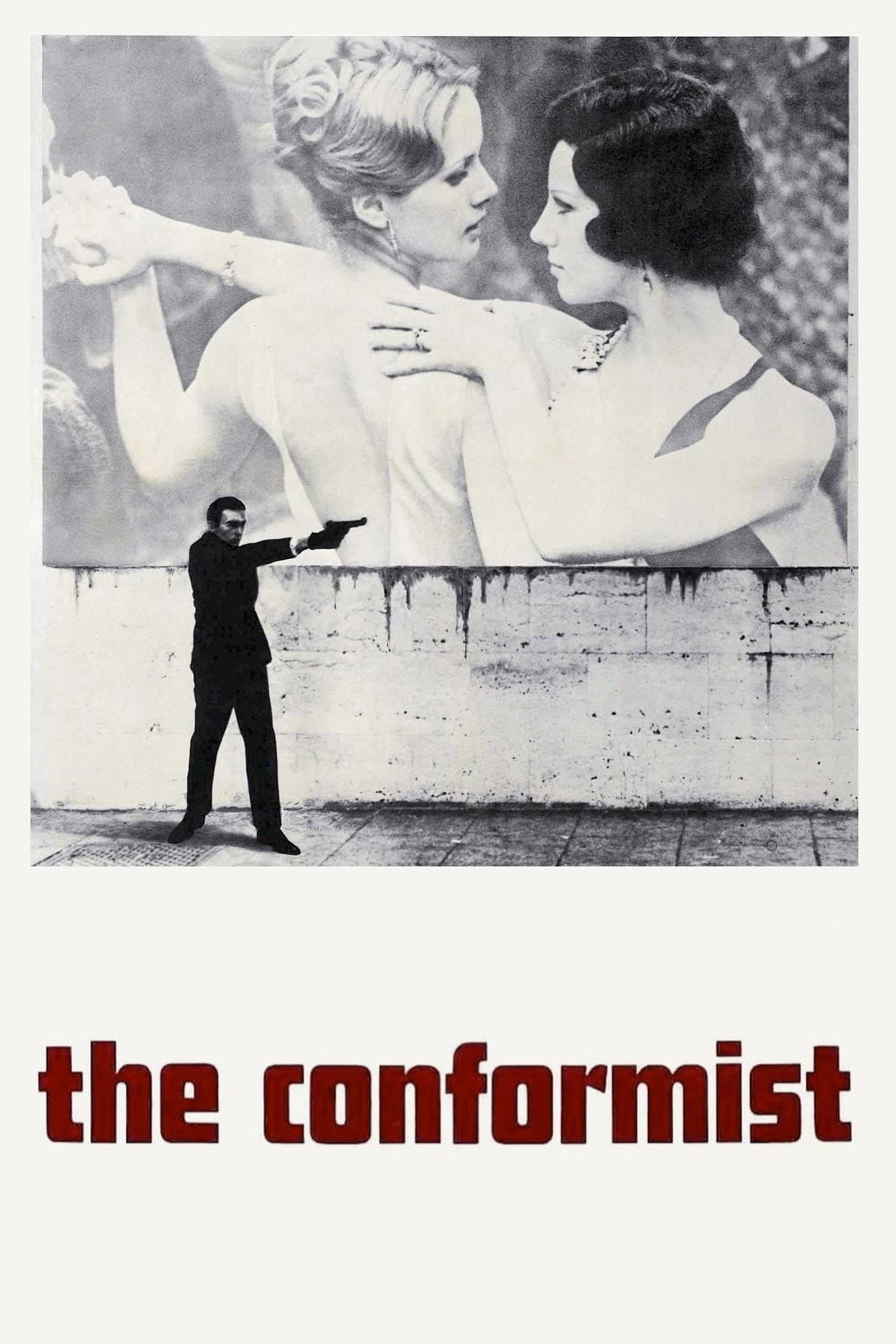
The reviews are uniformly positive about The Conformist, with praise clustering around Bertolucci’s direction, Vittorio Storaro’s cinematography and Jean-Louis Trintignant’s performance. Critics repeatedly connect the carefully composed images, colour and luxurious settings to the film’s examination of fascism, sexuality and the desire to fit in. Trintignant earns particular credit for making a weak, compromised protagonist psychologically compelling. Several reviews also admire the way political drama, sensuality and thriller tension work together without simplifying the character’s cowardice.
The differences concern the degree of enthusiasm rather than any substantial opposition. The Guardian admires the spectacle and central performance but finds the Freudian psychology simplistic, while Variety suggests some trimming despite praising the film’s power and cast. The Hollywood Reporter acknowledges narrative and thematic flaws but considers the visual style sufficient compensation. These reservations leave a clear consensus, though the more qualified reviews question the psychology and pacing that others find persuasive.
T
Time Out
26 February 2008 · ★★★★★ · Wally Hammond
100
The review calls the film a dazzling, idea-laden thriller that balances politics, philosophy and sex with a serio-comic tone, crediting its striking cinematography and performances while noting its intellectual engagement.
Read the full review →E
Empire
1 January 2009 · David Parkinson
95*
The critic describes it as Bertolucci's greatest film, a complex study of a man trapped between convention and rebellion that also reveals much about the director himself.
Read the full review →V
Vulture
14 January 2023 · Bilge Ebiri
95*
The critic hails it as one of the greatest and most visually ravishing films ever made, singling out its innovative nonlinear flashback structure that mirrors the protagonist’s psyche and its blend of sensuous beauty with moral and political complexity in a 4K restoration re-release.
Read the full review →L
Los Angeles Times
10 June 2010 · Betsy Sharkey
90*
The critic calls it a surreal masterwork that feels contemporary, praising its tale of political and sexual dark forces in Fascist Italy and the sheer beauty of every frame. Trintignant's performance as Marcello is singled out as sweeping the viewer away.
Read the full review →S
Slant Magazine
15 December 2010 · Violet Lucca
90*
The critic celebrates the re-release as one of the best films of the year, praising its timeless exploration of conformity and complicity through stunning visual storytelling—color, framing, and sets—along with Jean-Louis Trintignant’s complex performance and the film’s blend of art-house sensuality and noir tension.
Read the full review →H
The Hollywood Reporter
31 January 2007 · Doug Pratt
90*
The critic calls it one of the great triumphs of stylistic filmmaking, praising Vittorio Storaro’s cinematography, the sensuous construction of the images, and how the style smooths over any narrative or thematic flaws to create an overwhelming cinematic experience.
Read the full review →N
The New York Times
23 March 1971 · Vincent Canby
90*
The critic calls the film an elegant surprise and superior chronicle that equates the rise and fall of Italian Fascism with the romantic, obsessive life of its conformist protagonist. Bertolucci's rich, poetic, baroque style is praised as an improvement over the source novel.
Read the full review →T
The Times
2 March 2008 · Edward Porter
90*
Bertolucci’s 1970 masterpiece is rereleased in a smart new print, deserving to be seen for its strikingly composed images and ravishing colours from Vittorio Storaro’s cinematography. The visual artistry enhances the story of an insecure man driven to fascism by a desire to seem normal.
Read the full review →R
RogerEbert.com
14 December 2012 · Charlie Schmidlin
85*
The critic praises Bertolucci's striking adaptation as a powerful exploration of cowardice, conformity, and the interplay of politics and sexuality in 1930s Italy. Storaro's lush cinematography and the lead performance by Trintignant are singled out for creating emotional and visual depth.
Read the full review →E
Evening Standard
10 April 2012
80*
The critic hails the revival of one of Bertolucci's best films, praising its examination of Italy's fascist past through perverse sexuality and its icy luxurious period recreation via Vittorio Storaro's camerawork.
Read the full review →N
The New Yorker
13 December 2010 · David Denby
80*
The critic describes the film as an unprecedented mixture of political drama and sensuality, a classic study of betrayal and bad faith soaked in nostalgic ambivalence. The luxurious Parisian scenes and performances by Trintignant, Sandrelli, and Sanda are highlighted.
Read the full review →S
Sight and Sound
1 March 2008 · David Thomson
70*
The critic praises Bertolucci's assured direction and the film's exploration of a repressed, unlikeable protagonist drawn to fascism, highlighting its visual style and emotional depth over later works by the director.
Read the full review →G
The Guardian
2 March 2008 · Philip French
70*
Bertolucci's 1970 adaptation of Moravia's novel is welcomed back in a new print that does justice to its expressive spectacle and art direction. Jean-Louis Trintignant is magnificent as the weak intellectual drawn into fascism, though the psychology is described as 'dollar-book Freud.'
Read the full review →V
Variety
31 December 1969 · Variety Staff
70*
The review calls Bertolucci's free adaptation a click from start to finish, a powerful film about a coward conforming to Fascist dictates. Strong performances, especially by Trintignant, Sandrelli, and Sanda, are praised, though some trimming is suggested.
Read the full review →C
Collider
30 May 2024 · Ron Evangelista
90*
The critic calls Bertolucci's film one of the finest of the 1970s, praising its ironic mix of vibrant mise en scène and deliberate emptiness in its study of a conformist fascist operative.
Read the full review →E
Eye for Film
25 February 2008 · Ben Sillis
85*
The critic praises Bertolucci's bold choice to make every character unlikeable and pathetic in this exploration of fascism, using a sexual drama and love triangle to examine fear and complicity under Mussolini's regime. Vittorio Storaro's 'colour noir' cinematography and the film's focus on voyeurism and the regime's absurd bureaucracy are highlighted as standout elements.
Read the full review →Ordered by the weight we give each publication, then by score. Scores are normalised to 100; * means inferred from an unrated review. Summaries are ours, not quotations; follow the links for the reviews themselves. How we rate