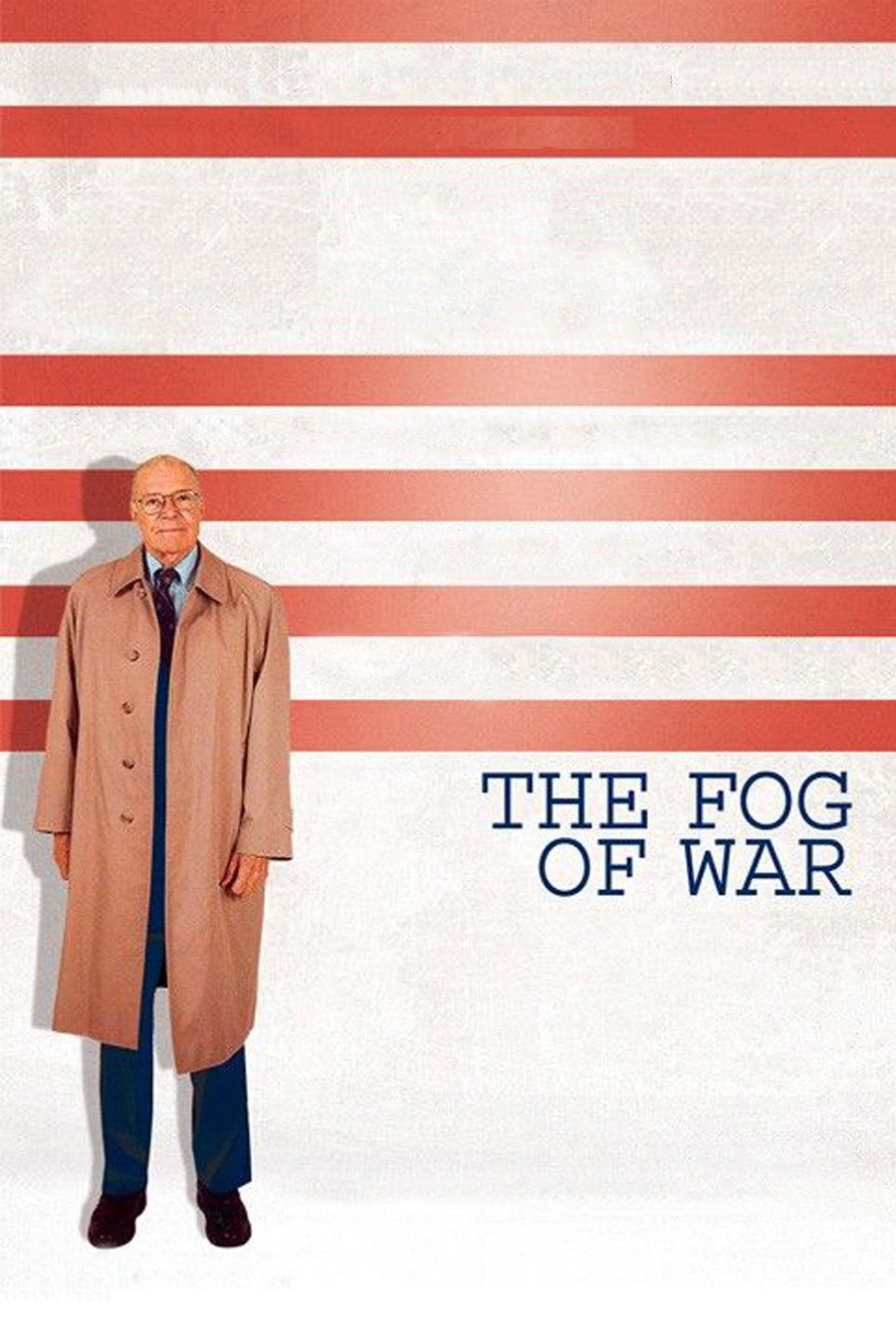
McNamara reflects on his career with archive footage and tapes backing some claims, proving crafty in interview. The film is a must-see, never less than fascinating re-examination of Vietnam regardless of one's view of its subject.
The documentary casts a gloomy spell as McNamara reflects on his life and wars, with few clarifications coming as a surprise. The taped conversations and his final inability to complete a thought stand out as the most revealing moments.
The film is shocking, funny, gripping and cleverly assembled but leaves the viewer unsure whether McNamara is an honest broker or war criminal. Morris presents him as reflective yet the critic questions if we should take his word and notes the lack of emotional regret.
The film presents McNamara reflecting on his life and decisions through eleven lessons, revealing the uncertainty and frailty of leaders in wartime. Ebert highlights McNamara's introspective interviews and the film's use of archival footage and Philip Glass score to underscore moral complexities of war.
Morris delivers a brilliant, nuanced examination of McNamara's career as defense secretary during Vietnam, highlighting the intellectual, moral and political complexity of his 11 lessons. As a cinematic experience it is rich and full-bodied, respecting its subject while revealing the inner man.
The film offers McNamara a platform to reflect on his career and the lessons from events like the Cuban Missile Crisis and Vietnam, without aggressively prosecuting him. It is a chastening experience that humanizes its subject while underscoring the road to hell paved with good intentions.
The film structures McNamara's reflections around eleven lessons on the limits of reason and human judgment, maintaining ironic distance while sympathetically probing his conscience and America's. It stands as one of Morris's best works, a haunting portrait of a life interwoven with history that expects few easy answers.
The film allows McNamara space to reflect on his actions without damning or exonerating him, evoking the truth in its contradictions through virtuoso technique and archival footage. It revisits the past with an eye on the present, highlighting lessons on proportionality, unilateralism, and the fog of war.
The film is a masterly, riveting and challenging documentary that uses McNamara's direct-to-camera interview and archival material to explore lessons from history. It highlights his reflections on war, power and ethics while noting his restraint in not speaking out earlier against the Vietnam War.
The film is a feature-length interview and moral travelogue where McNamara confronts firebombed cities, near nuclear catastrophe, and the morality of victory. It raises difficult questions about responsibility, with audiences divided on McNamara's reflections and lack of full apology.
11 October 2003 · festival review · Stephen Holden
Morris's documentary is a sober, beautifully edited portrait that should be studied by leaders, organizing McNamara's reflections into lessons about war and human error. It suggests that in wartime nobody in power really knows anything, with a solemn Philip Glass score and historical clips.
McNamara reflects on a life spanning WWII, the Cuban Missile Crisis and Vietnam through 11 philosophical lessons of his own. The film is brilliantly realised by Morris and should be mandatory viewing for politicians.
The critic calls Errol Morris’ film an amazing and relevant portrait of Robert McNamara that raises important questions about war and human nature. They single out the rhythmic editing, Philip Glass score, and archival footage for particular praise.
The critic finds the documentary powerful and absorbing, highlighting McNamara's erudite and sincere reflections on war, nuclear risks, and leadership lessons that remain relevant today.
Ordered by the weight we give each publication, then by score. Scores are normalised to 100; * means inferred from an unrated review. Summaries are ours, not quotations; follow the links for the reviews themselves. How we rate