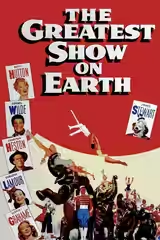
Most critics, certainly those writing on release, take the film as showmanship first and judge it kindly on those terms. The praise clusters on DeMille’s staging of the circus itself: acts filmed under a real big top with Ringling Bros., the colour and movement of the parades, the montage of the caravan on the road. Several find the Hollywood stars slot in convincingly among the working performers, and the train crash draws attention even from those unmoved by the rest.
The reservations gather around the story. Even admirers concede the romantic triangle is a framework rather than a drama, and the harsher notices call the characterisation childish and the romances foolish, interrupting the spectacle and stretching a long film into tedium. The spread is wide, from the trade papers and daily press of 1952 near the top to Sight and Sound at the bottom, and the split follows the calendar: the later reviews are the coldest, though The AV Club spares a word for James Stewart’s understated clown.