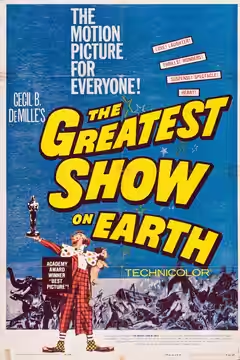
Cecil B. DeMille films a real circus with real care, and the tent-raising, the parade and the trapeze acts are worth anyone’s evening. Then the people start talking. The romance is stiff, the narration is pompous, and 152 minutes is a long afternoon.
Cecil B. DeMille took his cameras to the Ringling Bros. and Barnum and Bailey circus and filmed a season of it: the trains, the canvas, the elephants, the flyers, the crowds. Through the sawdust he ran a love story, or two and a half of them, with Hollywood stars in the costumes. The circus is real and the love story is not, and The Greatest Show on Earth is a good film whenever it looks at the first and a poor one whenever it turns to the second. It turns to the second a great deal.
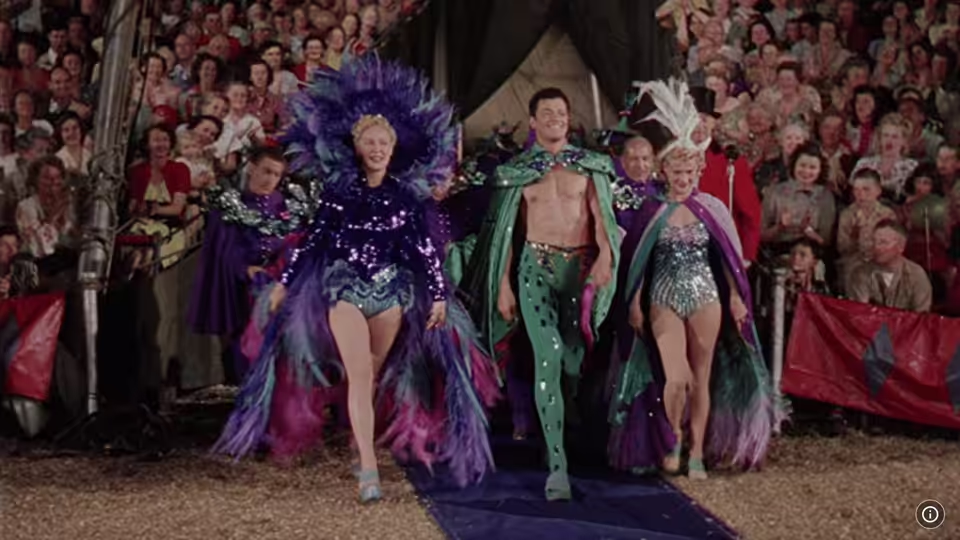
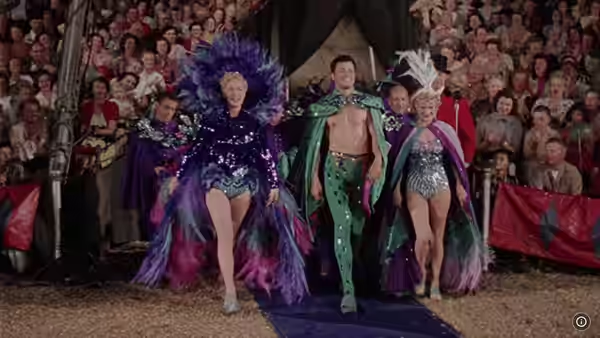
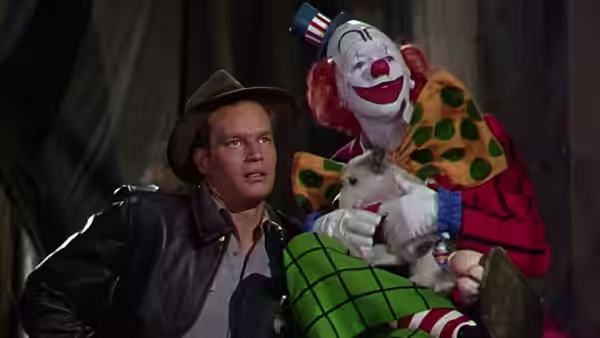
Whenever DeMille points George Barnes’s Technicolor camera at the circus itself, the film earns its title. The tent goes up at dawn with roustabouts hauling on the ropes and elephants leaning into the poles, and Barnes stays wide enough that we can see the whole machine working at once. The parade fills the ring with plumes and animals, the spotlights carve pink and blue circles out of the dark, and Anne Bauchens cuts between the acts, the crowd and the boss at ringside so that the ring never sits still. Emmett Kelly, in his own tramp make-up, drifts along the edges of scenes and is funnier without a line than anyone with one. Dorothy Jeakins and Edith Head must have sewn on several thousand spangles between them, and every one catches the light.
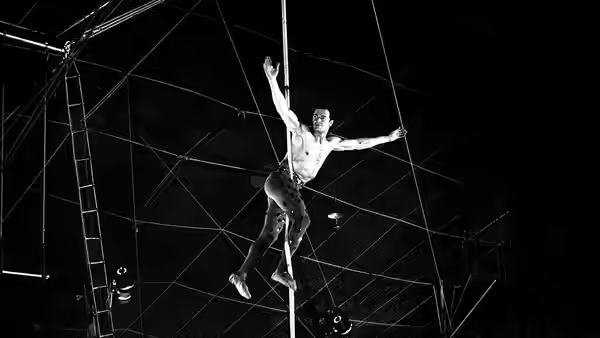
The trapeze duel is the best of it. Holly and Sebastian go up one after the other and try to outdo each other, and the camera goes up into the rigging with them, looking down past the wire at the sawdust a long way below. We gripped the arm of the sofa. We did not believe a word of the rivalry, but those are bodies in the air and the floor is where it is, and Barnes never lets us forget the distance. Wilde plays it grinning, Hutton plays it shouting, and the crowd below plays it exactly as we did.
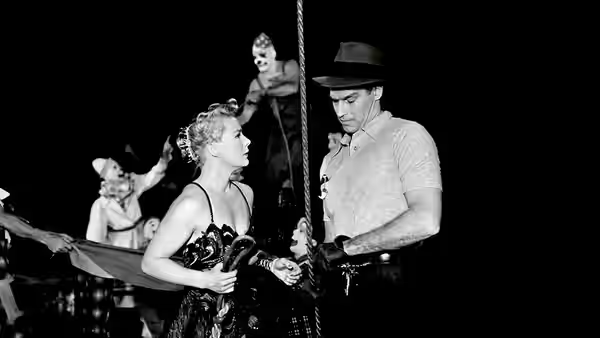
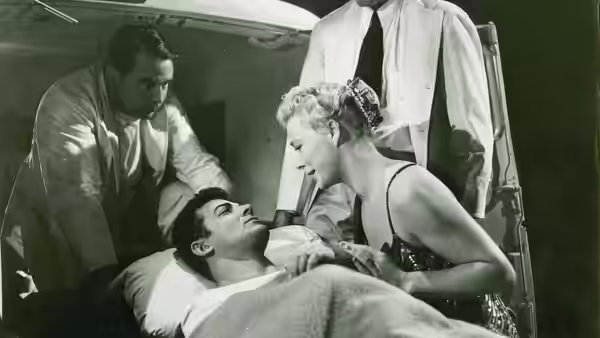
The trouble is everything said at ground level. Heston’s Brad loves the circus more than anyone in it, and Heston plays this by jutting his jaw at every woman who speaks to him and answering in the voice of a man reading a timetable. Hutton pitches every line as if calling across a field, which suits the ring and wears thin in a caravan. Wilde has the easiest time of it, all teeth and shrugs. Gloria Grahame does more with one bored glance than the script asks of her in two hours, and Lyle Bettger’s Klaus scowls so hard and so early that the film might as well have hung a sign on him.
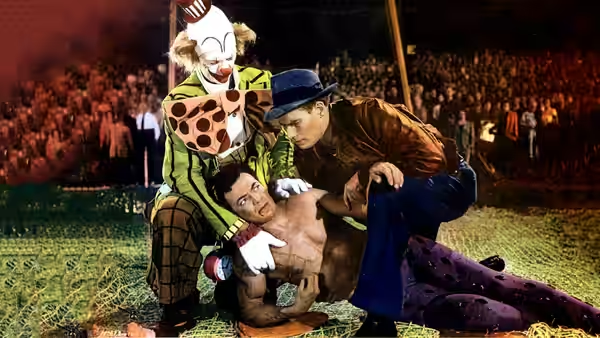
James Stewart is the exception. Buttons the clown keeps his make-up on between shows and will not say why, and Henry Wilcoxon’s Agent Gregory keeps turning up at the lot asking questions. Stewart plays it small, all in the eyes, and the film has the sense to let him. It is the one story here that is shown rather than announced, and we were sorry each time the others interrupted it.
The script announces everything else. Three writers share the screenplay, Theodore St. John, Fredric M. Frank and Barré Lyndon, and between them they have not written a line that trusts us to work anything out. Over the top runs a narration in the tones of a sermon, telling us the circus is a mighty machine and its people are brave, while the pictures are already showing us both. Victor Young’s score marches everything along in brass and drum, which suits the parade and flattens the caravan scenes. By the second hour we had stopped following the romances and were watching the elephants behind the actors.
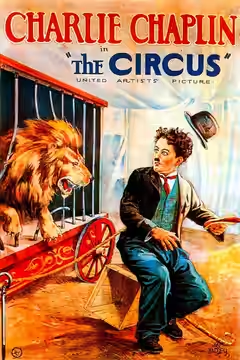
There is a late set piece, famous enough that you may have heard of it, which we will not describe beyond saying that for a few minutes the story and the spectacle need each other, and the film is what it wanted to be. Chaplin got more out of one ring and no colour in The Circus (1928). Watch this one at home, where the talky stretches can be talked over. It runs 152 minutes and carries a U, and children who like elephants will forgive it everything the adults cannot.