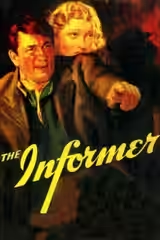
Most critics admire The Informer, and the praise gathers around two things: Victor McLaglen as Gypo and the look of John Ford’s Dublin. The 1935 reviews treat McLaglen’s blundering, pathetic betrayer as the film’s centre and credit the picture with a psychological seriousness rare in the early talkies. Later writers keep returning to the imagery instead: fog-shrouded streets, shadowy tenements, snatches of hymn and song drifting through the night. Nearly everyone reaches for the word Expressionist.
The reservations come from the later reviews and cluster around the script and the direction. Empire finds the writing has not aged well and the ominous, religious elements laid on too thick; Film Comment is warmer but holds the film at arm’s length as a moody nocturne. Time Out is the outright dissenter, finding it heavy-handed, humourless and patronising, with only the camerawork worth saving. The spread is wide, and it runs along the decades: the closer a critic sits to 1935, the higher the score.