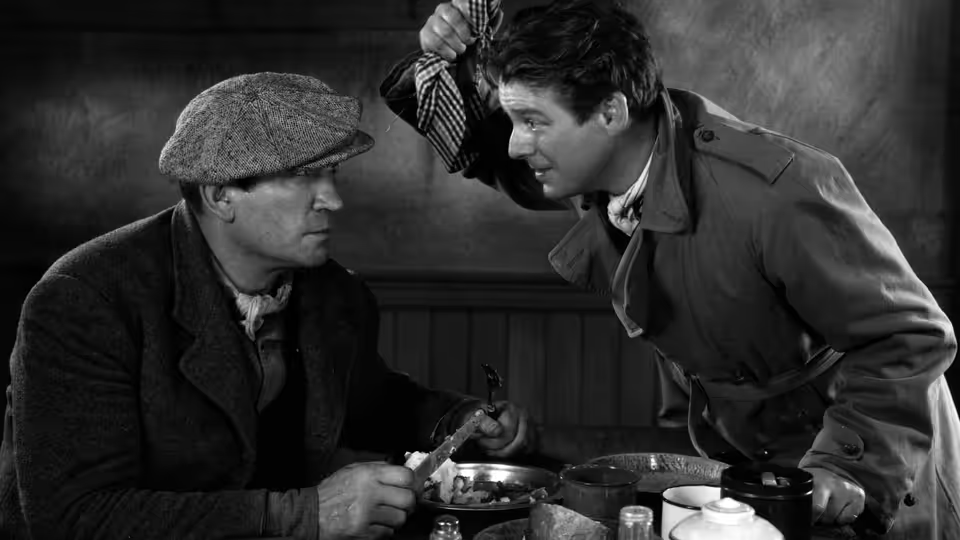
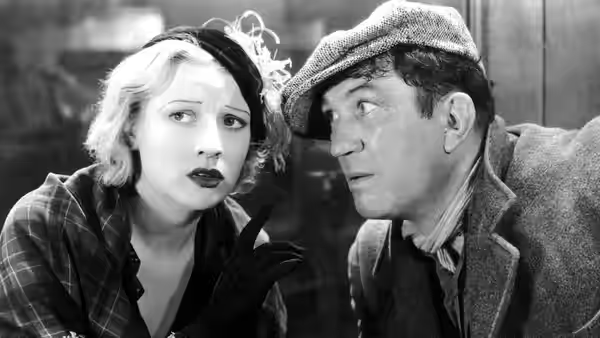
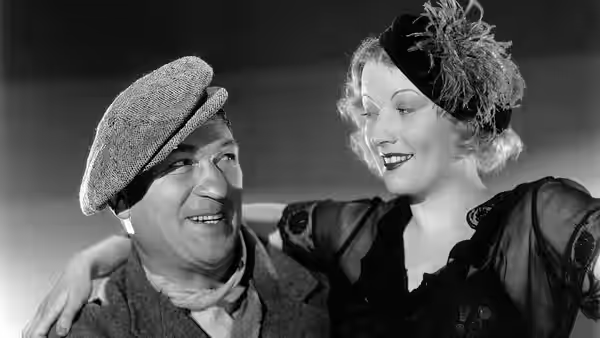
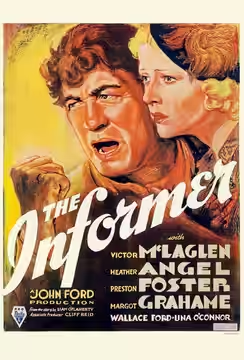
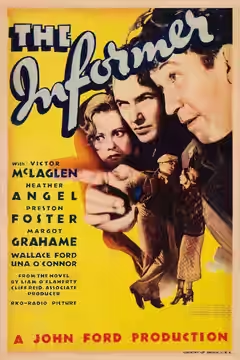
Ford’s fog-bound Dublin and Victor McLaglen’s slow, frightened face are as good as their reputation. The trouble is Max Steiner’s score and Dudley Nichols’s script, which keep saying out loud what the picture has already shown.
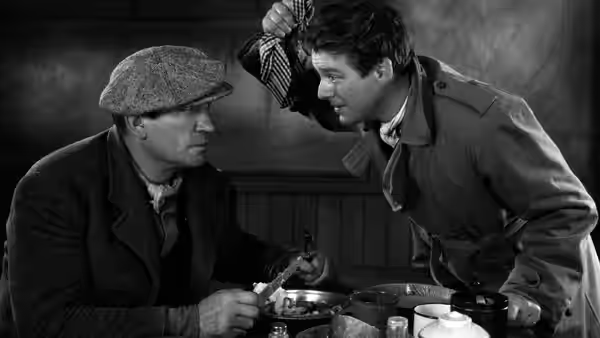
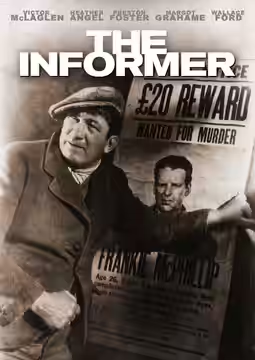
Dublin, 1922, a night of fog. Gypo Nolan (Victor McLaglen) has been thrown out of the organisation for failing to shoot a man, and he has nothing: no work, no money, and a girl, Katie Madden (Margot Grahame), who has been driven onto the street. His friend Frankie McPhillip (Wallace Ford) has a price of twenty pounds on his head. A shipping poster offers passage to America at ten pounds a head. Gypo can do that sum, and the film, adapted by Dudley Nichols from Liam O’Flaherty’s novel, is about what happens to him in the hours after he does it.
John Ford was reaching for something here that he did not often reach for, and it shows in every frame. Almost the whole film takes place in one night, on studio streets, in a fog that Joseph H. August lights from behind so that people arrive as shadows before they arrive as faces. The wanted poster tears loose from a wall and follows Gypo down the street, wrapping itself round his legs. A blind man (D’Arcy Corrigan) stands under a lamp outside the barracks as Gypo comes out with the money. It looks like a German silent, and it is meant to.
McLaglen is the reason the film still holds. Gypo is a big man with a slow mind, and McLaglen plays him with his whole body, shoulders forward, hands hanging, a face that takes several seconds to catch up with what it has just heard. The scene in the barracks got at us more than we expected: an officer counts out the notes and pushes them across with his stick rather than touch the man, and McLaglen does nothing at all for a long moment, then picks them up like something hot. Nobody says a word about shame. Nobody needs to.
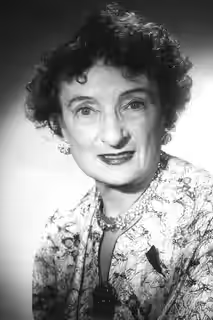
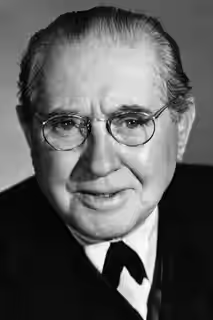
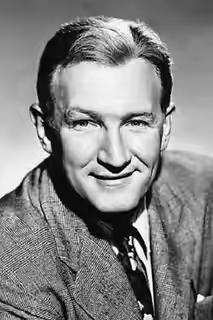
The rest of the cast are good in a smaller way. Grahame gives Katie a tired warmth that survives the dialogue. Heather Angel, as Frankie’s sister Mary, and Una O’Connor, as his mother, have the film’s quietest scenes and play them without weeping at us. J. M. Kerrigan is a pleasure as Terry, the sponger who attaches himself to Gypo the moment there is money about, and Donald Meek does a great deal with a small frightened tailor. Preston Foster, as the commandant Dan Gallagher, is the weak spot, upright and handsome and dull, a speech in a trench coat.
The trouble is that Ford does not trust his pictures, or was not allowed to. Max Steiner’s score follows Gypo down every street, a theme for each step and a chord for each glance, and by the halfway mark we were tired of being told where to look. Nichols’s script does the same in words. The religious business, the crucifix on the wall, the church, the opening text about Judas and his thirty pieces of silver, is laid on with a trowel, and Ford lingers on it every time. Walter Plunkett’s costumes are better judged: Gypo’s cap and split jacket, Katie’s thin coat, the trench coats and soft hats of the men who come looking for him.
George Hively’s editing is fast where it needs to be, in the raid that goes out of a window and over the roofs, and slow where it should be, at the court of inquiry in a cellar, which Ford stages as a long, patient trap. Ford would go on to Stagecoach and The Grapes of Wrath, films that hide their craft, and this is the one where he wanted you to see it. That is why some critics now find it heavy, and we can see their point.
At 91 minutes it does not waste your evening. Watch it late, with the lights off and the volume a notch lower than usual, which is the only way we know to argue with Steiner.