Critics’ reviews

The Last Emperor (1987)

10 reviews from 10 publications. Critics’ score 67: 8 positive, 0 mixed, 2 negative.

Back to our review of The Last Emperor

67
Positive
8
Mixed
0
Negative
2

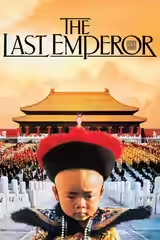
Most critics admire The Last Emperor, and the praise gathers almost entirely in one place: the look of it. The Forbidden City sequences, Vittorio Storaro’s photography, the production design and the thousands of extras are singled out again and again, and several reviews treat the film as a useful, handsome introduction to twentieth-century Chinese history. The reviews written for its later re-releases, with an extra hour restored, are noticeably warmer than those from its first run.

The reservations gather in one place too. Pu Yi is a passive figure, and many critics find the film cool and distant as a result, with spectacle standing in for sympathy. The spread is wide. The two dissenters are both from 1987: Pauline Kael in The New Yorker calls it a pageant without a protagonist, and Vincent Canby in The New York Times finds it arthritic and awkwardly built. Slant adds a further worry about an outsider’s gaze on China.

Empire
1 January 2000 · Natasha Aitken
90*

Bertolucci's masterpiece receives a re-release with an extra hour of footage that deepens the story of Pu Yi. The film is praised as a remarkable cinematic achievement and eye-opening history lesson, with breathtaking colours, sets, costumes and extras in the Forbidden City.

Read the full review →
The AV Club
27 February 2008 · A- · Scott Tobias
90

The Criterion edition makes a strong case for The Last Emperor as a truly great epic that captures the political turmoil of 20th-century China through the story of an individual swept up in history. The passive nature of the protagonist makes for a difficult epic, though rich ironies abound.

Read the full review →
Los Angeles Times
20 November 1987 · Sheila Benson
70*

The review praises the film as a coolly lavish epic and intoxicating visual rush thanks to its director, production designer and cinematographer. Its core remains cool and distant in telling the story of a man ill-fitted for either end of history's lens.

Read the full review →
Slant Magazine
27 February 2008
70*

The critic views the film as a visually magnificent but deeply flawed epic that foregrounds old-fashioned movie magic and marks a breakthrough for Chinese images in Western cinema. They single out the collaboration between Bertolucci, cinematographer Vittorio Storaro, and the production design team for lavish, awe-inspiring imagery while noting issues with characterization, perspective, and an outsider's gaze.

Read the full review →
The Guardian
12 March 2004 · Peter Bradshaw
70*

Bertolucci's director's cut of the epic is a David Lean-esque spectacle with spectacular richness and heartfelt storytelling. It gives clearer emphasis to Pu Yi's time as a puppet emperor in Manchuria, though some elements now appear ersatz compared to newer Chinese cinema.

Read the full review →
The Times
17 February 2023 · ★★★★☆ · Kevin Maher
70*

The sumptuous Bertolucci epic triumphs in production design and location shooting with its use of thousands of extras, though it also conveys great sadness in tracking Puyi's lifelong imprisonment from gilded cage to Red Army capture.

Read the full review →
Time Out
10 September 2012 · BC
70*

Bertolucci's epic follows Pu Yi's journey from child emperor to gardener, striving to show his capacity for personal redemption amid historical upheaval. The Forbidden City sequences stand out for their sumptuous visual richness, though spectacle often overshadows deeper sympathy.

Read the full review →
Variety
7 October 1987 · festival review · Todd McCarthy
70*

The film is described as one of unique visual splendor that makes for a fascinating trip to another world but proves remote and untouchable like its subject. It is a prodigious production and exquisitely painted mural of 20th century Chinese history.

Read the full review →
The New Yorker
23 November 1987 · Pauline Kael
40*

Bertolucci's film presents Pu Yi's life as a passive historical pageant without a true protagonist or dramatic drive, resulting in a visually graceful but ultimately dull and intellectually conceived spectacle. The critic singles out the film's many felicitous set pieces and rhyming images of helplessness for their poignant impact.

Read the full review →
The New York Times
20 November 1987 · Vincent Canby
30*

The critic finds the film arthritic and a let-down overall, with an awkward structure that fails to capture the drama of its subject's life despite occasional spectacular visuals. It works best as an illustrated introduction to modern Chinese history.

Read the full review →

Ordered by the weight we give each publication, then by score. Scores are normalised to 100; * means inferred from an unrated review. Summaries are ours, not quotations; follow the links for the reviews themselves. How we rate