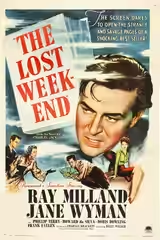
Most critics take The Lost Weekend for what it set out to be: a frank, unglamorous account of alcoholism made at a time when Hollywood rarely went near the subject. The praise gathers around Ray Milland, whose performance as the writer on a binge is called convincing, forceful and sympathetic across seven decades of reviews, and around Billy Wilder’s direction, which several critics credit with putting the audience inside the drinker’s head, through the camerawork, the hallucination sequences and the theremin score.
The reservations are about the ending. Time Out finds it unconvincing and blames the production code, and Slant Magazine, the one mixed voice, thinks the code’s concessions and a self-conscious presentation leave the film stodgy, for all its lurid style. The Guardian notes that it is less bleak than the novel. The spread is narrow otherwise: everything else sits at good or better, and the older reviews, from 1945, are if anything warmer than the recent ones.