Film review

The Lost Weekend

1945 · Directed by Billy Wilder · 1h 41m · MPA NR

In a sentenceA bottle on a string outside the window, and a whole city downstairs that keeps pouring

Drama

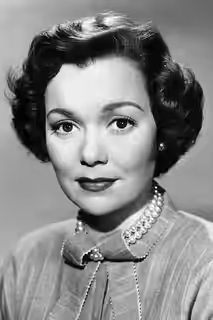
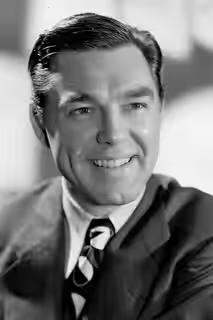
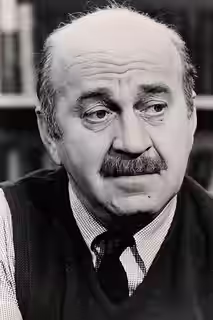
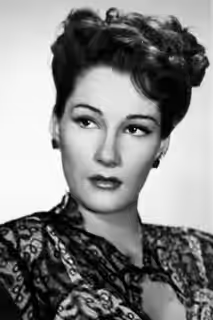
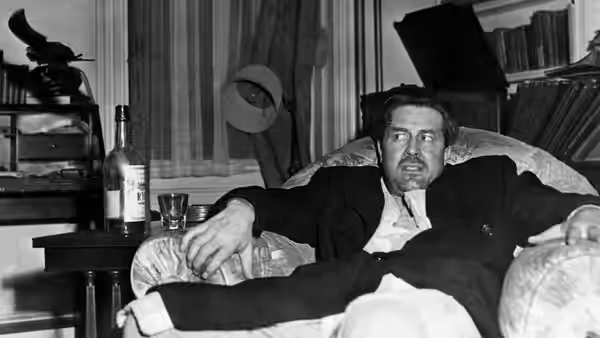
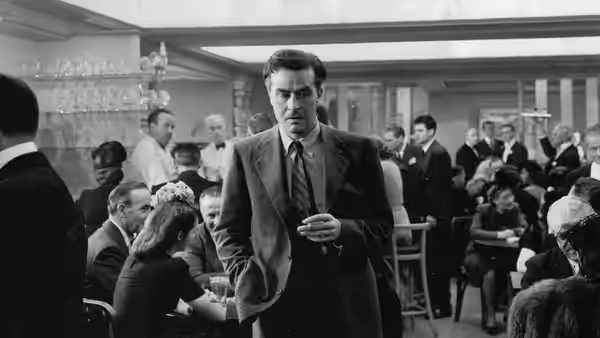
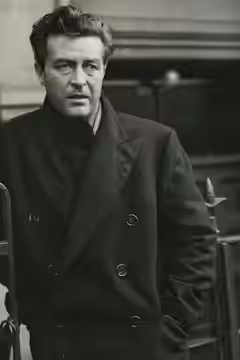
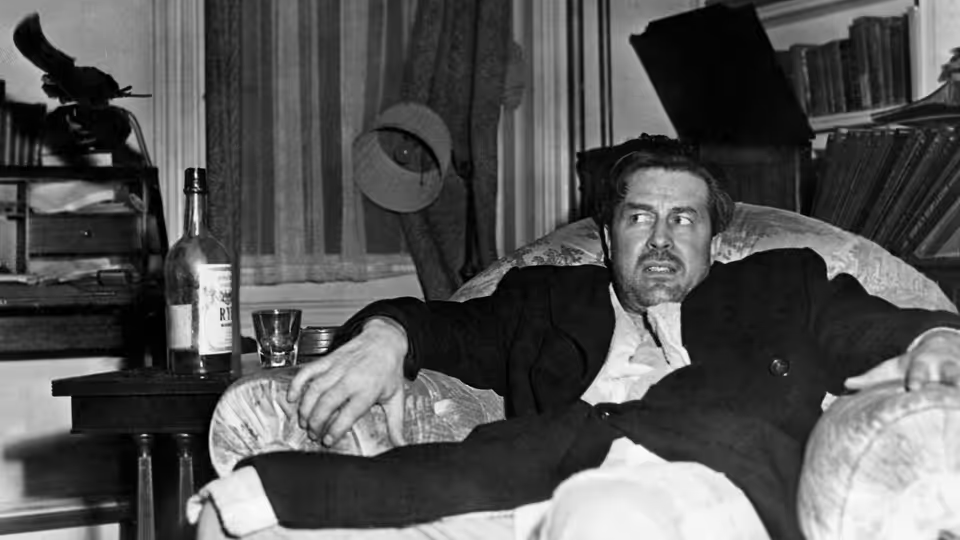
New York, over a long weekend. Don Birnam (Ray Milland), a writer who has not finished anything in years, is a few days dry and packing for a trip to the country with his brother Wick (Phillip Terry), who pays the rent and has been through this before. Don’s girlfriend Helen St. James (Jane Wyman) arrives with concert tickets, and Don talks the two of them into going without him for the afternoon. A bottle of rye hangs on a string outside the bedroom window. Once alone, Don finds the money left out for the cleaning woman, buys two bottles at the shop on the corner, and walks to Nat’s bar, where Nat the Bartender (Howard Da Silva) wipes rings off the counter and Gloria (Doris Dowling) sits waiting for someone. The train to the country leaves without him.

Fi1m review

Billy Wilder’s account of four days in the life of a New York drunk is still frightening, still honest and, in Ray Milland’s hands, still hard to look away from. The last few minutes ring false, and the film seems to know it.

Billy Wilder followed Double Indemnity with a film about a man trying to get a drink, in which almost nothing is funny and nobody is killed. The Lost Weekend, written by Wilder with his producer Charles Brackett from Charles R. Jackson’s novel, follows Don Birnam over four days in New York as he lies, hides, steals and drinks. It is one of the best films about drinking we know, and we recommend it, with one caveat we will come to.

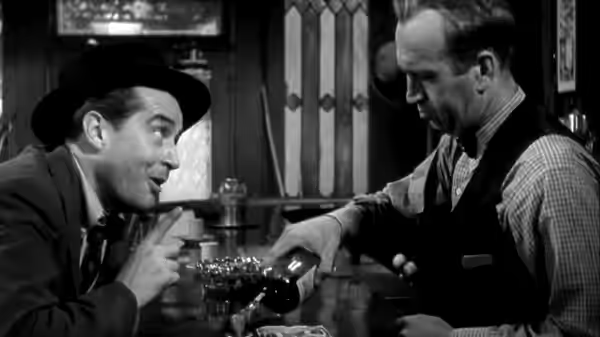
What the film understands, and most films about addiction do not, is that a binge is work. Don has to get Wick and Helen out of the flat, find money, reach the shop before it shuts, hide what he has bought, and keep the story straight. Ray Milland plays all of this as a man who is rather good at his job. He is charming, he is quick, and he believes his own excuses for about as long as it takes to say them. In Nat’s bar he watches the wet ring his glass has left on the counter and asks Nat not to wipe it away. It is the one that got at us. We had braced for the collapse; what shook us was the planning, and the small pleased look on Milland’s face each time a lie lands.

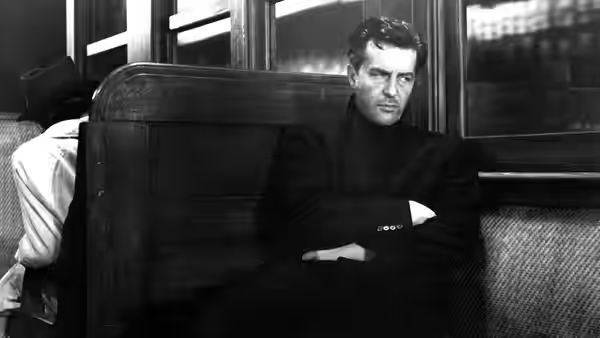
John F. Seitz, who had shot Double Indemnity for Wilder, takes the camera out on to the streets of New York and lets the daylight be hard. The long walk up Third Avenue, Don carrying his typewriter from one shuttered pawnshop to the next, is done on real pavements with real passers-by, and it lasts long enough to hurt. Indoors, Seitz lights the flat so that the bottle on its string outside the window is the brightest thing in the frame. Doane Harrison’s cutting is patient: he lets Don pour, lets him look at the glass, and does not hurry on. Edith Head keeps Don’s suit presentable a good deal longer than Don manages to be, which is right.

Miklós Rózsa’s score is the part that has aged. He uses a theremin to mark the moments when Don’s thirst takes over, and the first time it came in we winced. The idea is sound. The trouble is that the music tells us Don is doomed before the film has shown us, and the film is capable of showing us. Keep your eyes on the picture when the theremin starts and you will lose nothing.

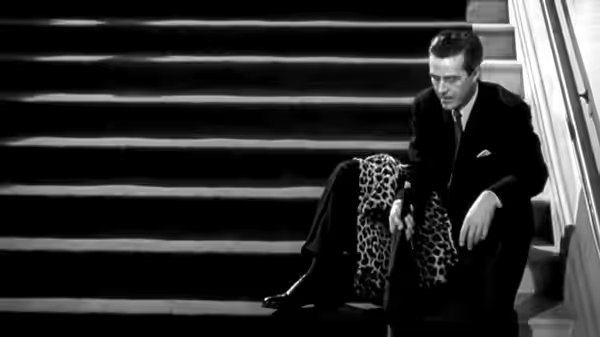
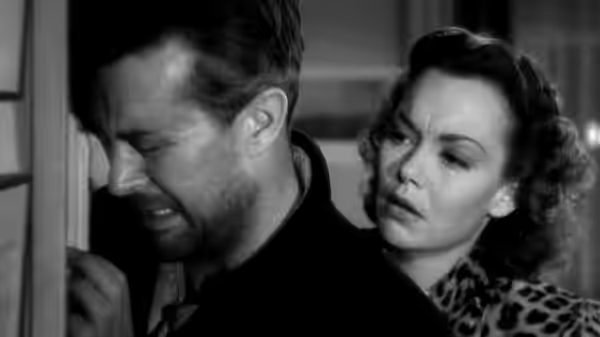
The supporting cast is better than the writing gives them room to be. Howard Da Silva’s Nat serves Don with a tired decency that never turns into a lecture. Doris Dowling’s Gloria, waiting at the bar for a man who keeps promising her an evening, has three or four scenes and makes a whole life out of them. Frank Faylen turns up late, in a ward, as a night attendant called Bim, and we found him the most frightening thing in the film; he has seen a thousand Dons and says so, kindly. Jane Wyman’s Helen St. James is written as a good woman who waits, and a flashback to how she met Don, a mix-up at an opera cloakroom, is charming but stops the film dead. Wyman plays her intelligence anyway.

Then there is the ending, which we will not describe. Most critics have called it a concession to the Production Code, and whatever forced it, it arrives in a rush and asks us to believe something about Don that the previous hour and a half has taught us not to believe. It is the only part of the film where Wilder and Brackett stop telling the truth. It does not undo the rest. It does leave us with the sensation of a film clearing its throat and changing the subject.

Wilder went on to make crueller and funnier films. This is the one where he keeps a straight face for 101 minutes. Watch it with someone who has lived with a drinker, if you can bear to, and notice how quiet they go when the camera finds the bottle on the string.
Critical consensus AI synthesised

78
Positive
12
Mixed
1
Negative
0

Most critics take The Lost Weekend for what it set out to be: a frank, unglamorous account of alcoholism made at a time when Hollywood rarely went near the subject. The praise gathers around Ray Milland, whose performance as the writer on a binge is called convincing, forceful and sympathetic across seven decades of reviews, and around Billy Wilder’s direction, which several critics credit with putting the audience inside the drinker’s head, through the camerawork, the hallucination sequences and the theremin score.

The reservations are about the ending. Time Out finds it unconvincing and blames the production code, and Slant Magazine, the one mixed voice, thinks the code’s concessions and a self-conscious presentation leave the film stodgy, for all its lurid style. The Guardian notes that it is less bleak than the novel. The spread is narrow otherwise: everything else sits at good or better, and the older reviews, from 1945, are if anything warmer than the recent ones.

Empire
1 March 2007 · Kim Newman
90*

The film offers a painfully sincere and uncompromising look at alcoholism for its 1945 release, anchored by Ray Milland's career-best performance as the writer descending into a binge.

Read the full review →
The Hollywood Reporter
28 November 2023 · THR Staff
90*

The critic calls it one of the best pieces of picture-making Hollywood has produced in years, praising the writing, directing, and Ray Milland's terrific, believable lead performance as a tour de force. Some weaknesses are noted in the ending and one piece of casting.

Read the full review →
The New Yorker
24 November 1945 · John McCarten
90*

The film version is every bit as impressive a tour de force as the novel, with taut suspense and Ray Milland conveying overwhelming realism as the anguished protagonist. Most episodes from the book are faithfully included, supported by excellent performances from the cast and strong work by Wilder and Brackett.

Read the full review →
The New York Times
3 December 1945 · Bosley Crowther
90*

The film is a shatteringly realistic and morbidly fascinating study of alcoholism that ranks among the best character studies on screen. It succeeds as an objective, graphic report of a drunkard's misery thanks to strong direction and Ray Milland's splendid performance.

Read the full review →
Los Angeles Times
30 November 1945 · Edwin Schallert
70*

The curse of drink is vividly depicted in this modern, scientific melodrama about alcoholism, replete with horrors up to the DTs. Milland gives a forceful performance that arouses sympathy, though the film is stark and violent compared to the book.

Read the full review →
The Guardian
12 August 2012 · Philip French
70*

The film is an uncompromising depiction of alcoholism's lies, self-deception and degradation, confronting the need for abstinence, though ultimately less bleak than the source novel. Exceptional support comes from Jane Wyman and Howard Da Silva, with Ray Milland delivering an Oscar-winning performance.

Read the full review →

Cast

Awards

Academy Awards, 1946

Nominated
Best Cinematography
Nominated
Best Cinematography, Black-and-White
Nominated
Best Film Editing
Nominated
Best Original Dramatic or Comedy Score
Nominated
Best Original Score
Won
Best Actor
Won
Best Director
Won
Best Picture
Won
Best Writing, Adapted Screenplay

If you liked this, try…

Days of Wine and Roses poster

Days of Wine and Roses

1962 · Lemmon and Remick drink together, and the marriage goes down with the bottles.

Leaving Las Vegas poster82

Leaving Las Vegas

1995 · Cage’s drinker has given up pretending; the film does not judge him for it.

Another Round poster

Another Round

2020 · Four Danish teachers test a theory about alcohol; the experiment goes as you fear.

The Small Back Room poster

The Small Back Room

1949 · Powell and Pressburger’s bomb-disposal man fights a whisky bottle the size of a wardrobe.

Sunset Boulevard poster93

Sunset Boulevard

1950 · Wilder and Seitz again, with a different addiction: an old star who cannot stop performing.