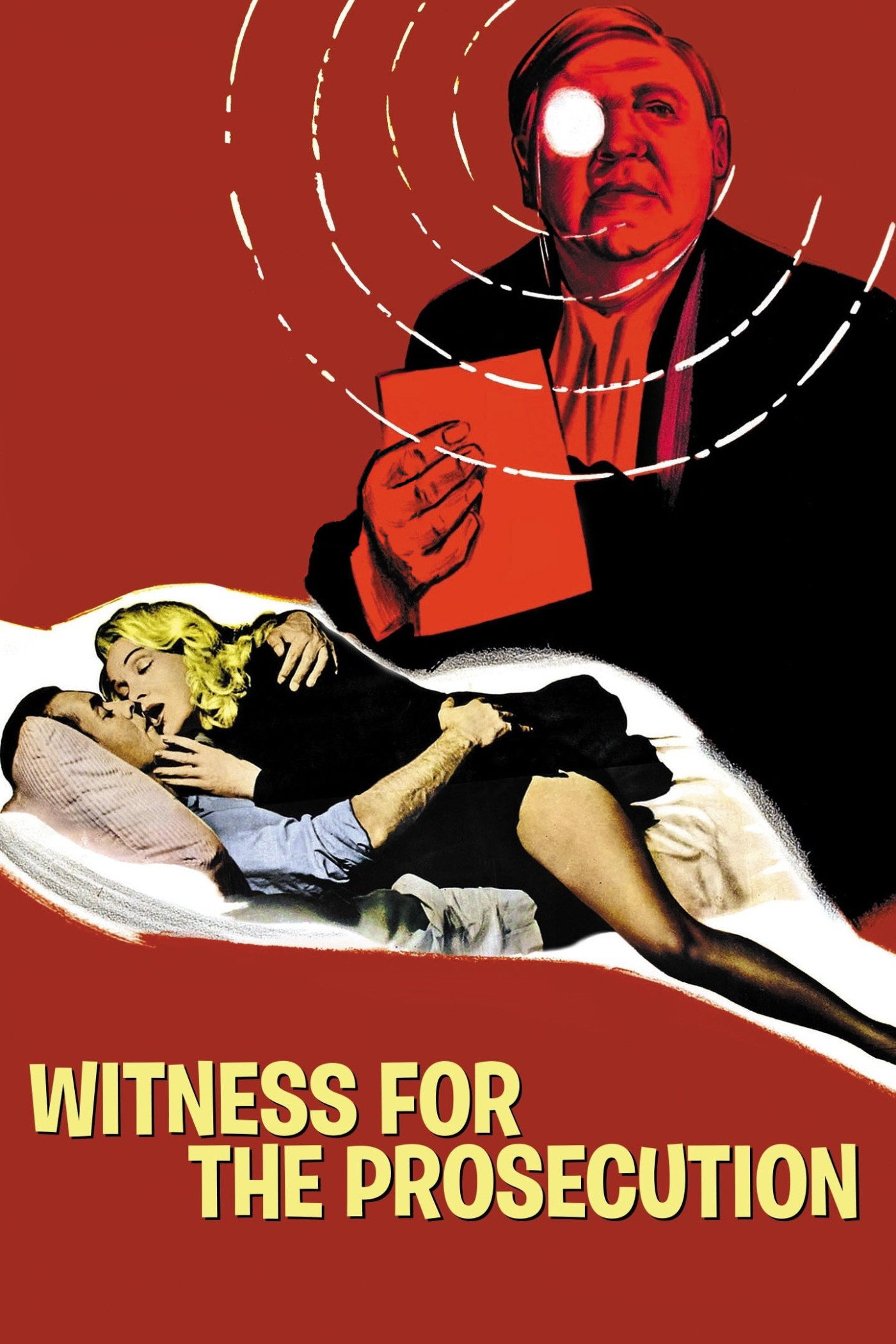
Critics’ reviews

Witness for the Prosecution (1957)

9 reviews from 9 publications. Critics’ score 82: 5 positive, 1 mixed, 0 negative.

Back to our review of Witness for the Prosecution

82
Positive
5
Mixed
1
Negative
0

Most critics warmly endorse Witness for the Prosecution, with praise clustering around Charles Laughton’s commanding, funny performance as barrister Sir Wilfrid. The reviews find Billy Wilder’s handling of Agatha Christie’s play sharp and assured, particularly in its dialogue, characterisation and courtroom storytelling. The barbed exchanges between Sir Wilfrid and Miss Plimsoll are a particular pleasure. Marlene Dietrich also earns strong notices, while the supporting performances help keep the legal proceedings lively.

Reservations centre on plot mechanics and the weight of the theatrical origins. Radio Times finds the intricate plotting slightly leaky without losing its enthusiasm. Time Out is the clear dissenter: it finds the drama heavy and argues that the plotting undermines Dietrich and Laughton’s credibility, while praising Tyrone Power and Alexander Trauner’s recreation of the Old Bailey. The spread therefore runs from wholehearted enjoyment to a mixed response, rather than outright rejection.

Radio Times
★★★★★ · Adrian Turner
100

This gleefully enjoyable film version of Agatha Christie's play from director Billy Wilder stars Tyrone Power and Marlene Dietrich in a tale of murder and testimony with an intricate, slightly leaky plot and trademark surprise ending. Wilder provides the broadest stage imaginable for Charles Laughton's epic, extravagant, inventive and hammy performance as the wily barrister.

Read the full review →
The Times
7 September 2018 · ★★★★★ · Kevin Maher
100

The critic calls it the definitive courtroom thriller with two startling final twists. They single out Marlene Dietrich’s naturalistic performance as the doting yet testifying wife and Charles Laughton’s commanding turn as the barrister.

Read the full review →
The AV Club
2 June 2021 · Gwen Ihnat
85*

The film is an odd, delightful standout in both Wilder’s and Christie’s careers. The critic singles out the humorous barbed interplay between Sir Wilfrid and Miss Plimsoll, along with Charles Laughton’s tremendous presence.

Read the full review →
Empire
1 January 2000 · David Parkinson
80*

The critic praises Billy Wilder's adaptation for its sharp dialogue, strong characterizations, and focus on Sir Wilfrid Robarts. Performances by Charles Laughton, Elsa Lanchester, Tyrone Power and Marlene Dietrich are singled out as particularly effective.

Read the full review →
Slant Magazine
13 February 2024 · Clayton Dillard
80*

The film is a triumph of effortless story execution, pinpoint humor, and acting masterclass, remaining vintage Wilder. The critic singles out Charles Laughton’s cunning, funny performance as the principled yet indulgent barrister Sir Wilfrid.

Read the full review →
Time Out
10 September 2012 · PH
50*

The undisputed star of this courtroom drama is Alexander Trauner's magnificent recreation of the Old Bailey, which is just as well since the theatrical origins give the movie a heavy, almost stolid flavour. Tyrone Power is surprisingly good, but the swift twists soon drain Dietrich and Laughton's roles of dramatic credibility.

Read the full review →
The New Yorker
8 February 1958 · John McCarten

The film builds up quite a head of suspense in its adaptation of the Agatha Christie play, with strong turns from Charles Laughton, Marlene Dietrich, and others.

Read the full review →
The New York Times
7 February 1958 · Bosley Crowther

The film comes off extraordinarily well as a courtroom melodrama thanks mainly to Billy Wilder's splendid staging of the courtroom scenes and a first-rate performance by Charles Laughton.

Read the full review →
Variety
31 December 1956 · Variety Staff

A courtroom meller played engagingly and building evenly to a surprising climax, transferred to the screen with competence under Billy Wilder's direction that generates quiet and steady excitement.

Read the full review →

Ordered by the weight we give each publication, then by score. Scores are normalised to 100; * means inferred from an unrated review. Summaries are ours, not quotations; follow the links for the reviews themselves. How we rate