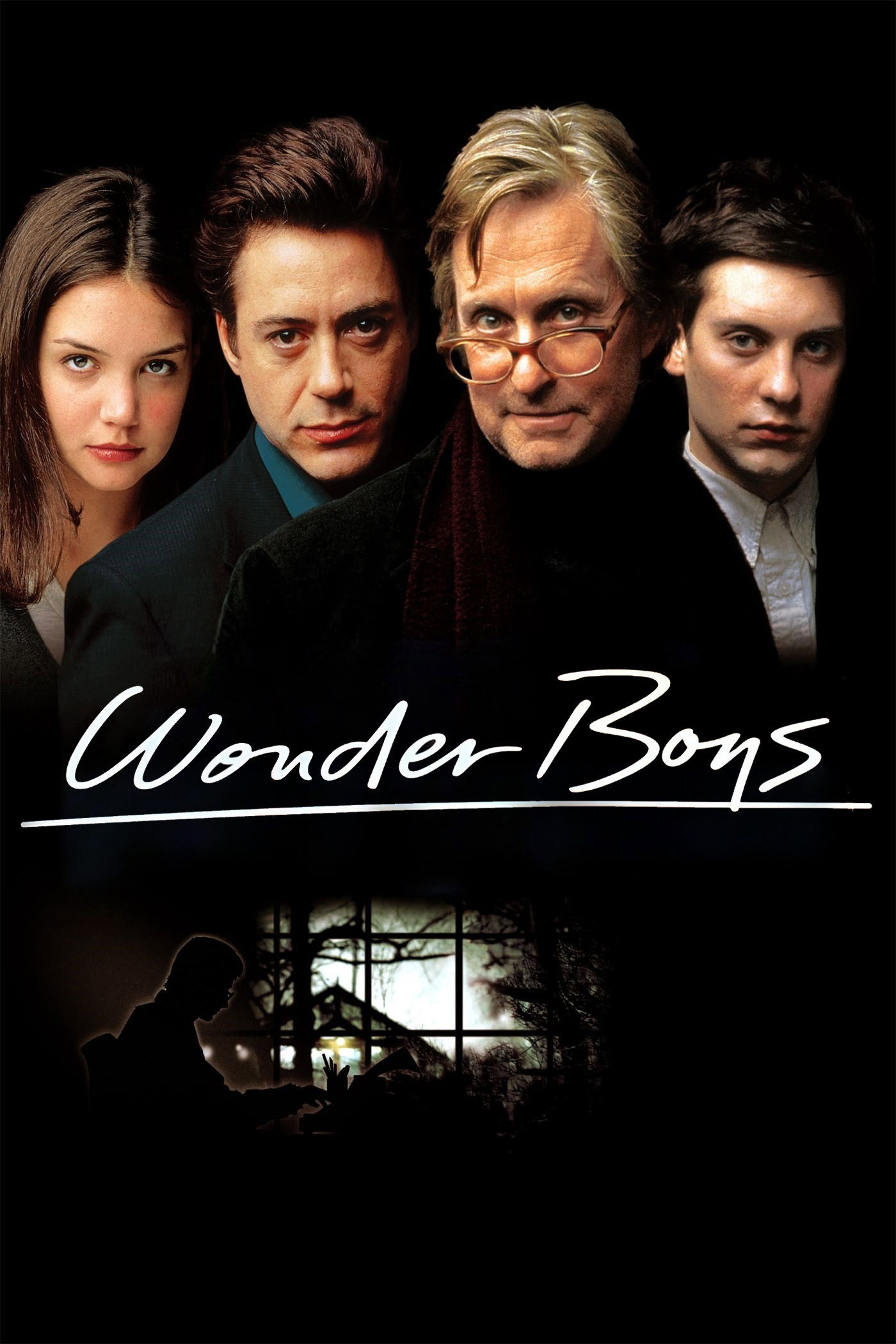
Hanson’s remarkably warm and understated film explores academic life and the bonds that build between emotionally frustrated men over chaotic events. The overall effect is like opening a present on Christmas morning as the broken men overcome isolation and commit to each other and their work.
The critic finds Wonder Boys a delightful and constantly surprising film that stands out from dumbed-down Hollywood with its literary references and jokes. He singles out the warmth felt towards the shambling protagonist Grady Tripp for praise.
Hanson weaves the quirky, dark strands of the professor's chaotic life—including affair, pregnancy, stalled novel and odd student—into a mesmerising, often moving drama with fascinating characters and wicked humour. Strong performances from Douglas, Maguire, McDormand and the supporting cast stand out.
The critic calls it a great movie and minor masterpiece that feels both timeless and contemporary. He singles out the witty screenplay unafraid of slapstick and the heart-felt drama devoid of sentiment, along with the generous ensemble performances.
Turan calls the film a pleasure for its generous spirit and sympathetic warmth toward flawed characters, crediting Hanson's fastidious direction and Kloves's adaptation of Chabon's novel. He singles out Michael Douglas's anchored performance as the once-formidable man gone to seed.
Ebert praises the film as an accurate and accomplished portrayal of campus life and midlife crisis, highlighting its character-driven story and Michael Douglas's nuanced performance as a stuck professor. He singles out the European-style preference for character over plot and the focus on trying to be a good teacher.
The film packs too many elements into a frenetic hybrid of coming-of-age drama, in-jokes about success and road movie, leaving most characters underdeveloped. Maguire's unnerving performance as the precocious student stands out amid the broad strokes of Douglas' lead role.
Scott finds the film a dud despite its strong cast and source material, criticizing Hanson's direction for smothering the screwball energy and resulting in a slow, muffled tone. He singles out Robert Downey Jr.'s manic insouciance as the element that rescues it from complete dullness.
Douglas delivers one of his most appealing performances as the befuddled professor, and the film entertainingly digresses through its campus discontents and collisions in a more comic mode than Hanson's prior work. Sophisticated dialogue and craftsmanship enhance the pleasure of the unusual confusion.
Levy hails the film as a superbly mounted screwball comedy with a delectably original reworking of the coming-of-age genre, praising its witty sophistication and flawless ensemble performances led by Michael Douglas. He singles out the tremendous charm from impeccable timing, right tone, and the gallantry of defeat in its loser characters.
The critic praises Michael Douglas's performance as the once-lionized writer Grady Tripp and the clever, witty script by Steve Kloves. The film is singled out for its intelligent take on the dissolution of promise and creative passion, though the ending is called a cop-out.
Ordered by the weight we give each publication, then by score. Scores are normalised to 100; * means inferred from an unrated review. Summaries are ours, not quotations; follow the links for the reviews themselves. How we rate