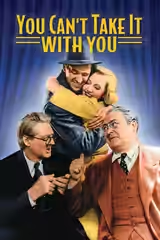
Most critics like it, and the warmest notices are the earliest. The 1938 reviews treat it as one of the best pictures of its year: Capra’s boisterous handling of the eccentric Vanderhof household, the set-pieces of the tax inspector’s visit and the night court, and an ensemble in which Edward Arnold, Jean Arthur and James Stewart are picked out again and again. Later writers keep the praise for the cast and for the romance between Alice and Tony, which more than one finds the most natural thing on screen.
The spread is wide. The reservations cluster around sentiment and message. Time Out finds Capra at his preachiest and thinks the appealing leads cannot save a trite story, and Empire calls the plotting clumsy, the characterisation lazy and the view of capitalism naive. Even admirers concede that some scenes run too long and that the broader comedy carried over from the play has not aged well. The dissent, notably, comes from British publications decades on.