Capra’s version of the Kaufman and Hart play is at its best when the Vanderhof household is simply making noise, and Stewart and Arthur are as easy together as any couple he filmed. Then Grandpa starts making speeches, and it becomes a long two hours.
Frank Capra took the Kaufman and Hart play about a Manhattan household in which nobody works for money and turned it into a film about what money does to people, which is a heavier load than the play was built to carry. Robert Riskin’s screenplay keeps the family, adds Edward Arnold’s banker and his plan for a munitions plant, and gives Lionel Barrymore’s Grandpa Vanderhof more to say than any grandfather should. The result is a comedy that is lovely for about an hour and a sermon for much of the rest. We recommend it, warmly, for the house and the couple in it, and we would not blame anyone who drifted off during the speeches.
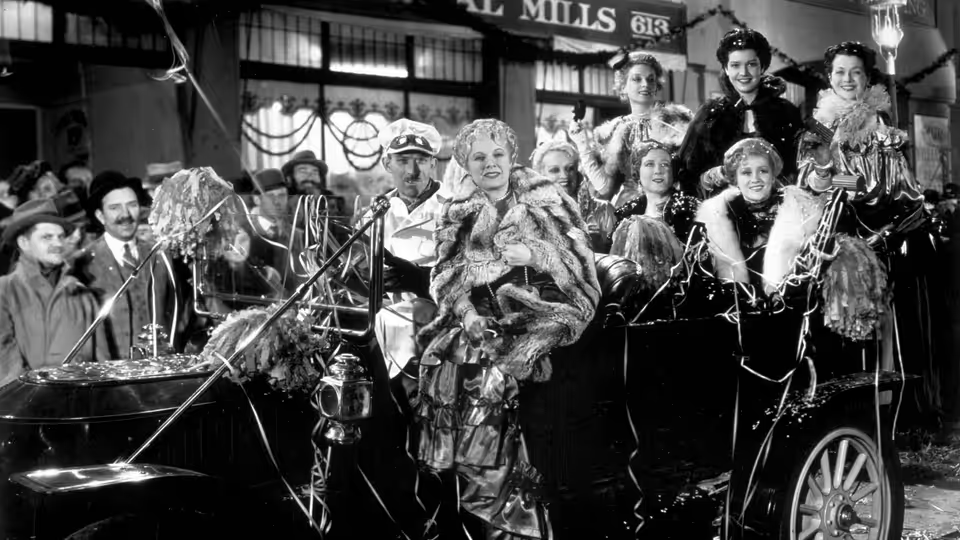
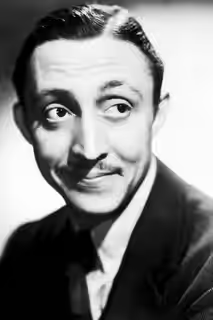
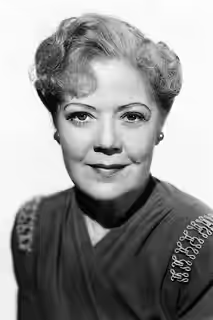
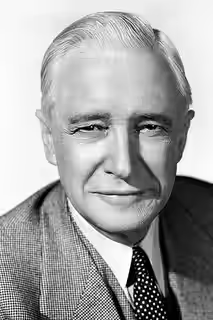
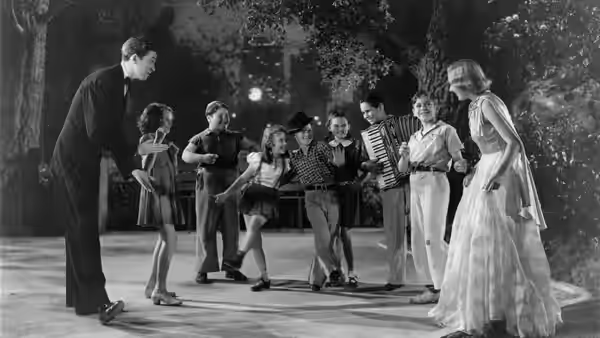
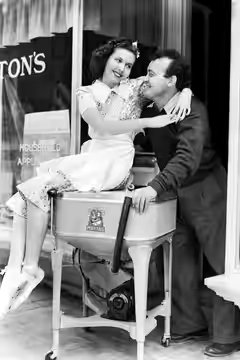
The house is the thing. Paul Sycamore (Samuel S. Hinds) and DePinna (Halliwell Hobbes), an iceman who came to deliver and never left, make fireworks in the cellar. Essie (Ann Miller) dances across the parlour in a tutu, her husband Ed (Dub Taylor) plays the xylophone for her, Penny (Spring Byington) types plays because a typewriter was once delivered by mistake, and Kolenkhov (Mischa Auer) watches Essie dance and announces that, confidentially, it stinks. Joseph Walker shoots the rooms in depth, so there are always two or three things going on behind whoever is talking, and Gene Havlick cuts to the racket rather than to the lines. Nobody waits their turn, and that is the point of the place.
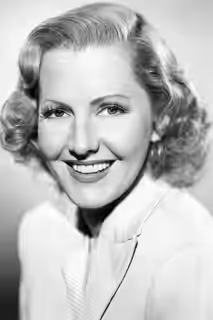
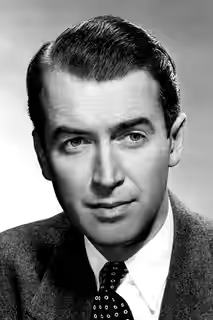
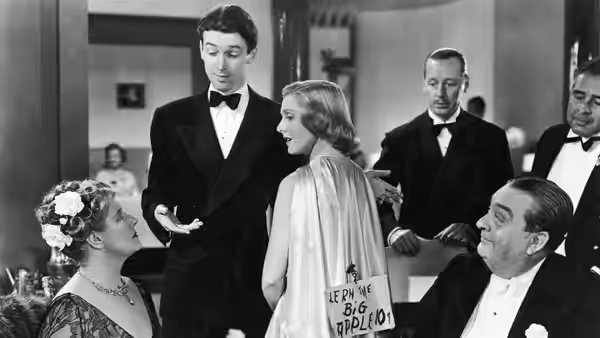
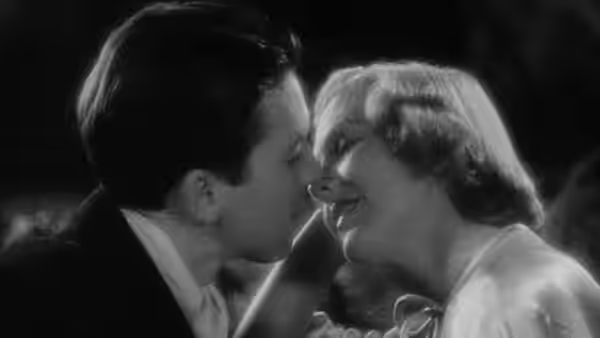
Then there is Stewart and Arthur. Tony Kirby is the boss’s son, Alice is his stenographer, and Riskin gives them the film’s best scenes away from the house. In a restaurant Tony explains the trick for getting out of anywhere: scream, and everyone will assume you have seen a mouse. She tries it. We laughed, and then found ourselves more moved than the scene had any business making us, because Stewart, in his first film for Capra, plays Tony as a young man who has never been allowed to be silly before, and Arthur watches him do it with a face that says she is going to have to look after him. Nobody pushes the romance. It is simply there, and the film is calmer every time it goes back to it.
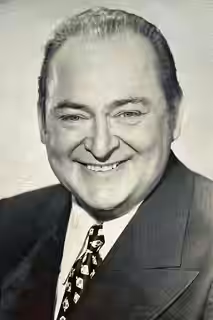
Arnold is excellent as Kirby, a large man who lives on bicarbonate of soda, and he lets you see that the indigestion is the character. Donald Meek’s Poppins, a clerk Grandpa talks out of his job in the film’s first ten minutes, is a small, exact piece of business. Irene Lentz and Bernard Newman dress the Kirbys in clothes that look expensive and uncomfortable, and the Vanderhof household in whatever they had on when the idea struck them.
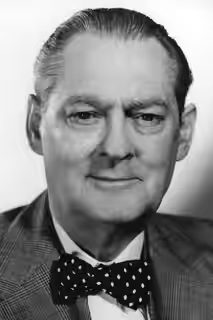
Then Grandpa talks. Barrymore plays Vanderhof as a man who has worked out how to live and would like to tell you, and Riskin lets him tell you several times: about the tax man, about isms, about what a man actually needs. Each speech stops the film so that it can be delivered, and Dimitri Tiomkin’s score swells underneath to make sure you have heard. We were bored, and then we were irritated at being bored in a film that had been so pleasant a quarter of an hour earlier. The capitalism the film argues against is a cartoon, and the freedom it argues for depends on a house that somebody, somewhere, is paying for; the film never asks who. At 126 minutes it is half an hour longer than its material, and the last stretch, which takes the family somewhere we will not describe, is where Riskin does his heaviest lifting.
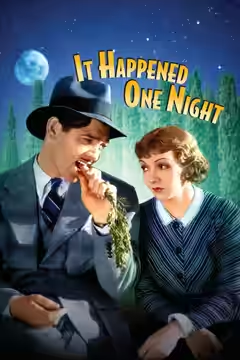
Set against Capra’s own work, it sits between It Happened One Night, which trusted its couple to carry the meaning, and Mr. Smith Goes to Washington, which came next and made the speeches the whole point. Most critics have been kinder to the sermon than we are; the reviews at the time thought the added seriousness deepened the play. We think it slowed it down.
Watch it for the house, the fireworks and the mouse. When Barrymore clears his throat, that is a good moment to put the kettle on.