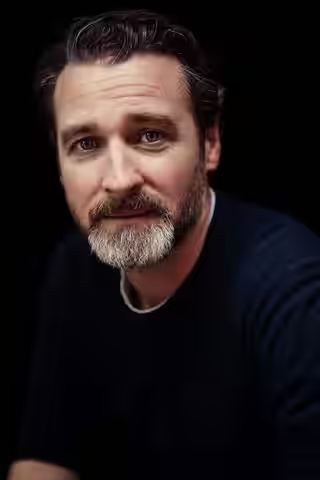
Neil Berkeley gives artists and comedians time to explain themselves, and we value his patience. In Paralyzed by Hope, that generosity produces a revealing portrait, though his admiration makes the film longer and safer than it needs to be.
Fi1m perspective
When Maria Bamford explains where her comedy comes from in Paralyzed by Hope: The Maria Bamford Story (2026), Neil Berkeley keeps the camera's attention on the speaker. He is both cinematographer and, alongside Judd Apatow, co-director, and the simple presentation suits the candour of the conversation. We were moved by Bamford's willingness to explain the experiences behind her material. It is a good documentary whose directors take too long to establish how much their subject deserves our attention.
His feature debut, Beauty Is Embarrassing (2012), follows the artist Wayne White; Harmontown (2014) takes to the road with Dan Harmon's podcast tour. With Gilbert (2017), about Gilbert Gottfried, the method becomes particularly clear: Berkeley's persistent solo filming gives a private comedian room to talk. By Group Therapy (2024), he is putting comedians into moderated group conversations rather than following one subject. The format changes, but giving performers time to talk remains central to the work.
Berkeley frequently serves as his own cinematographer, using small crews or filming alone to help subjects become comfortable with the camera. For the Bamford film, an initial plan built mainly around observational footage gave way to an archive-and-interview structure in pursuit of a more linear story. That choice makes her work and life easy to follow, but it also leaves the film more conventional than its subject. Berkeley's unobtrusive images keep the attention on the speakers; the trouble is how much testimony survives the edit.
Editor James Leche has to accommodate the comedy and the testimony, and too many worthwhile pieces have been retained. At 116 minutes, Paralyzed by Hope becomes tiring through accumulation, leaving its most revealing conversations less room to register. That is the risk in Berkeley's approach: getting people to speak freely does not mean that everything they say needs to stay in the film. Start with the Bamford film, especially for its account of how she makes comedy, and forgive the directors for staying a little too long.
Biography
Neil Berkeley is a documentary filmmaker and producer. His feature credits as director include Beauty Is Embarrassing (2012), about artist Wayne White, Harmontown (2014), following writer Dan Harmon, and Gilbert (2017), a portrait of comedian Gilbert Gottfried.
He co-directed Paralyzed by Hope: The Maria Bamford Story (2026) with Judd Apatow, also serving as producer and cinematographer on the film. Berkeley co-directed Who Is Martin Mull? (2026) with Bob Saget, completing the project after Saget’s death. He is an Emmy nominee and has directed episodes of television series including SNL50: Beyond Saturday Night.