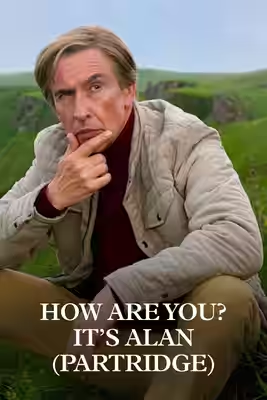
Steve Coogan still makes Alan Partridge worth spending time with, but this mental-health mockumentary leans too heavily on familiar mistakes. The supporting cast and a few sharply observed digressions keep an uneven series going.
How Are You? It’s Alan (Partridge) sends Alan into a mental-health documentary, and we found the result funny enough for established admirers, though too patchy to recommend more widely. The subject gives his familiar blunders somewhere awkward to land, without requiring much explanation of why they matter. There is a useful comic risk in having this particular man discuss something that requires care. The series does not find enough different ways to make that risk pay off.
Steve Coogan remains the reason to persevere. Alan’s mistakes still feel sufficiently personal to be funny, even when the surrounding idea is thin, and Coogan keeps him recognisable through the blunders. The pleasure depends on how thoroughly Alan he remains while getting things wrong. Coogan shares the writing with Rob and Neil Gibbons, and together they can still find the peculiarities that make his behaviour worth watching. They also seem too willing to trust that recognition alone will keep us amused.
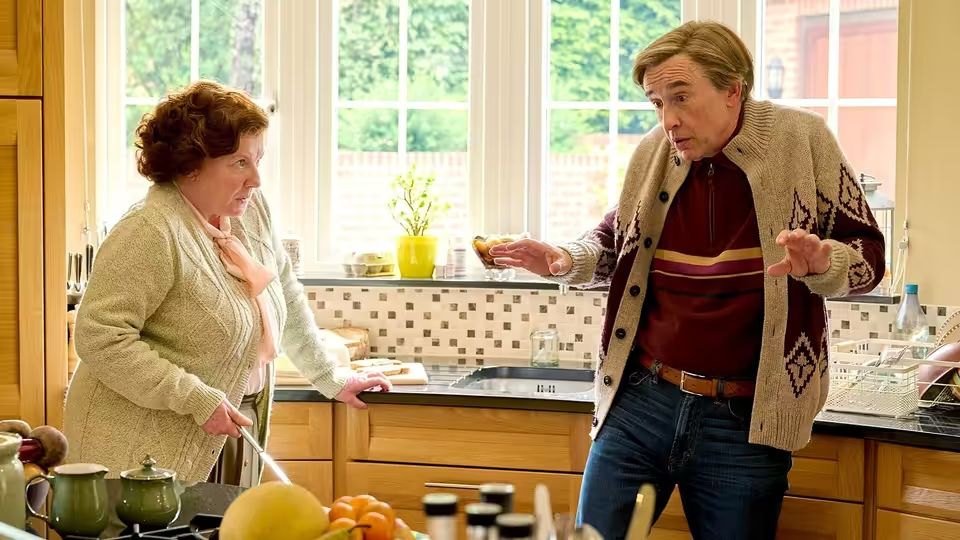
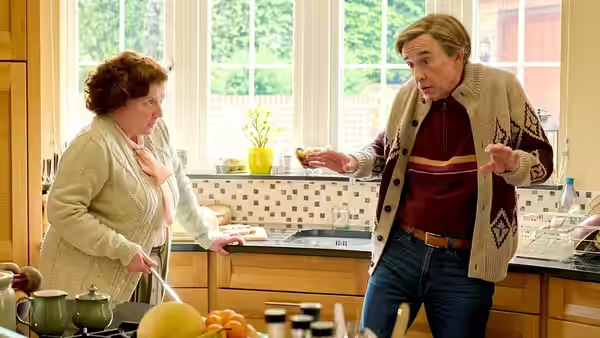
Rob and Neil Gibbons also direct, using a scrappy mockumentary style that helps the jokes appear to have slipped through by accident. The magazine photoshoot interview, with its fleeting information about Alan’s home, is a particularly good use of that approach. We laughed, and wanted longer to take in the domestic oddities. Keeping it brief is nevertheless the right decision: there is no need to explain why these details belong to Alan. The sequence trusts us to notice them, and gives the series a comic precision it too often lacks elsewhere.
Felicity Montagu’s Lynn is a welcome part of the supporting cast, which also includes Katherine Kelly as Katrina. Their presence helps keep the series watchable when the central premise begins to feel stretched, though the writing does not become more reliable simply because we like the company. There is nothing wrong with enjoying a familiar character for a few more minutes. Here, however, that pleasure is asked to cover too many passages that need another joke.
The mental-health premise is less dependable. Discussing mental health ought to give Alan plenty of opportunities to misunderstand or offend, but too many jokes feel transferable to any documentary he might front. Mental health is a reasonable subject for comedy; the question is how precisely the jokes are aimed. Rob and Neil Gibbons and Coogan do not find enough fresh situations to justify the choice. In weaker stretches, familiarity makes the next joke easier to anticipate.
Against the standards of character comedy, this is an uneven continuation with enough good material to make its lapses irritating. The documentary form still suits Alan, and there is pleasure in watching him mishandle it, but affection is doing too much of the work. Anyone coming for a consistently inventive series about the awkwardness of discussing mental health should lower those expectations. Come for Coogan and the brief, peculiar details, and be prepared for stretches when the next laugh takes longer than it ought to.