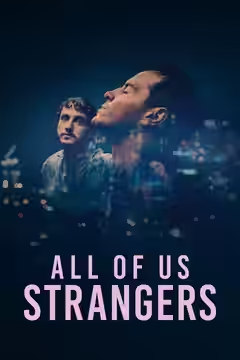
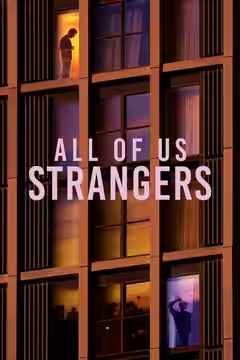
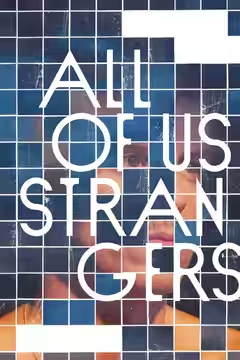
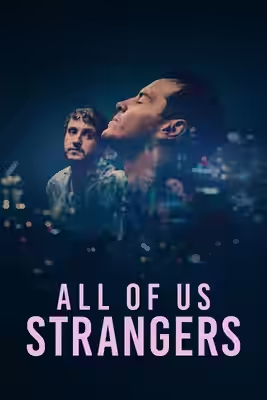
Andrew Haigh sends Andrew Scott home to parents who died when he was a boy, and the scenes with Claire Foy and Jamie Bell are as good as anything he has made. The romance beside them is thinner, and the ending leans on the songs.
Andrew Haigh has made a ghost story in which nobody is frightened. Adam (Andrew Scott) is a screenwriter living alone near the top of a new tower block with almost nobody else in it. Looking for something to write about, he takes a train to the house he grew up in, and his parents are inside. They died when he was a boy; here they are, younger than he is now, asking whether he has eaten. Haigh, writing and directing from a novel by Taichi Yamada, treats this as the most ordinary thing in the world, and for an hour the film is as good as anything he has made.
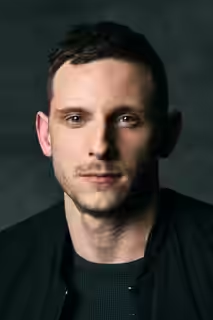
Claire Foy and Jamie Bell are the reason. They play Mum and Dad, which is what the credits call them, as people from another decade who love their son and do not know what to do with the man he has become. In the kitchen Adam tells his mother he is gay, and Foy plays the next minute as a woman searching for something kind and coming up with the wrong words, one after another. We came apart in that scene, quietly, and it was her face that did it: not the disapproval but the fear underneath it, which is love with nowhere to go. Bell has a later scene about something heard through a bedroom door years ago, and he plays it with his eyes down, and hardly moves, and it is enough.
Jamie D. Ramsay shoots the two worlds so that you always know which one you are in. The flat is glass and grey, lit by a city that never seems to have anyone in it, and Adam is often small against a window. The house is lamplight and Christmas colours, with a haze on everything as if someone had breathed on the lens. Sarah Finlay’s production design keeps the house as it was left, down to the wallpaper and the records, and Sarah Blenkinsop puts Mum in a blouse and cardigan nobody has bought new since the 1980s. Jonathan Alberts cuts without establishing shots, so Adam falls asleep in one place and wakes in another and we stop asking how. The film would fall apart if it explained itself.
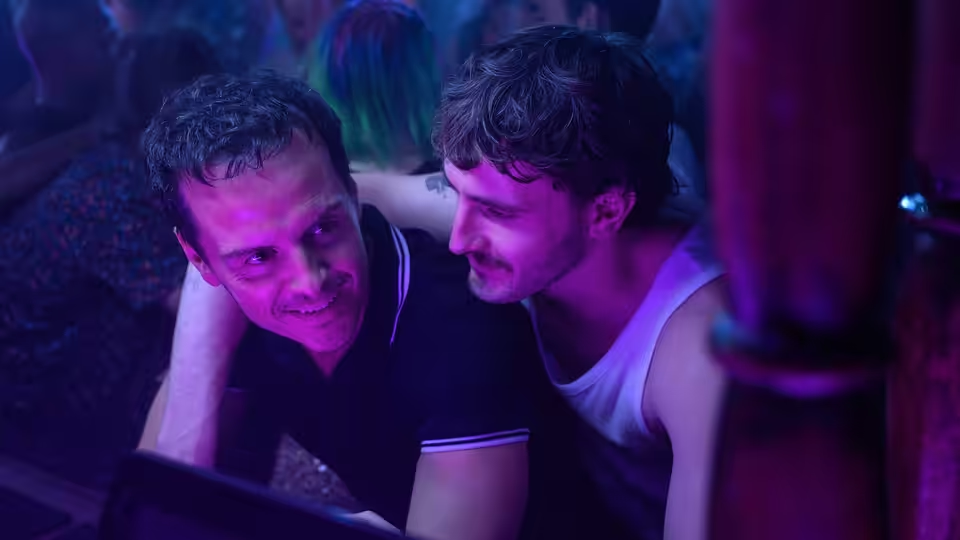
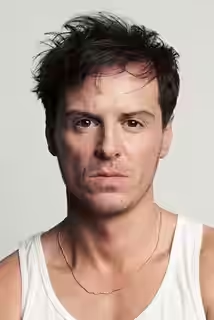
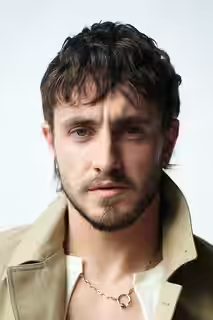
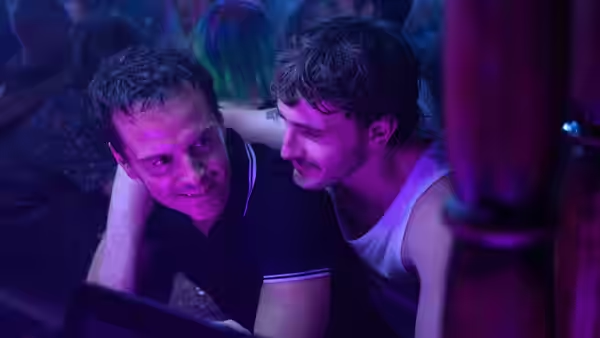
Paul Mescal’s Harry is the neighbour, and the other half of the film. Mescal is good at the loneliness under the charm, and the early scenes between the two men are slow and honest about how people who have been alone a long time get used to being touched. Scott is remarkable throughout; he has the stillness of a man who has learnt to want almost nothing, and he lets it crack a little at a time. But Harry is written thinner than the parents. He is there to be kind and a bit sad, and we learn about his life in a handful of lines while Adam’s takes up the whole film. Most critics have been carried past this. We noticed, and it is the gap between the film’s two halves.
Emilie Levienaise-Farrouch’s score is strings, held low, and it mostly stays out of the way. The songs do not. Haigh uses the pop of the decade Adam’s parents stopped in, and there is a stretch near the end, which we will not describe, where a record is asked to carry more than the writing has earned. We were moved, and we could feel the film deciding that we should be, which is not quite the same thing. One or two critics have called the ending sentimental. We would say it is a step softer than what came before, and the step shows.
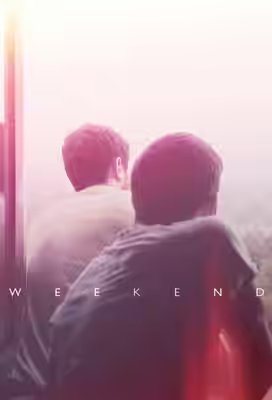
Set against Haigh’s own films, this is the one where he lets go. Weekend kept two men in a flat and listened to them; 45 Years watched a marriage take a knock and stay standing. Both were dry. This is not, and it is braver for it, even where it goes soft. The consensus is warm and we are a little short of it, but only a little.
See it in a cinema if you can, where the silences in the kitchen are harder to get away from. It is 105 minutes and a 15, and you will want to ring somebody afterwards. Choose carefully who.