Aleksandre Koberidze’s three-hour search across rural Georgia is shot on an old mobile phone and looks like nothing else we have seen in a cinema, and there are stretches where it is a trial. For the patient it is worth it, with reservations.
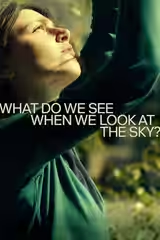
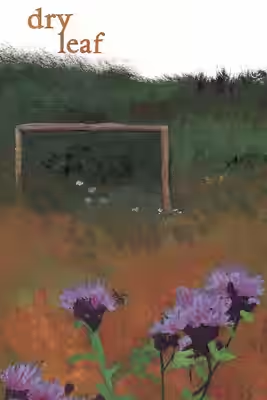
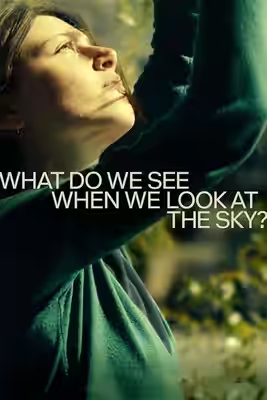
Aleksandre Koberidze follows What Do We See When We Look at the Sky? (2021) with a film about a father driving round the villages of Georgia looking for his daughter, and he has shot the whole of it on a Sony Ericsson mobile phone of a kind nobody has owned for years. It runs 186 minutes. It is slow, it is frequently lovely, and it asks more of the viewer than it strictly needs to. If patience is something you can bring to a film, this repays it; if it is not, three hours will feel like four.
Irakli (David Koberidze) learns that his daughter, who has been photographing village football pitches across the country, has stopped calling. The police take a statement. He gets in his car with Levan (voiced by Otar Nijaradze), a friend nobody can see, including us, and sets out to retrace her route. Koberidze never explains Levan and never treats him as a joke; the passenger seat is empty, a voice comes from it, and the film carries on.
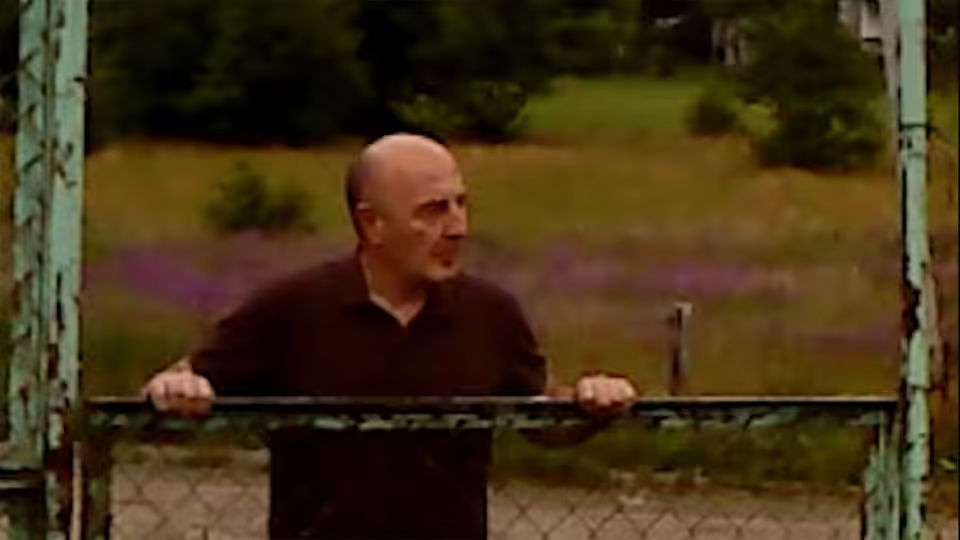
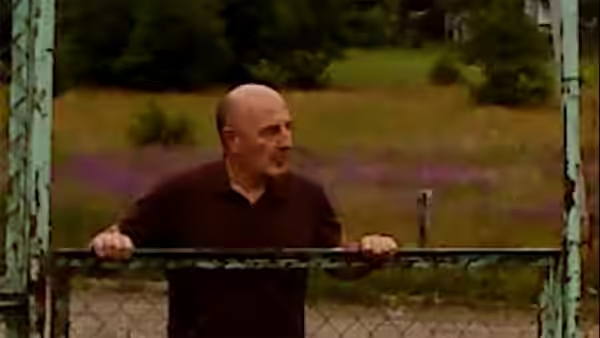
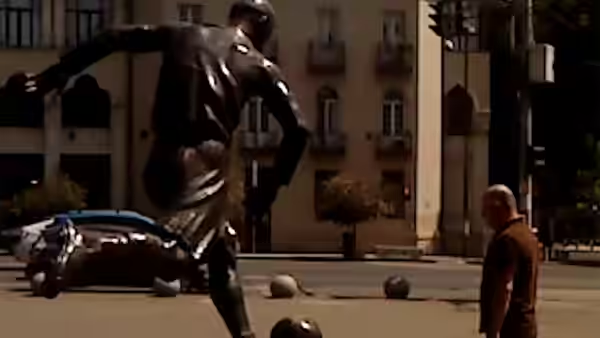
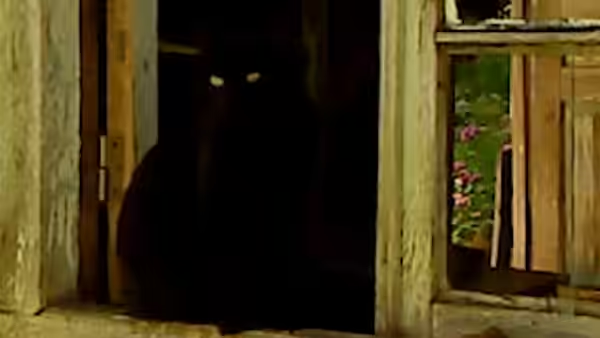
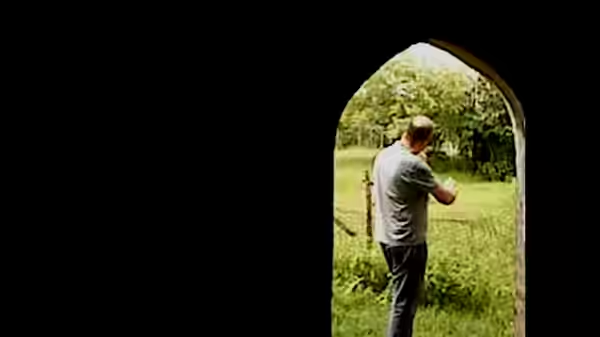
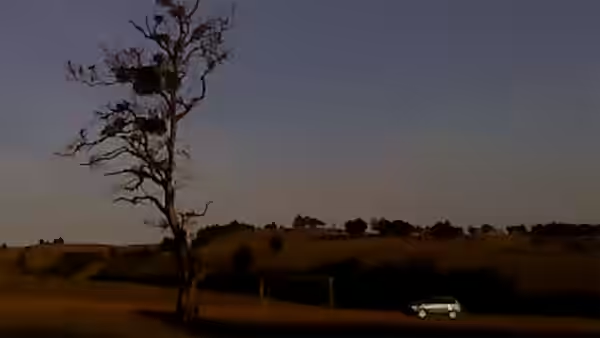
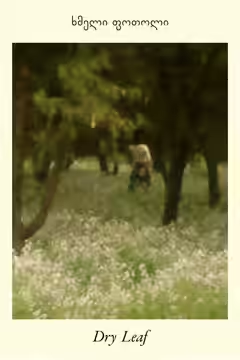
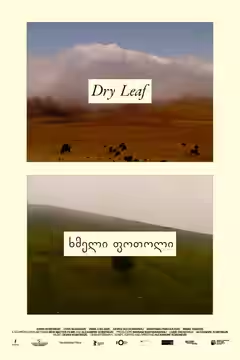
The phone is the film. Koberidze is his own cinematographer and editor, and the camera he has chosen cannot see much. A cow at forty yards is a brown rectangle. Headlights at dusk bloom into squares of white and yellow. A boy running across a pitch is a dozen pixels that reorganise themselves every step. Faces up close survive, just, and hands survive better than faces. For the first twenty minutes we took it for a stunt. Then we noticed we were leaning forward, working out what a moving smudge was before the film told us, and that a countryside we had never visited had become something we were building ourselves, from almost nothing.
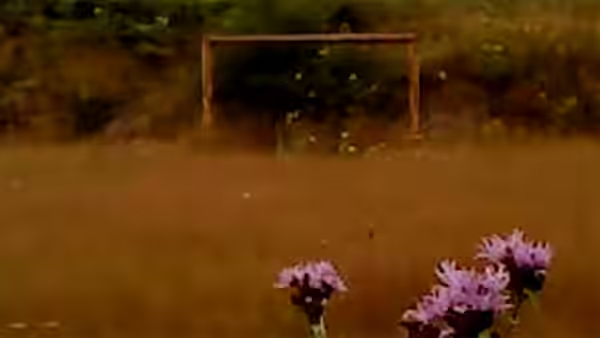
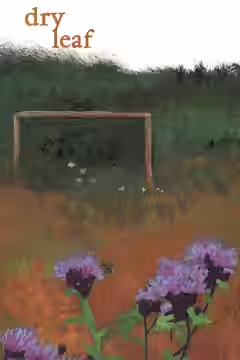
The pitches are the film’s best idea. Every village has one, a rectangle of rough grass with goalposts and no nets, and most of them are empty, or have a cow on them, or two children and a ball. They were made for villages with more people in them, and the film does not need to say so; the emptiness says it. When a match does break out, with men in mismatched shirts and a referee nobody listens to, Koberidze holds on it for as long as it lasts, and one of these, late in the second hour, moved us far more than a picture this rough had any right to. Giorgi Koberidze’s score is used sparingly, and when it does arrive under the driving it lifts the road without telling us what to feel about it.
What does not work is the length, and the way the search goes missing along with the daughter. For long stretches Irakli stops asking about her, and the film stops too, and watches a dog, a river, a man fixing a gate. Some of this is the point; not all of it is. Somewhere past the two-hour mark we were bored, and then cross about being bored, because the first hour had promised something with more shape. The invisible passenger, so light in the opening, becomes a device the film reaches for when a scene needs a lift, and by the end we could feel it reaching.
Against Koberidze’s own last film this is the harder sit. What Do We See When We Look at the Sky? had a town, a love story and a World Cup on the television to hold it together, and its digressions came back to somewhere. Dry Leaf has a road and a rumour, and its digressions are the road. The image is bolder here and the story slighter, and the trade is not entirely in the film’s favour.
See it in a cinema if you possibly can. Blown up, the pixels become a way of seeing, and the eye learns it in a quarter of an hour. At home it will look for the first ten minutes as though your connection has dropped, and you will be tempted to wait for it to recover. It does not recover. That is the film.