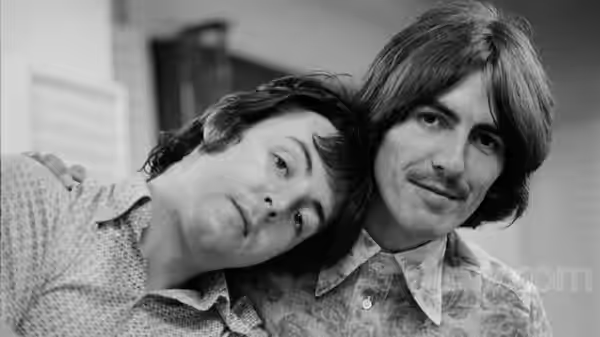
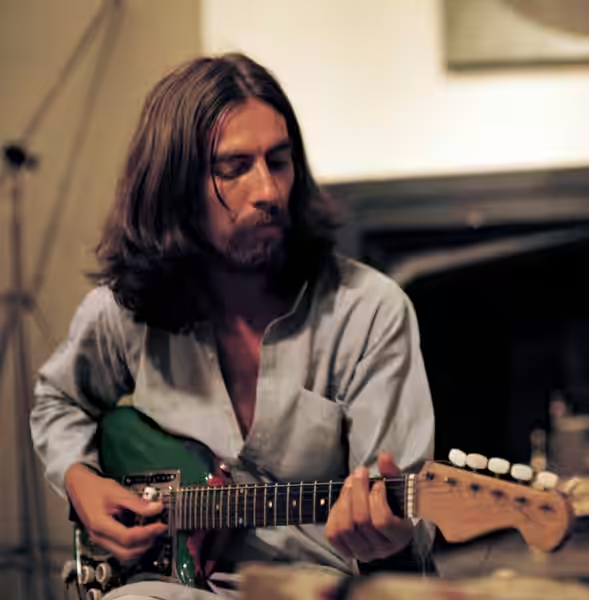
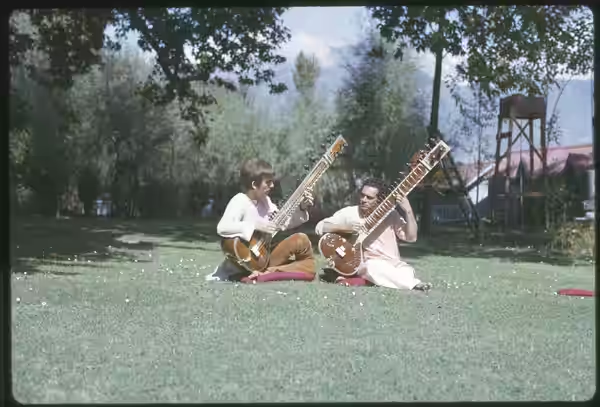
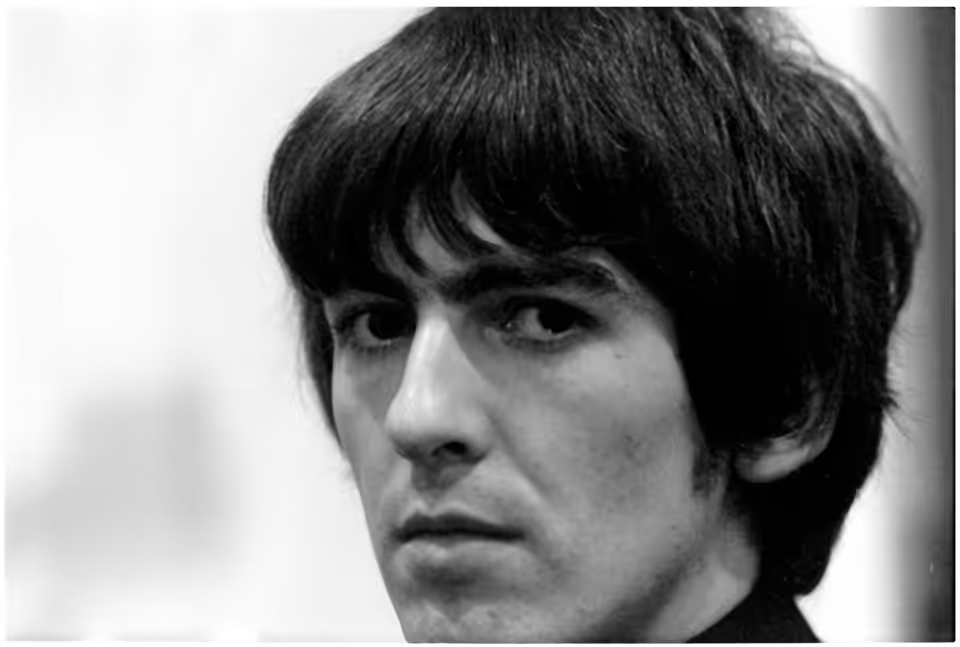
George Harrison looking toward the camera in a black-and-white close-up
Film review

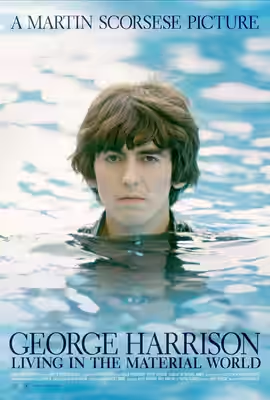
George Harrison: Living in the Material World

2011 · Directed by Martin Scorsese · 3h 28m

In a sentenceThree and a half hours with George Harrison, and somehow the letters home make the strongest impression

Early photographs and letters home to his parents bring George Harrison into view alongside interviews with people from his life. Studio outtakes and archive footage follow his work in music, with “While My Guitar Gently Weeps” among the recordings Martin Scorsese draws upon. His search for spiritual meaning runs alongside that work. The letters describe his experiences in matter-of-fact terms, adding his own account to the recollections of those who know him. The film approaches his private life through this combination of family correspondence, music and remembered encounters.

Fi1m review

Martin Scorsese’s affectionate portrait of George Harrison is worth its considerable length for the music and personal archive. It is less satisfying when admiration discourages difficult questions, and it assumes more knowledge than newcomers may possess.

Martin Scorsese gives George Harrison 208 minutes, and enough of that time is rewarding to make the commitment worthwhile. The music, photographs and personal material keep the portrait engaging even when its organisation is untidy. We recommend it to anyone already interested in the musician, with a warning that affection sometimes prevents the film from asking enough. It needs more curiosity about his weaknesses and rather less confidence that we arrive knowing the story.

The archive is the main reason to settle in. Early photographs, footage and studio outtakes give the film something more useful than a succession of people explaining that their subject mattered. We can hear the music and look at the man rather than rely entirely on other people’s memories. The editing makes those changes of source feel natural, so moving between an interview and archive material rarely interrupts our interest in what is being said.

We were moved by the plainness of the letters to his parents. Their everyday tone makes room for a recognisable life away from the music, without insisting that every word must tell us something profound. The interviews bring warmth and closeness, but the letters let us spend time with him without someone else explaining what he was like. They deserve their place alongside the recordings.

The use of “While My Guitar Gently Weeps” is especially effective, allowing the music to carry feeling that commentary would only labour. The musical arrangement gives the long account some movement, returning our attention to why the work matters whenever recollection threatens to become dutiful. His spiritual search gives the film a subject beyond the familiar sequence of achievement and applause. Martin Scorsese takes that search seriously, and his patience with it is one reason the long running time is sometimes justified.

Yet taking a person’s beliefs seriously should leave room to question the person holding them. The treatment of his weaknesses is too gentle, and the interviews do not consistently turn their closeness into a clearer understanding of his private self. We hear affection, but the difficult parts of his life deserve more sustained attention than they receive. That restraint becomes frustrating across such a long film, particularly when there is so much opportunity to ask more.

The length also makes the gaps in explanation more noticeable. Events sometimes pass too quickly, and details arrive without enough context, so a newcomer can be left doing homework during a supposedly generous account. Martin Scorsese is better at keeping a passage alive than at deciding how much the whole film needs, and familiarity with the life helps cover the gaps. This is a worthwhile music documentary for the interested, not the place to expect a brisk introduction or an exhaustive reckoning. Give it the evening if the songs already mean something to you.

Critical consensus AI synthesised

71
Positive
9
Mixed
6
Negative
0

Most critics find Martin Scorsese’s portrait of George Harrison affectionate and moving, with praise concentrated on the rare archival footage, interviews and use of music. The reviews repeatedly value the access to Harrison and those around him, even when they question how much it reveals. His spiritual search gives the film emotional weight for several critics, while the editing draws praise for bringing together an abundance of material.

The reservations concern length, missing context and a reluctance to probe Harrison’s failings. The response ranges from warmly appreciative to mixed, with no outright negative verdicts in the supplied scores. Critics disagree most sharply over how revealing the portrait is: Paste finds fresh perspective in the interviews and archive, while Slant Magazine sees a bloated missed opportunity offering little unexpected insight. Several reviews also suggest that unexplained details make the film less accommodating to newcomers than to existing admirers.

The Hollywood Reporter
4 September 2011 · festival review · Todd McCarthy
85*

McCarthy finds the documentary richly satisfying and consistently engaging. He especially praises its extraordinary archival footage, intimate interviews, and wealth of musical material.

Read the full review →
Los Angeles Times
5 October 2011 · Robert Lloyd
80*

Lloyd finds Scorsese’s documentary a lovely, emotionally rich portrait of Harrison, though it leaves out information and sometimes fails to explain what it includes. He especially praises its musical arrangement and depth of feeling.

Read the full review →
Evening Standard
10 April 2012 · The Standard
75*

The critic finds the film a long, loving tribute that sometimes struggles to uncover Harrison’s private self. The archive and interview material is especially praised for its editing.

Read the full review →
The Guardian
29 September 2011 · Peter Bradshaw
75*

Bradshaw finds the documentary affectionate and cherishable, though indulgent and overlong. He singles out the thrilling use of “While My Guitar Gently Weeps” and the stunning early photographs.

Read the full review →
Variety
4 September 2011 · festival review · Peter Debruge
75*

Debruge finds the documentary a thoughtful, emotionally engaging portrait rather than mere hagiography. He praises its exploration of Harrison’s lifelong spiritual search, while noting that its rapid chronology and unexplained details can leave newcomers behind.

Read the full review →
The AV Club
5 October 2011 · Noel Murray
70*

Murray finds the documentary shaggy but ultimately moving, with its focus on Harrison’s search for meaning giving the film emotional force. He praises Scorsese’s use of studio outtakes and archival footage, while faulting the film for not probing Harrison’s weaknesses more deeply.

Read the full review →

Straight answers AI written, from our review

Is George Harrison: Living in the Material World worth watching?
George Harrison: Living in the Material World is worth watching for anyone already interested in the musician, and we scored it 74. The archive of photographs, studio outtakes and letters home to his parents rewards the 208 minutes, but Martin Scorsese's affection keeps him from asking hard questions, and newcomers will find events passing without enough context. Give it the evening if the songs already mean something to you.

How long is George Harrison: Living in the Material World, and what is it rated?
George Harrison: Living in the Material World runs 3h 28m. It is a documentary film.
Where can I watch George Harrison: Living in the Material World in Poland?
George Harrison: Living in the Material World is not on any streaming or rental service in Poland at the moment. Availability is checked daily.
What should I watch after George Harrison: Living in the Material World?
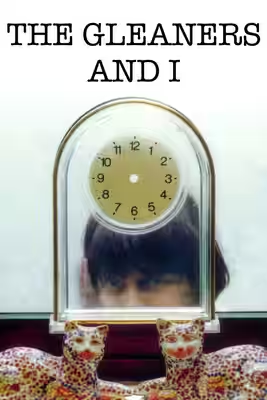
After George Harrison: Living in the Material World, try Buena Vista Social Club (1999, Fi1m 76): Patient company with musicians whose pleasure in playing needs little explanation. Then Amy (2015, Fi1m 81): Archive footage builds a more troubling account of musical talent and public attention; and The Gleaners and I (2000, Fi1m 85): Another patient portrait of people seeking meaning outside the obvious measures of success.

Cast

Awards

BAFTA Film Awards, 2012

Nominated
Best Documentary

Broadcast Film Critics Association Award for Best Documentary Film, 2011

Won
Broadcast Film Critics Association Award for Best Documentary Film

Directors Guild of America Award for Outstanding Directing – Documentaries, 2011

Nominated
Directors Guild of America Award for Outstanding Directing – Documentaries

If you liked this, try…

  1. The Last Waltz (1978) · not reviewed yetMusical performances hold the attention, with recollections offering a less tidy history.

  2. Buena Vista Social Club (1999, Fi1m 76)Patient company with musicians whose pleasure in playing needs little explanation.

  3. Amy (2015, Fi1m 81)Archive footage builds a more troubling account of musical talent and public attention.

  4. The Gleaners and I (2000, Fi1m 85)Another patient portrait of people seeking meaning outside the obvious measures of success.

  5. Searching for Sugar Man (2012, Fi1m 74)A musician’s life becomes a mystery, with the songs keeping curiosity alive.

Free account

Know what to watch tonight

Two lists that know where things are streaming, collections you can share, your own score beside ours, and Discover that remembers what you have seen.

  • Want to see, sorted by what is streaming now
  • Seen, with your score out of ten
  • No adverts, ever