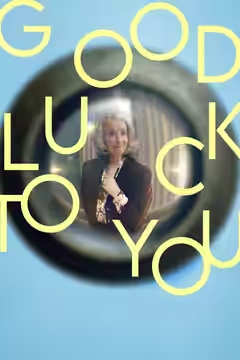
Emma Thompson and Daryl McCormack make this frank drama about sexual pleasure funny, awkward and moving. Katy Brand’s script occasionally turns conversations into lessons, but Sophie Hyde gives the actors room to be less tidy.
Sophie Hyde’s Good Luck to You, Leo Grande is warm, funny and worth the occasional wince at dialogue that sounds too carefully prepared. It asks us to take an older woman’s sexual curiosity seriously without treating her embarrassment as something shameful, and mostly earns that trust. Katy Brand’s screenplay gives Nancy Stokes a sex worker to talk to and a formidable amount to say. Emma Thompson and Daryl McCormack make the exchanges engaging even when we can hear the lesson coming.
Nancy’s list of desires is a good comic starting point because it makes something intimate sound reassuringly manageable. We laughed, then felt rather sad: she can put her wishes on paper more easily than she can ask for them. Thompson makes that difficulty recognisable without asking us to find everything Nancy says endearing. There is something aggravating about her, and the performance benefits from allowing it. Her embarrassment never becomes an excuse to stop paying attention to how she treats the person listening.
McCormack’s Leo Grande needs to be more than an agreeable answer to Nancy’s difficulties, and the performance does patient work towards that. His ease could make the exchanges feel one-sided, with Nancy supplying every complication and Leo supplying every reassurance. Instead, McCormack makes listening interesting: we keep wondering how much of his attention is professional and how much Nancy can reasonably ask of him. The chemistry works because both actors remain worth watching when the other is speaking, which matters in a film with this much conversation.
Bryan Mason’s cinematography attends to the actors’ physical responses without making either body an exhibit. As editor, he also respects Thompson’s comic timing; the exchanges have enough breathing space for embarrassment to register. That attention helps the film avoid feeling like dialogue accompanied by faces, though it cannot disguise every line written for our instruction. Miren Marañón’s restrained production design keeps the surroundings from competing with the performers. It is an appropriate choice for a drama whose chief visual interest is how comfortable two people can become with each other.
Stephen Rennicks’s score handles the movement between humour and tenderness lightly. The music helps those changes feel natural, particularly when the writing seems anxious to make sure we have understood them. Brand is good at finding comedy in the difficulty of speaking plainly about sex, and Thompson can make an awkward exchange funny without dismissing the anxiety underneath it. When the screenplay starts explaining its attitudes to sex work, however, the conversation becomes noticeably less convincing.
That is the film’s main limitation, and it matters because Leo can seem almost too well equipped to help. The questions about professional attention, private feeling and what a client is entitled to know deserve more untidy answers than the screenplay always permits. McCormack supplies some of that uncertainty, but the writing keeps trying to be helpful. We would have welcomed fewer assurances and more confidence that these two actors could leave a difficult question hanging without losing our sympathy.
As a drama about sexual self-acceptance, the film earns considerable affection by allowing awkwardness to be funny without making desire itself ridiculous. Its theatrical quality will trouble anyone who needs more than talk to keep a film moving. At 97 minutes, though, it gives its performers a worthwhile amount of room. See it for them, and allow for a script that occasionally explains what their faces have already made clear.