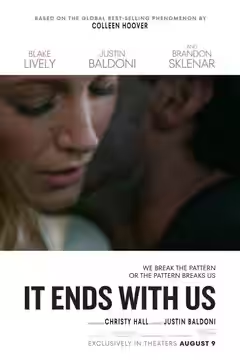
Blake Lively is better than the film around her. Justin Baldoni’s adaptation of Colleen Hoover’s novel handles a serious subject with care for about an hour, and dresses it like a perfume advert for the rest.
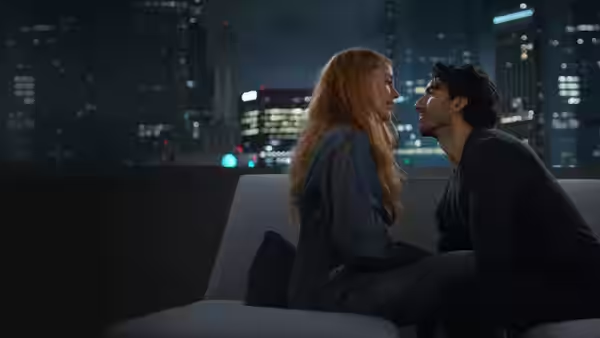
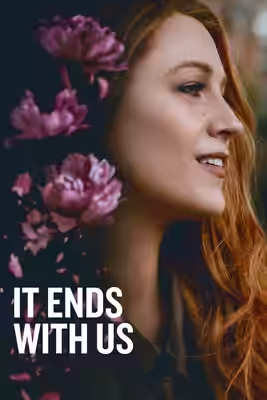
Lily Bloom (Blake Lively) is asked at her father’s funeral to name five things she loved about him, and stands at the lectern in silence. Then she moves to Boston, opens a flower shop and meets Ryle Kincaid (Justin Baldoni), a neurosurgeon, on a rooftop, where he kicks a chair about and tells her he does not do relationships. He does. Baldoni also directs, from Christy Hall’s screenplay of Colleen Hoover’s novel, and the film lets us know early, through what Lily says of a mother who stayed with a man who hit her, that this romance is heading somewhere the trailer only hints at.
Lively is the first reason to watch. She plays Lily as bright, quick and too ready to make a joke of herself, and she lets the brightness drop only when nobody else in the scene is looking. The funeral moved us more than anything in the two hours after it: no music, no speech, a woman waiting for a feeling that does not come and then walking out. Lively also has to hand the part back and forth with Isabela Ferrer, who plays the teenage Lily in flashback, and Ferrer matches her so closely in voice and posture that the joins barely show.
Jenny Slate is the second. Her Allysa walks into the flower shop wanting a job she does not need and stays to become the friend the film badly requires, and Slate gets a laugh from nearly every line without tipping the film into comedy. We laughed at her a good deal, and then noticed we had relaxed, which is what she is there for. Hasan Minhaj, as her husband Marshall, is given little and does it amiably. Brandon Sklenar’s Atlas, the first love who turns up grown and running a restaurant, is written as a good man and not much else, and Sklenar cannot find more in him.
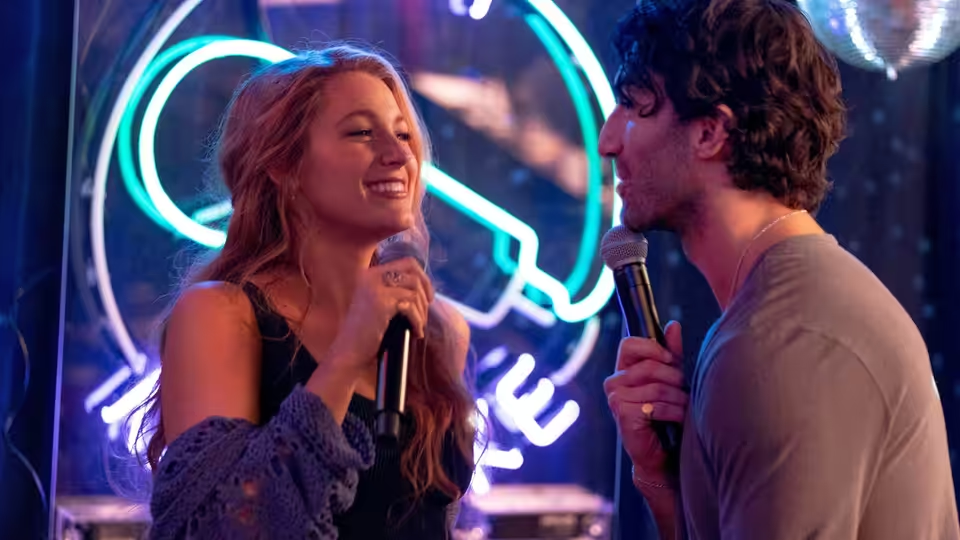
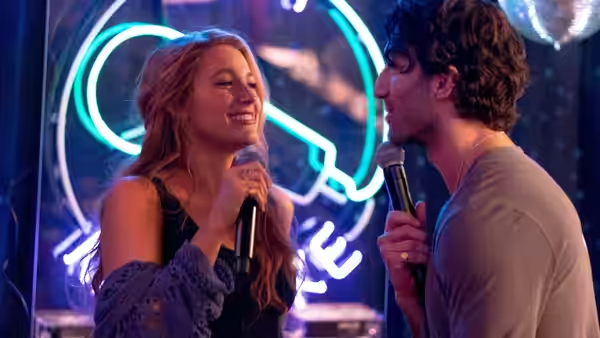
The look is the trouble. Barry Peterson shoots Boston in a permanent warm haze, so that every scene, tender or terrible, arrives in the same soft light. Russell Barnes fills the flower shop with dried blooms and neon, and it is pretty, and it is also the set of a commercial. Eric Daman puts Lively in layered denim, print dresses and hats that would not survive a bus, and in more than one hard scene we caught ourselves looking at the clothes instead of her face. The film means the gloss as Lily’s armour. It reads as the film’s.
Rob Simonsen and Duncan Blickenstaff’s score is piano and rising strings, and it arrives a beat before each feeling to make sure we have it. Oona Flaherty and Robb Sullivan cut the flashbacks in without much shape, so the teenage story stops and starts rather than gathering weight. The film runs 131 minutes, and there are at least two scenes of Lily and Ryle being happy in nice rooms that could go without loss.
About an hour in, something happens that we will not describe, and Baldoni directs it well: shot close and fast, from inside Lily’s confusion, so that for a moment we cannot be sure what we have seen. We felt sick, and then unsure whether we were meant to, and that uncertainty is the truest thing in the film. Then Hall’s script has people explain it, and the second half keeps explaining, until a late scene states the theme aloud as if reading the tagline. Most critics have split down the middle on this, and we can see why: the film is at its best in that hour and loses its nerve afterwards.
The old women’s pictures this wants to join let their heroines be foolish and grand and put the furniture to work. This one needs Lily to be admirable at every turn, and the furniture is only furniture. Readers of the novel will get the film they were promised. Everyone else should watch it at home, where it plays as the glossy soap it half wants to be. It carries a 15 certificate, and it earns it.