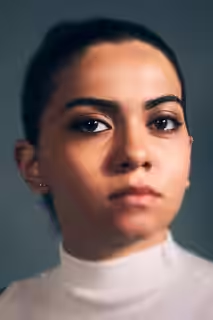
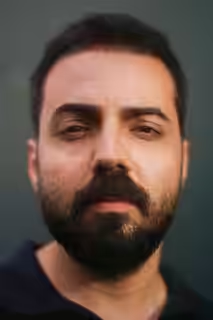
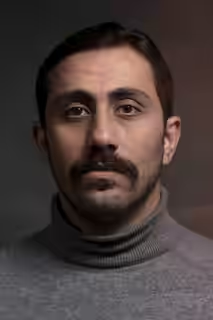
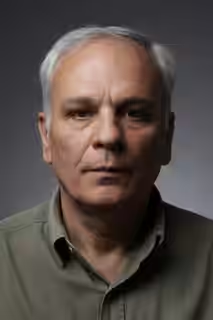
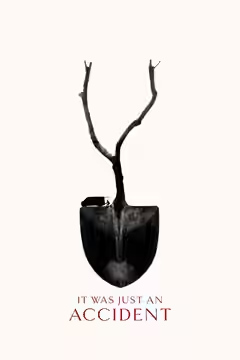
Jafar Panahi, filming without permission after his own spell in prison, puts a torturer in the back of a van and lets his victims argue over him for a hundred minutes. It is funny, frightening and morally serious, and it talks a little too much.
Jafar Panahi has made films under a ban, a film in his flat, a film in a taxi, and now a film after prison, and this is the angriest of them. It is also, for long stretches, a comedy. Eghbal (Ebrahim Azizi) is driving home at night with his pregnant wife (Afsaneh Najm Abadi) and small daughter (Delmaz Najafi) when he hits a dog. The car limps to a workshop where Vahid (Vahid Mobasseri) is working late. Vahid never gets a proper look at the customer. He hears him instead: a squeak in the man’s artificial leg, the same squeak that used to come down the corridor towards his cell. The next day Vahid puts Eghbal in the back of his van and drives into the desert with a spade.
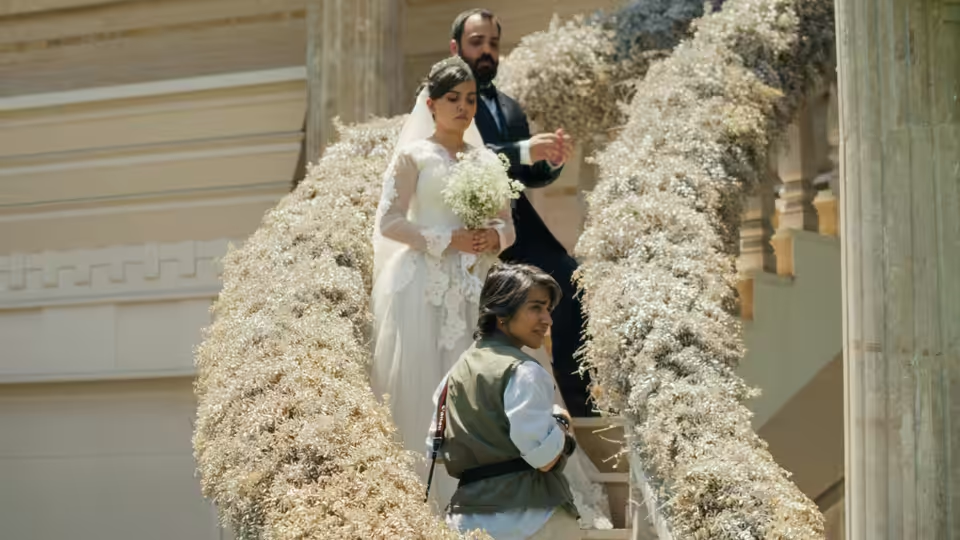
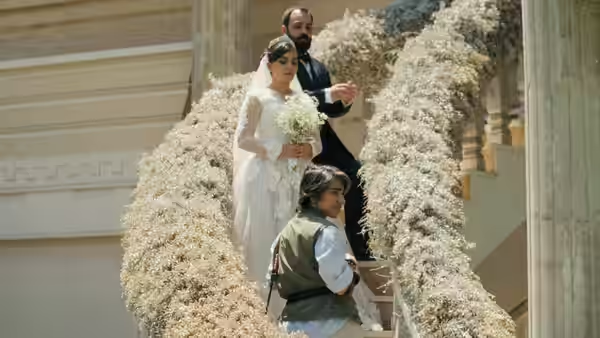
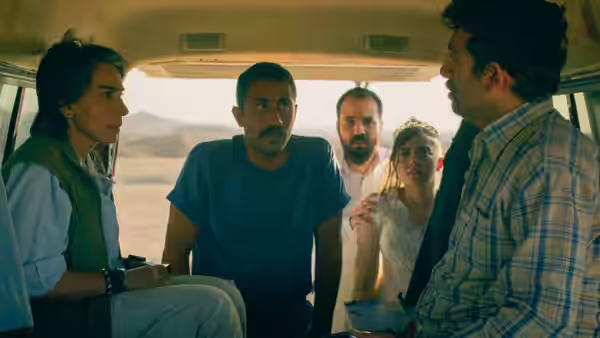
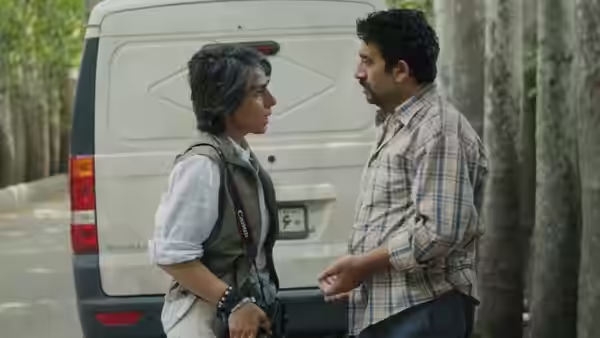
Then he stops. He was blindfolded in prison. He never saw the face of the man who beat him, and a leg is not a face. So It Was Just an Accident becomes a film about a mechanic driving round Tehran with a possibly innocent man in a wooden box, collecting other former prisoners who might be able to say for certain. Shiva (Mariam Afshari), a photographer, is mid-shoot with a bride, Golrokh (Hadis Pakbaten), and her groom, Ali (Majid Panahi), when the van pulls up. Hamid (Mohamad Ali Elyasmehr) wants a shovel and no discussion. Nobody can agree whether Eghbal is Eghbal, or what a decent person does with him if he is.
We recommend it, and not only for what it took to make. Panahi was banned from filmmaking in 2010 and jailed again in 2022; this was shot without permission, and the women in it go bareheaded, which alone would keep it out of Iranian cinemas. The squeak did something to us. It is a small sound, and Panahi holds on Mobasseri’s face while he hears it, and we understood before a word had been spoken that this was a man who has spent years listening for it.
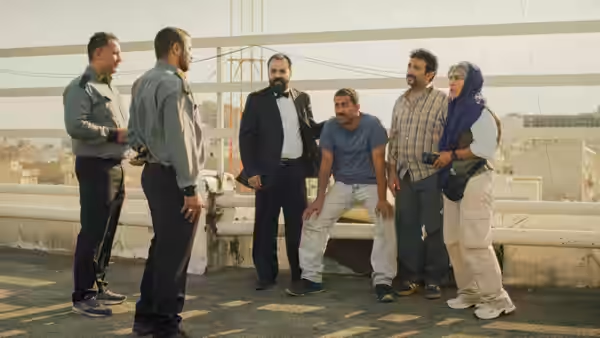
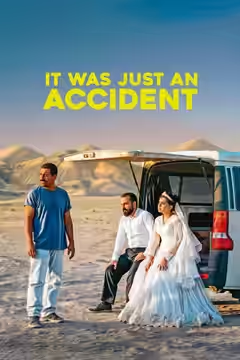
The comedy is in the errands. Every uniform the van meets wants paying, from Mohsen Maleki’s security guard on down, and the kidnappers count out notes for officials while the man in the box waits in the van outside. We laughed a good deal and the laughter had an edge, because the joke is that the country runs on small cash payments and everyone on screen knows the tariff. Amin Jafari shoots most of it in long takes, inside the van in daylight and out on dust roads in the flat afternoon, and he does not move the camera unless somebody moves first. Amir Etminan cuts as little as he can; scenes run until the argument runs out. Leila Naghdi Pari’s production design is mostly a workshop, a van, a box and a white wedding dress, and the dress against the desert is the image we kept.
The performances are the case for the film. Azizi plays Eghbal as a reasonable, frightened family man, and the film’s trick is that this proves nothing either way. Afshari’s Shiva argues for evidence and for the law, and keeps arguing when nobody wants to hear it. Pakbaten’s Golrokh says what was done to her in one plain sentence and then has to go on standing there in her dress. Elyasmehr’s Hamid is all fists and shouting, and the film does not pretend he is wrong. Mobasseri, at the centre, is quiet almost throughout, and it is the quiet of someone who has rehearsed this for years and finds the rehearsal is no use.
The flaws are the flaws of a film made in a hurry by a man with a great deal to say. The talk goes round. The same position is restated in the same words in three different lay-bys, and Etminan’s patience, elsewhere a virtue, lets it. The premise is a fable’s coincidence, of all the workshops in Tehran, and we had to decide early to accept it. One or two speeches are aimed past the other characters at us. No composer is credited, and the silence is right, but it also leaves the dialogue nowhere to hide.
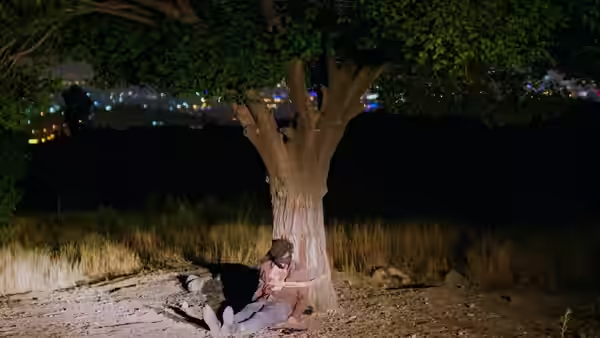
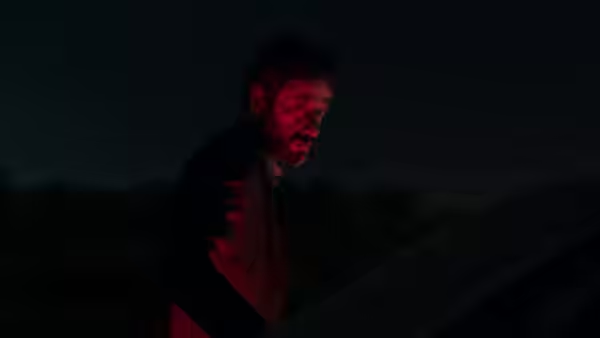
The last stretch is a confrontation we will not describe, and then a final shot and a final sound. That sound frightened us more than anything else in the film, and we are still arguing with ourselves about what it means.
It is a 12A, which is correct. Almost nothing violent is shown. Everything that hurts in it has already happened.