Posy Dixon’s affectionate documentary makes Beverly Glenn-Copeland excellent company and gives his music room to persuade us. Its admiration could use more questioning, but the warmth between him and his younger bandmates makes this an easy recommendation.
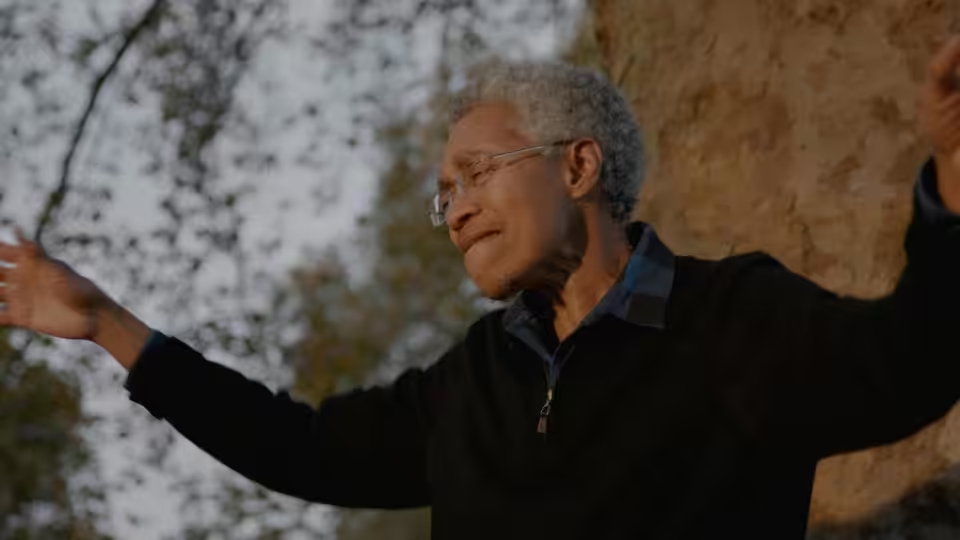
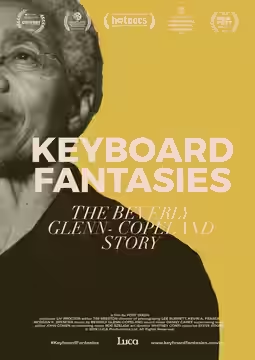
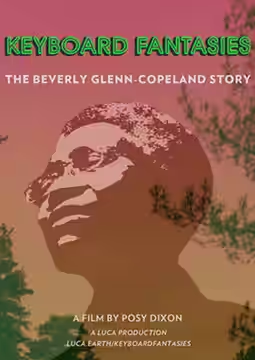
Posy Dixon’s Keyboard Fantasies is a warm, engaging music documentary with a subject worth spending time with. Beverly Glenn-Copeland’s album has found its audience late, and the director approaches that recognition through the man receiving it and the younger musicians around him. It is a good choice: his warmth makes the story interesting before any claim for his importance has to be proved. The film is occasionally too content to admire him, but its affection is easy to share.
Delayed recognition could have supplied a routine account of talent finally receiving its due. The candid encounters with the younger bandmates give this story something more particular, allowing us to enjoy the company these people keep. We were moved by their ease together. Those exchanges make the difference in their ages seem unimportant for a while, because their pleasure in being together is so readily apparent.
The music gives that affection something substantial to rest on. An agreeable subject can carry a documentary some distance, but hearing the work is essential when the film concerns an album’s rediscovery. Here, the music rewards the attention being paid to its maker and encourages us to keep listening beyond the biographical story. The film makes a persuasive introduction, even if our curiosity about the work occasionally runs ahead of what it offers.
Cinematography is credited to Morgan K. Spencer, Kevin A. Fraser and Lee Burnett, whose contribution is most useful in supporting that feeling of intimacy. The encounters with other musicians give the images their interest; there is a person here worth watching as well as hearing. The photography serves the company we are being invited to join. That is an appropriate choice for a documentary whose appeal depends so much on its subject’s openness.
Tim Beeston’s editing gives the film a compact shape across 71 minutes. That is a modest span for a life and a musical rediscovery, and the film remains companionable rather than exhausting its welcome. There is room, though, for a closer consideration of the music that has brought these people together. Wanting another conversation is a pleasant response to a portrait; wanting a fuller account of the work is also a reservation about it.
The admiration sometimes becomes too settled. The director is good at communicating why this musician matters to the people around him, but a more questioning approach might have helped explain what makes the music distinctive. His happiness is welcome, and there is no reason to demand misery as proof that a documentary has looked deeply enough. Still, affection need not prevent a film from asking more of its subject.
Music documentaries about overdue recognition have a familiar route available to them, with neglect supplying the difficulty and discovery supplying the satisfaction. Here, the relationships make that route worth taking, particularly when the younger musicians share the attention with the person they admire. The result is generous without becoming a lengthy demand for reverence. Choose it for an evening when music and conversation sound sufficient, with the understanding that a detailed musical study will have to wait.