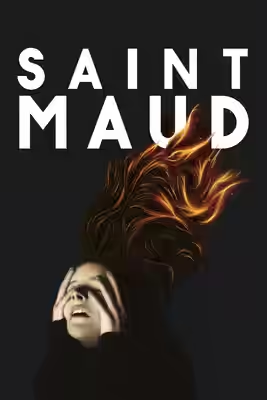
Rose Glass follows Saint Maud with a sweaty desert noir about a gym manager, a bodybuilder and a great deal of blood. For an hour it is the best kind of pulp; then it gets bigger, louder and less interesting, though never dull.
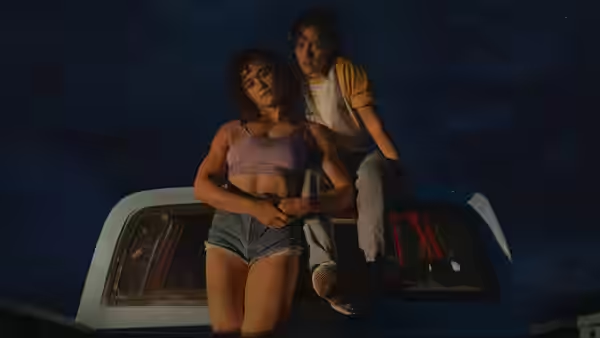
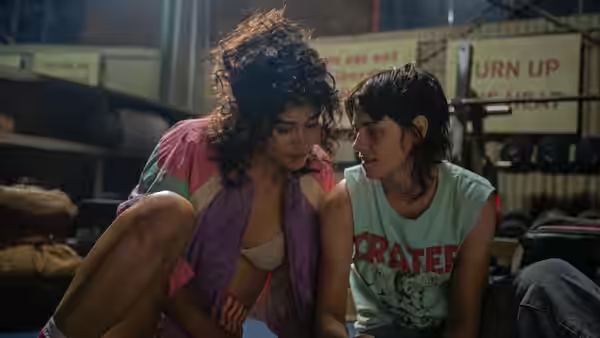
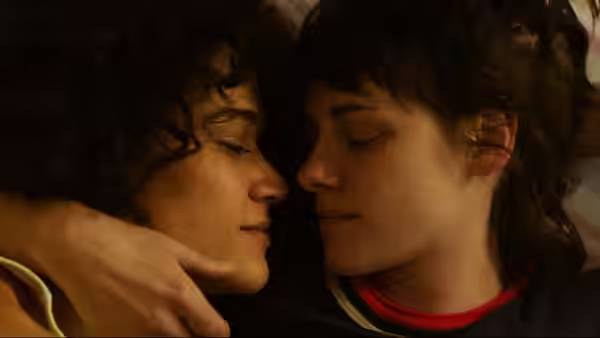
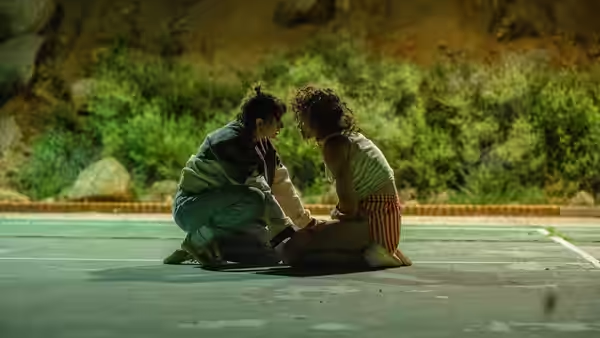
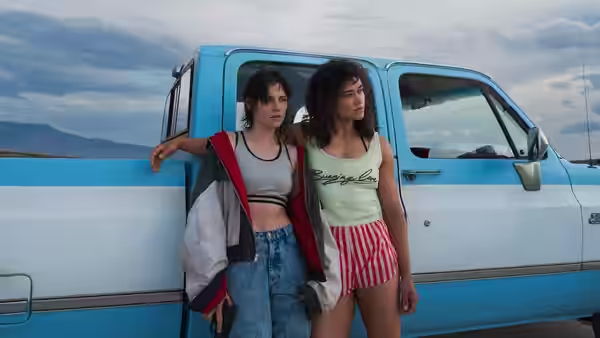
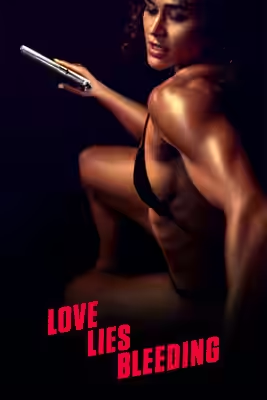
Rose Glass’s first film, Saint Maud, was a small, tight thing about a nurse and God in a seaside town. Her second is set in the American desert in the 1980s, runs on steroids, sex and gunfire, and is about twice as loud. Lou (Kristen Stewart) manages a gym so run down that the first thing we see her do is clear a blocked toilet. Jackie (Katy O’Brian) hitches into town on her way to a bodybuilding competition in Las Vegas and comes in to use the weights. Within a day they are in bed. For an hour this is as good a piece of pulp as we have seen in some time. After that it gets bigger, and we liked it a little less with every enlargement.
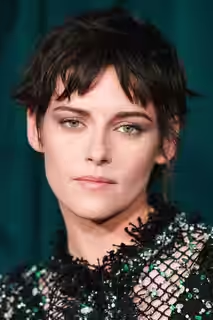
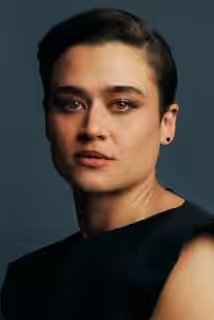
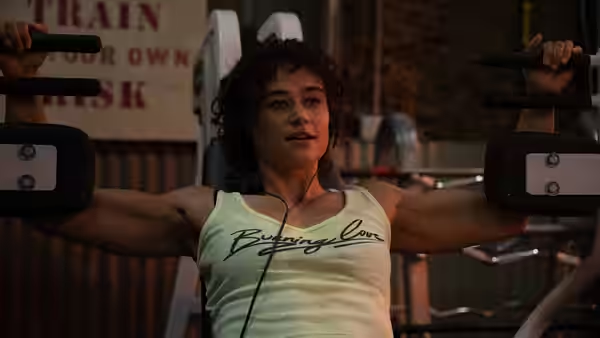
The romance is the film’s engine and it works. Stewart plays Lou with a mullet, a permanent cigarette and the posture of someone who stayed in her home town too long and knows it. O’Brian has the harder job, because Jackie’s body is the film’s central prop and she has to be a person as well. She plays her as open and hopeful, a woman who believes hard work gets rewarded. Lou hands her a vial of steroids early on, and Ben Fordesman’s camera goes in close on a shoulder as the muscle swells under the skin, with a sound like wet rope taking strain. We were unnerved by it, more than by anything bloodier later, because it is not a monster effect. It is a body doing what bodies do, only faster and on purpose.
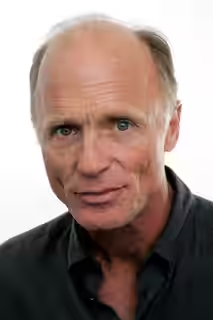
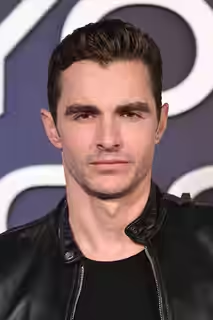
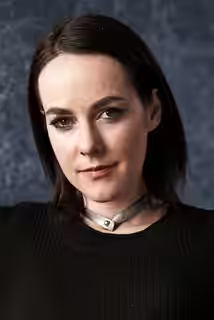
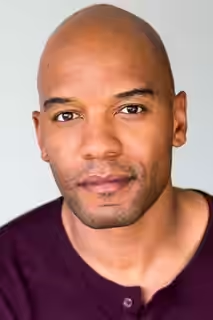
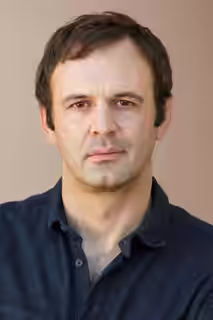
Around the couple Glass and her co-writer Weronika Tofilska have built a family that any noir would recognise. Ed Harris is Lou Sr., who runs the gun range outside town, keeps insects in glass cases, and wears his long grey hair down the back of a bald head. Jena Malone is Lou’s sister Beth, married to JJ (Dave Franco), who hits her; Franco plays him as a moustache with a grievance, and the film does not ask for more. Anna Baryshnikov’s Daisy, who is in love with Lou and will not be told otherwise, gets most of the laughs.
It looks and sounds as it should. Katie Hickman’s gym has tired mirrors, fluorescent tubes and equipment older than its members, and Lou Sr.’s house is a place where things are kept rather than lived in. Fordesman lights the nights with sodium lamps and shop neon and bleaches the days to bone; the flashbacks come in a saturated red that tells you what they are before anyone speaks. Olga Mill puts Lou in vests two sizes too big and Jackie in cropped Lycra, so that one of them is hiding and one is not. Clint Mansell’s score is analogue synthesiser, low and pulsing, and it recalls the decade without doing an impression of it. Mark Towns cuts fast and lands several jokes on the edit alone.
Then the second half arrives, and Glass keeps adding: more bodies, more blood, more veins, and a climax that takes a swerve we will not describe. The story gets thinner as the pictures get bigger. People start doing what the genre needs rather than what they would do, and Lou Sr., a real threat in his first two scenes, is reduced to an obstacle. The film has one idea, that wanting someone is a drug and a drug makes you larger and worse, and it has made it plain by the hour mark. After that it repeats the idea at greater volume, and we started to notice the time.
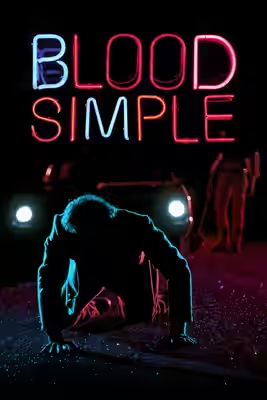
Saint Maud frightened us because it kept its world small and its heroine close. This is a looser, wider film, and it trades that closeness for energy, a fair trade for a while. The obvious ancestors are Blood Simple and Bound, both of which knew when to stop. Most critics have been warm and so are we; the most excited of them are describing the first hour.
See it with someone who will not look away during the injections. At 104 minutes it does not dawdle, and the 15 certificate is, if anything, generous.