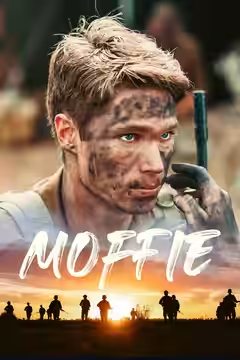
Oliver Hermanus makes a forceful, difficult drama about a gay conscript in apartheid South Africa. Kai Luke Brümmer’s restraint gives the cruelty a human scale, though the storytelling becomes less sure as it goes on.
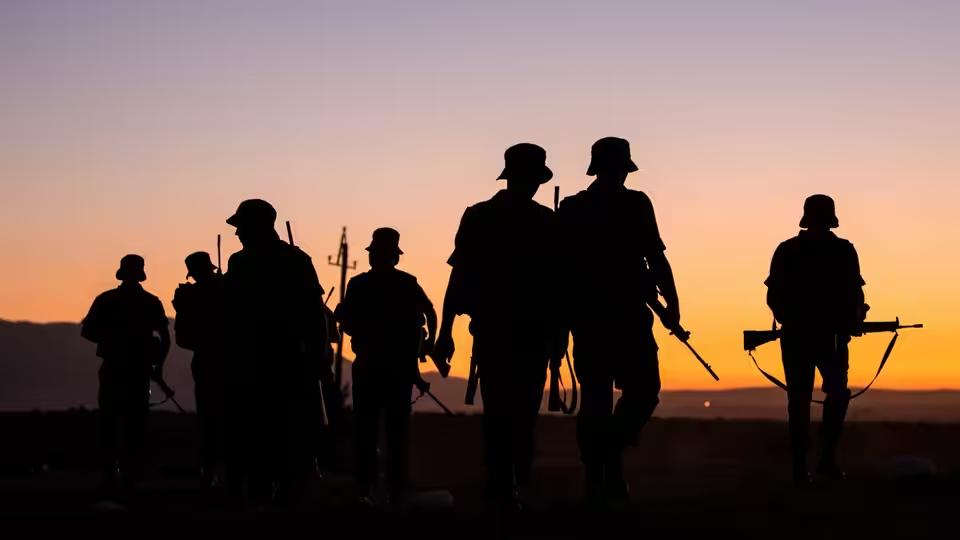
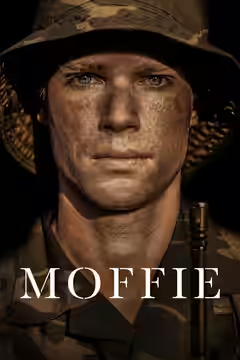
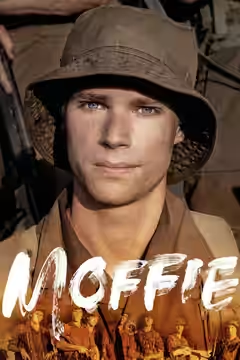
Moffie is a forceful, troubling drama, and we recommend it with a reservation about its increasingly uneven storytelling. Oliver Hermanus approaches military training through the effort of a gay conscript to avoid being noticed. In apartheid South Africa, Nicholas Van der Swart must conceal feelings that the institution around him treats as grounds for humiliation. The film’s interest is in the daily work of keeping those feelings from showing, and in how much of a young man’s attention that work consumes.
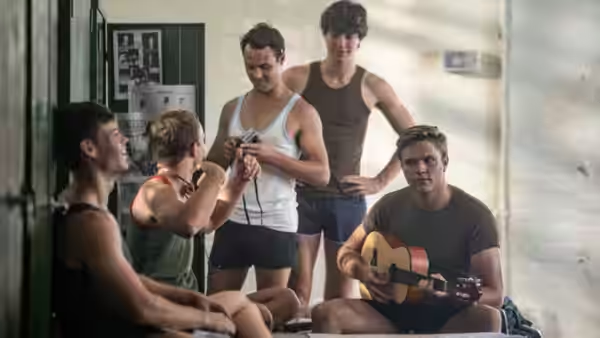
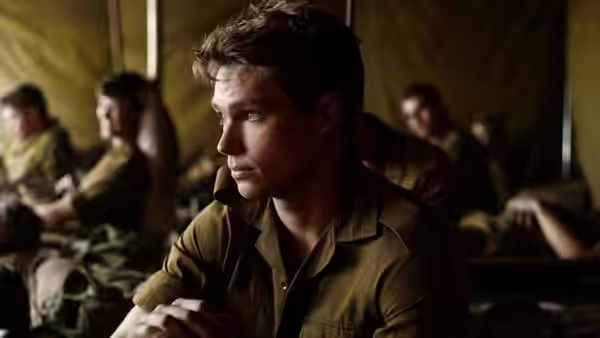
Kai Luke Brümmer gives that vigilance a physical presence without turning Nicholas into a succession of signals for us to decode. His reserve makes the bullying harder to watch, because the performance offers so little release from it. We felt worn down by the homophobic abuse; the repetition of slurs makes ordinary proximity to other men seem dangerous. The friendships matter because they offer some relief without removing the need for caution.
Jamie Ramsay’s cinematography lets us understand why Nicholas cannot simply stop looking at the men around him. The attention to male bodies makes attraction palpable even when the military setting makes it frightening. That is a difficult judgement to get right: photographing these men with care could soften our sense of their capacity for cruelty. Here, the beauty makes Nicholas’s predicament more painful, because we can understand the longing as well as the fear.
Franz Lewis’s production design helps make shared military space feel unsafe, even before anyone speaks. The surroundings offer little sense of somewhere Nicholas could stop monitoring himself, which serves the film’s tightly restricted view of his experience. Braam du Toit’s score presses that anxiety further, and its intensity is often effective. It can also feel too insistent, telling us to brace ourselves when the faces and the proximity of the men have already done the work.
George Hanmer and Alain Dessauvage make Nicholas’s memories feel close enough to disturb the military present. The editing gives his fear a history without requiring the central performance to become more demonstrative. The broader pacing is less convincing, with later stretches feeling both hurried and prone to drift. Across 104 minutes, some developments need more room, while other passages repeat an anxiety the film has already made clear.
The screenplay by Oliver Hermanus and Jack Sidey remains strongest when it stays close to the practical business of concealment. Its close focus on Nicholas’s suffering also leaves the wider racial hierarchy of apartheid less fully examined. That choice is understandable, and it gives the lead performance room to register. Still, we wanted a fuller sense of how this military culture serves the society outside it.
Anyone expecting military action to provide the main drama should adjust those expectations. The film has already made the business of surviving other men’s company frightening enough. Its tenderness comes as a relief, and the central performance keeps that relief from feeling cheaply offered. We recommend it, with patience for the uneven stretches and fair warning about the sustained verbal cruelty.