Curry Barker’s horror about a man who wishes a woman would love him, and gets her, is nasty, funny and properly frightening, and Inde Navarrette is the reason. It is not subtle, and one killing tips into cartoon. Horror fans should go.
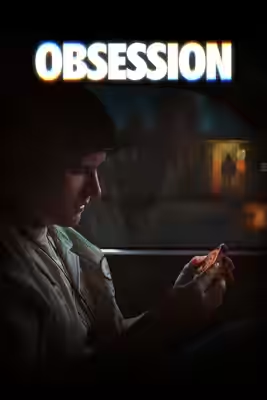
Bear (Michael Johnston) wants Nikki (Inde Navarrette), and Nikki does not want him. Then he makes a wish, and she does. That is the whole of Obsession, which Curry Barker wrote, directed and edited, and it is an old story: the monkey’s paw, the granted wish that arrives with its own bill. Barker knows it is old. What he has added is a plain question the genre has mostly avoided: what does a man who wants to be loved actually want, and what would he do if it turned up at the door and would not go home. The film is good, it is frightening, and it is about as subtle as its title.
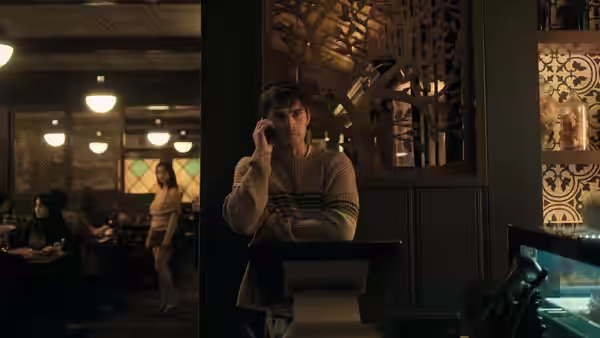
The first act is the courtship, and it is uncomfortable in the right way. Johnston plays Bear as a man who thinks of himself as the nice one, and Barker’s script keeps declining to agree with him. We were on the film’s side from the moment it became clear the film was not going to be on Bear’s. Cooper Tomlinson’s Ian and Megan Lawless’s Sarah are around to notice things he does not, and Andy Richter, as Carter, gets the dry lines and lands them. Then comes the wish, which we will not describe, and Nikki changes.
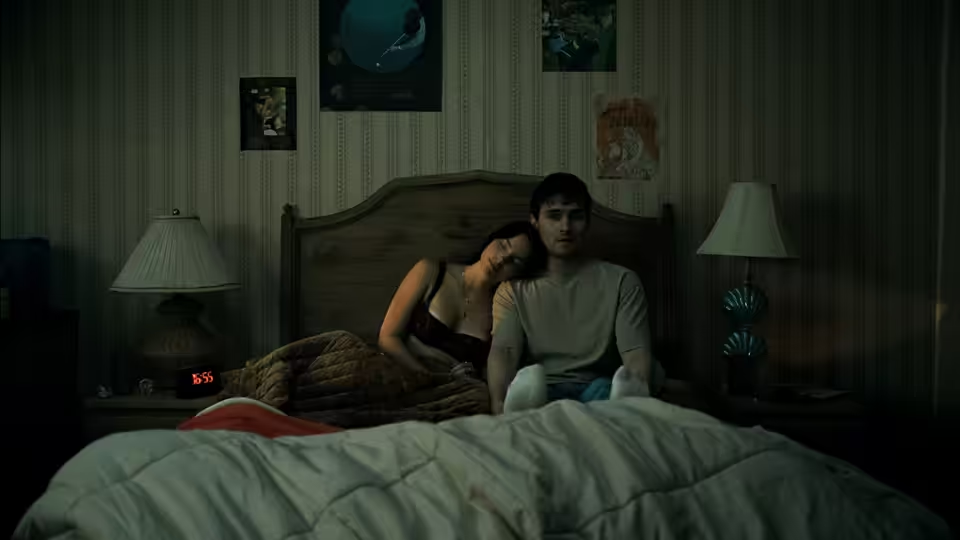
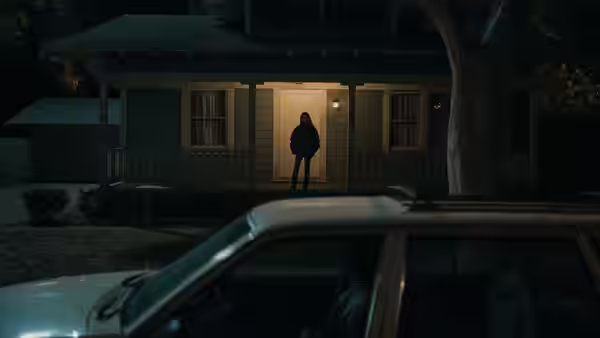
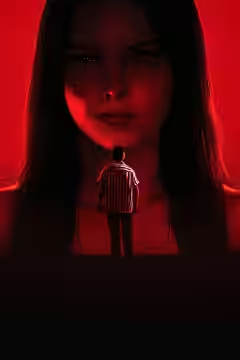
Navarrette is the film. Before the wish she is ordinary, warm, slightly bored. After it she is devoted, and the devotion has no bottom. She does not play possession as growling or contortion. She plays it as attention, the kind that does not blink, and the horror comes from watching a face that used to belong to a person become a face that is only about him. There is a moment, quite early in her new state, where she is simply standing there, already in the doorway before Bear has noticed her, and we jumped, then felt foolish, then realised that feeling foolish was the point. He asked for this.
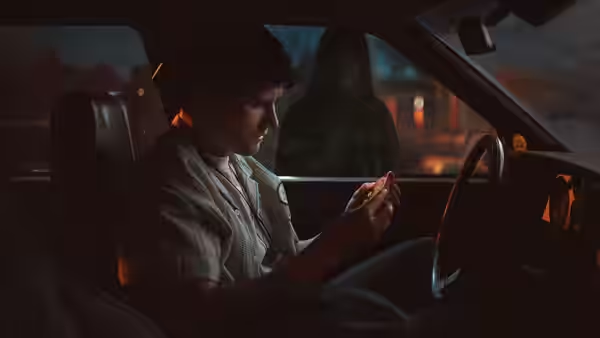
Taylor Clemons shoots the interiors dark, one lamp on and the rest left to guesswork, so that Nikki is found rather than shown. Barker, cutting his own film, holds a shot two beats past comfortable and then cuts hard, and the sound drops to nothing just before a scare rather than swelling into it. It is a trick, and by the third time we could see it coming and jumped anyway. Rock Burwell’s score stays low and out of the way; the silences do the work. The production design keeps the rooms ordinary and lets them stay ordinary, which is right, and Blair James’s costumes barely change on Navarrette across the film. The clothes are the same. The woman is not.
The flaws are real and the loudest one is the film’s habit of saying what it means and then saying it again. Barker does not trust an audience to have noticed that Bear is the problem, so he has people tell us. One scene of violence is staged for a laugh; it gets the laugh and then keeps going past the point where the film needs us frightened, and it takes a few minutes to recover. The middle sags too. Bear tries the same solution more than once and the film does not seem to notice it is repeating itself.
Set against the possession films it borrows from, this one has no priest, no Latin and no interest in whether there is a God. The devil here is a wish, and the person it has really got hold of is not the woman. Barker’s dialogue is sharp, funny in the awkward way of people who cannot say what they mean, and the comedy never lets Bear off. At 109 minutes the length is right, or would be if the middle were tightened.
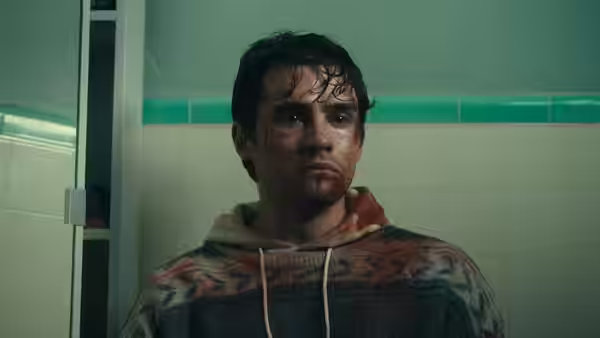
It is an 18 and earns it; the blood is frank and there is a lot of it. Go if horror is yours, and take someone whose hand you can hold. Then think about why you wanted to.