Film review

Fatal Attraction

1987 · Directed by Adrian Lyne · 1h 59m · MPA R

In a sentenceGlenn Close acts everyone else off the screen; the script never forgives her for it

ThrillerDramaRomance

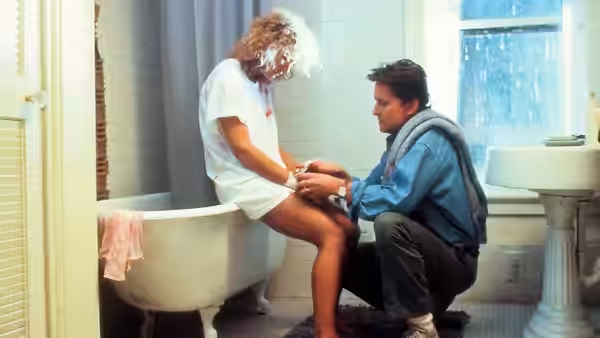
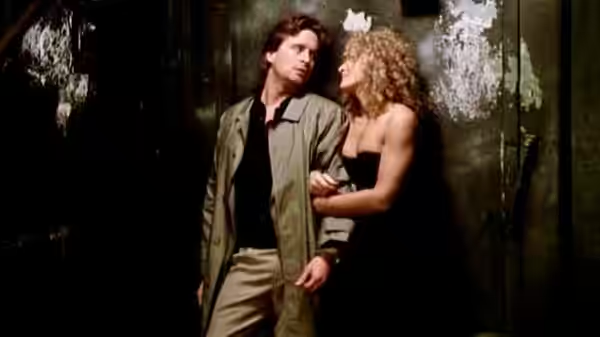
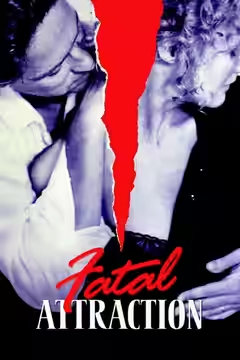
Dan Gallagher (Michael Douglas) is a Manhattan lawyer with a comfortable marriage to Beth (Anne Archer), a young daughter, Ellen (Ellen Hamilton Latzen), and a flat he is thinking of trading for a house outside the city. At a publisher’s party he meets Alex Forrest (Glenn Close), an editor, and they trade a look. When Beth and Ellen go away for the weekend to see the house, Dan and Alex share a lunch on a rainy Saturday and then her bed. He treats it as a weekend. She does not. On the Sunday night he tries to go home, and Alex makes it plain she will not let him leave quietly.

Plays from YouTube when you press play; nothing loads from them until then.

Fi1m review

Adrian Lyne’s thriller about a weekend affair is slick, tense and superbly acted, with Glenn Close turning a woman the script wants as a monster into someone we pity. Then the last reel arrives and turns a study of guilt into a slasher film.

Dan Gallagher (Michael Douglas) is a Manhattan lawyer with a wife, a daughter and a good flat. Beth (Anne Archer) and Ellen (Ellen Hamilton Latzen) go away for a weekend, and he spends it with Alex Forrest (Glenn Close), an editor he met at a party. James Dearden’s script then spends the rest of its length making him pay. For about ninety minutes it is a first-rate thriller, tense and well acted and better made than its reputation. Then the last reel arrives, and it is a different and worse film.

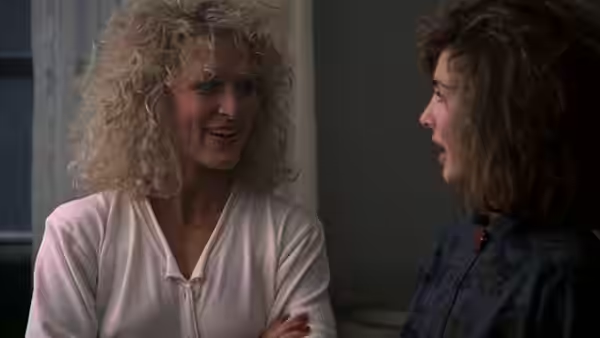
Close is the reason to watch it. She plays Alex as a woman who believes every word she says, and she makes the pleading come before the rage, so that when Dan tries to leave on the Sunday night we understand exactly why she cannot let him. There is a scene, midway, in which she is alone in her loft, and it is not frightening at all. It is desolate. We pitied her, and we went on pitying her long past the point where the film wanted us to stop, which is a measure of how far ahead of her script Close is.

Douglas is good at the two things Dan needs, smugness and panic, and he lets the first curdle into the second by degrees. His Dan keeps looking around for someone to tell him this is unfair, and the film, to its discredit, tends to agree with him. Anne Archer has the hardest job, the wife who must be warm enough that we want the marriage saved and sharp enough that we believe she could run it, and she does both with almost nothing written down. Stuart Pankin, as Dan’s friend Jimmy, supplies the few laughs.

Adrian Lyne directs with more discipline than he showed in 9½ Weeks the year before. Howard Atherton’s photography keeps Dan’s world and Alex’s looking like two different cities, and the film is at its best when it crosses from one to the other. Mel Bourne’s loft for Alex is the best single set in the film, and it tells you more about her than any line does. Ellen Mirojnick’s costumes do the same quiet work of keeping the two women apart before the script gets round to it. Maurice Jarre’s score is mostly a low synthesised pulse, and it knows when to stop.

The frightening scenes are small ones. Peter E. Berger and Michael Kahn cut the telephone calls so that the ring lands a half-beat before we are ready for it, and there is a stretch in the middle when we flinched every time a phone was in shot. That is proper craft, and it is done with a prop that costs nothing.

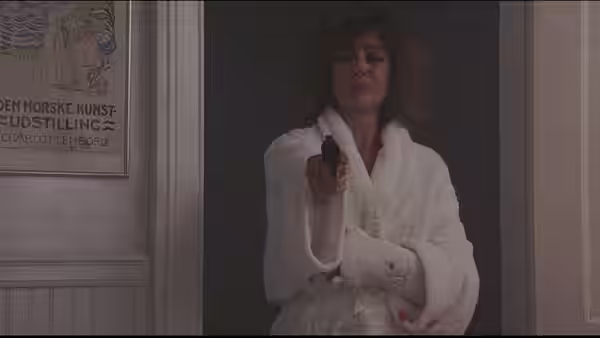
Then the film loses its nerve. Dearden’s Alex is written as a symptom rather than a person, and every scene after the midpoint takes something from her until only the threat is left. The wife at home is good and sane; the woman with a job and a flat of her own is mad; and the film does not seem to notice what it is saying. The ending was reshot after test screenings, and it shows. The last twenty minutes are cut in glimpses and reflections, as a slasher film, and we were angry, because the film had spent an hour and a half making Alex someone we could not look away from and then decided she was a monster after all.

Most critics land somewhere in the middle on this one and so do we. Watch it for Close, for Archer, and for the phone calls. It runs 119 minutes and carries an 18. It reached British cinemas on 15 January 1988, and the final reel has not improved with age.

Critical consensus AI synthesised

64
Positive
7
Mixed
2
Negative
2

Most critics come down in favour, though the praise is of a particular kind: this is a glossy studio thriller, and the reviews that like it admire it for being exactly that. Glenn Close is the one point of near-total agreement, singled out in review after review as the reason the film holds together. Adrian Lyne is credited with milking the tension and giving the affair a seductive, tactile surface, and Michael Douglas gets steady if less excited notice.

The reservations gather around the script and the ending. Several critics find the screenplay shallow and predictable, and a recurring complaint is that the ending was reshot after test screenings and pushes the film towards slasher territory. The spread is wide. The New Yorker and Time Out both object to what the film says about women, reading it as hostile to feminism or flattering to those who dislike them, while The Ringer argues it endures because of those flaws rather than despite them.

Empire
1 January 2000 · Angie Errigo
90*

Adrian Lyne's slick thriller is praised as a gripping, suspenseful hit driven by two riveting performances, with Glenn Close's unhinged portrayal singled out as spectacular. The reversal of the typical stalker dynamic leaves a nasty but unforgettable impression.

Read the full review →
Radio Times
★★★★ · John Ferguson
80

The critic notes it helped create the 'crazed female from hell' genre, praises Glenn Close's excellent performance and Adrian Lyne's skill at milking tension and slick power, while acknowledging the dubious message about affairs.

Read the full review →
The AV Club
20 February 2017 · Alex McLevy
75*

The critic calls Fatal Attraction a glossy but pulpy studio thriller that became a cultural phenomenon and Oscar nominee despite its trashy story of an affair gone wrong. They single out its effective dread, strong performances, and honest embrace of its sensationalism over deeper ambiguity.

Read the full review →
Los Angeles Times
18 September 1987 · Michael Wilmington
70*

The movie is an exciting New York thriller built on the idea that casual sex without bonds can lead to psychopathology, with tight direction and strong performances that keep viewers gripped for most of its runtime. The botched climax turns it toward slasher territory and undermines its potential complexity.

Read the full review →
The New York Times
18 September 1987 · Janet Maslin
70*

The film is a thoroughly conventional thriller elevated by director Adrian Lyne's slick, seductive style and visual imagery that makes every element tactile and rich. Michael Douglas and Glenn Close deliver strong performances in a manipulative soap opera of exceptional power.

Read the full review →
The Independent
21 October 1992 · John Lyttle
55*

The critic examines the video re-release featuring the original darker ending, in which the protagonist is framed for murder after the mistress's suicide, and contrasts it favorably with the theatrical happy ending. Hollywood's preference for feel-good resolutions is critiqued as undermining the story's moral ambiguity.

Read the full review →

Cast

Awards

Academy Awards, 1988

Nominated
Best Actress
Nominated
Best Director
Nominated
Best Film Editing
Nominated
Best Picture
Nominated
Best Supporting Actress
Nominated
Best Writing, Adapted Screenplay

If you liked this, try…

Play Misty for Me poster

Play Misty for Me

1971 · Clint Eastwood’s DJ has the same bad weekend, sixteen years earlier and with less gloss.

La Femme infidèle poster

La Femme infidèle

1969 · Chabrol’s adultery thriller keeps its voice down and is the more frightening for it.

Unfaithful poster

Unfaithful

2002 · Lyne returns to the affair, older and sadder, and this time the wife strays.

The Housemaid poster

The Housemaid

2010 · Im Sang-soo’s Korean melodrama of a rich household and the woman it uses up.

Misery poster83

Misery

1990 · Kathy Bates as the fan who will not let go; the same fear, better ending.