The third Mariachi film is loud, hot and busy, and it belongs to Johnny Depp’s rotten CIA man rather than to the hero. Rodriguez shoots, cuts and scores it himself, and the plot he wrote gets away from him well before the hour mark.
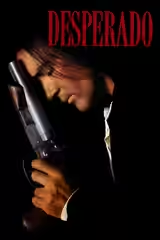
Robert Rodriguez finishes the story he began with El Mariachi in 1992 and continued with Desperado in 1995, and borrows a Sergio Leone title to tell us how big he means it to be. He directs, writes, shoots, cuts, scores, designs and produces. What he has made is 102 minutes of guns, guitars and sunburnt colour that is never dull for long and never clear for long either. It is a mixed bag, and most of what is good in it is Johnny Depp.
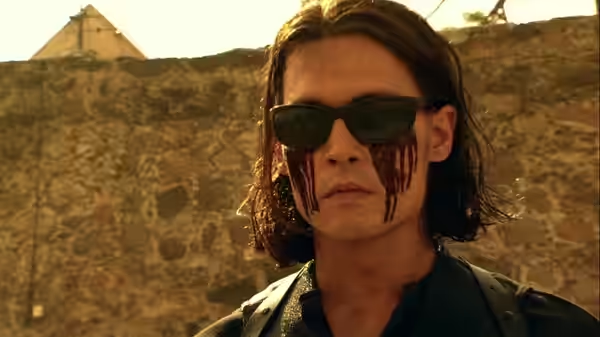
Depp plays Sands, a CIA agent with no superiors we ever see and no grievance we ever learn, as a tourist who has found a country he can do anything in. He wears pastel shirts and a T-shirt that spells out what the letters CIA stand for in his version of the agency. He orders the same pork dish in every restaurant and shoots the cook if it is too good, because it upsets the balance. He puts on a prosthetic third arm for no reason the plot requires. We laughed, properly and often, and every time it was Depp, lolling in a chair and explaining a coup to someone who did not ask.
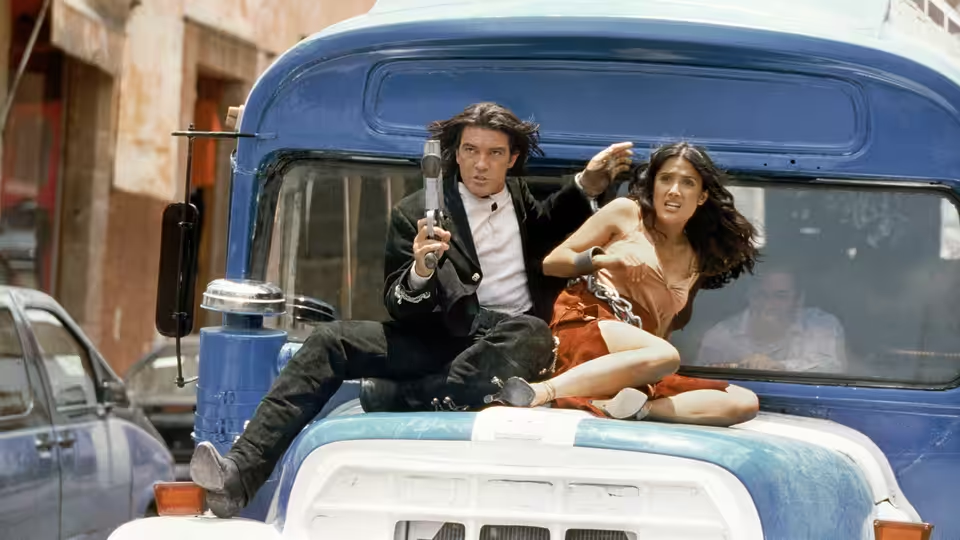
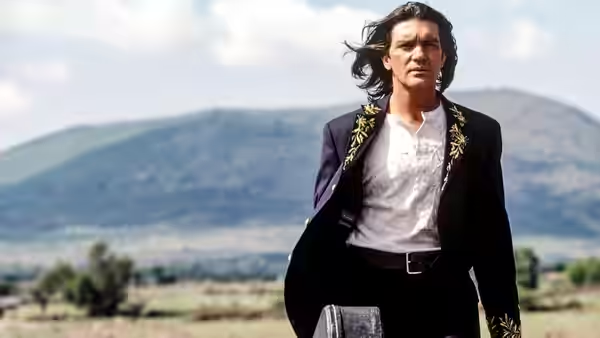
The trouble is that the hero of the film is someone else. The Mariachi sits in a village of guitar makers, says little, and remembers his wife. Banderas is good at this kind of stillness, and the film gives him almost nothing to do with it; whenever he starts to brood, Rodriguez cuts back to Sands running errands. Hayek is in the film only in flashback. One of those flashbacks, told by Belini in the first ten minutes, has the two of them handcuffed together and swinging down the front of a hotel, storey by storey, as the balconies give way behind them. It moved us more than the rest of the film put together. It is the one time the film’s feeling and its stunt work are in the same shot.
Then the plot arrives. Barillo is paying a general to kill the President. Sands wants the general killed after he does it. Sands hires Jorge to go after Barillo, Cucuy to watch the Mariachi, and gets a cross officer called Ajedrez (Eva Mendes) involved for reasons that come later. Chambers, Barillo’s man, carries a small dog and looks sad about it. Each of these people gets a scene in which someone explains to them what is going on, and by the fourth such scene we had stopped listening. We were bored, and then we were cross about it, because the film kept promising a shootout as a reward for sitting through the briefing.
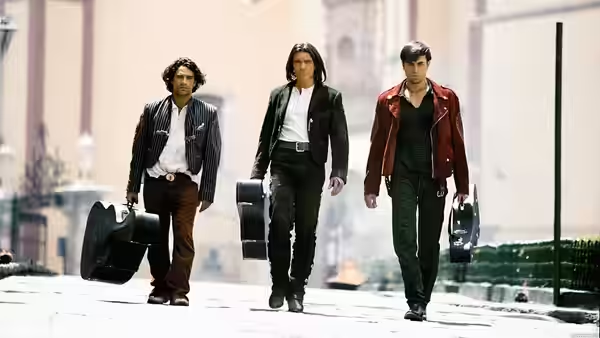
Rodriguez’s own photography is the hot, overbright kind: oranges and ochres pushed until the plaster looks lit from inside, nights the blue of a swimming pool. He cuts his action into fragments, a gun, a face, a man through a window, and at speed it has a rough energy. Lorenzo and Fideo’s guitar cases open into things that are not guitars, and that joke still works. His score is a twanging guitar and a trumpet playing the same figure over and over, and after an hour it is wallpaper. Graciela Mazón’s costumes are the best department: the Mariachi in black with silver down the seams, Sands in shirts no agency would sign off, Ajedrez pressed and buttoned to the throat.
Dafoe plays Barillo with a sneer and a tan and not much else. Rourke gives Chambers tired eyes and a good suit and seems to be in a quieter film. Blades is the one who stays with us, a retired man who has seen all this before and does not care to see it again. Trejo scowls. Iglesias and Leonardi are fine as backing.
Leone’s films took their time and let one man’s want fill the frame. Desperado had one revenge and one woman and got on with both. This has a dozen schemes and lets Depp carry all of them, which he nearly does. Watch it at home, where you can stop pretending to follow the coup and simply wait for him to come back. Something happens to Sands in the last act that we will not describe, and he is funnier after it.