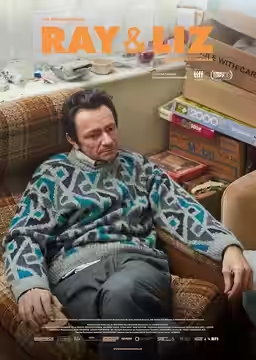
Richard Billingham’s childhood memoir is moving, uncomfortable and worth the patience it asks for. Closely observed performances and cramped, grainy images make the neglect hard to bear, though some episodes feel disconnected and overlong.
Richard Billingham’s Ray & Liz is a moving family drama that asks for patience and mostly earns it. Writing and directing this account of his childhood, he gives boredom and neglect time to become uncomfortable. There is little attempt to make his parents easier company, or to turn each remembered incident into a tidy stage in a story. The unevenness matters, but so does the care with which he keeps looking at people whose company can be hard to bear.
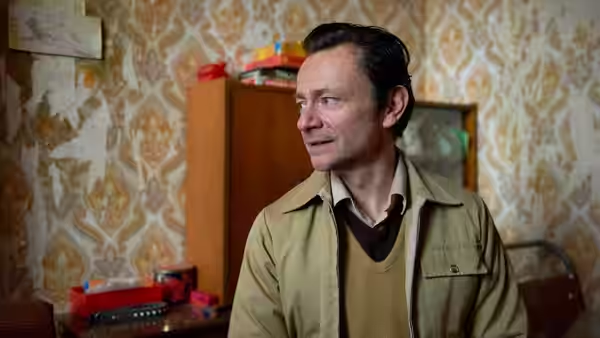
Justin Salinger and Ella Smith play Ray and Liz, with Patrick Romer and Deirdre Kelly taking the older roles. Having different performers at different ages makes the changes in the family tangible, even when the links between episodes are loose. The acting helps keep the parents from becoming a pair of case studies in failure. There is room for humour in these performances, and for recognisable human awkwardness, without much invitation to find the adults endearing.
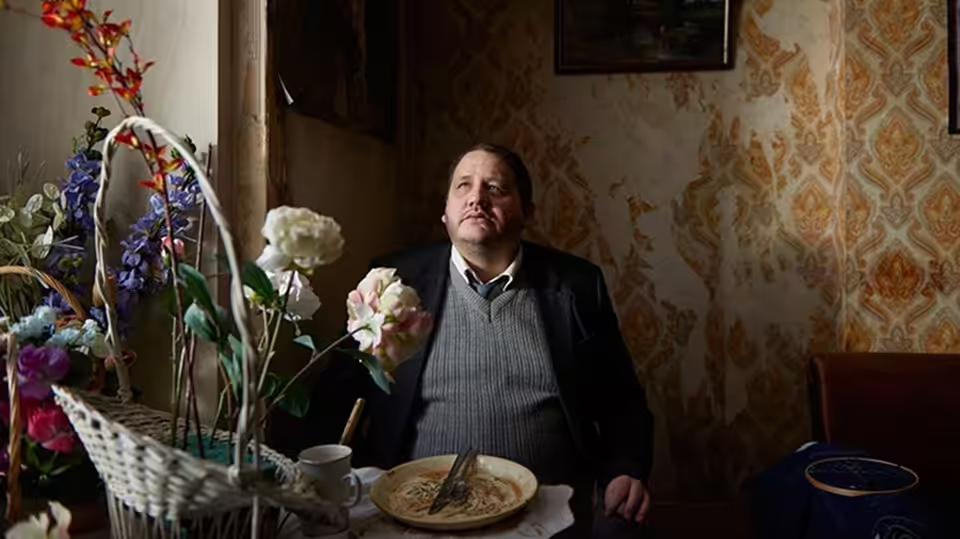
Dan Landin’s grainy 16mm photography makes the interiors feel cramped before we have had time to examine their condition. We felt hemmed in. The compositions leave so little room around the family that even looking at them can feel intrusive. The closeness also lets us study faces as carefully as the rooms, which is crucial in a film where the setting could so easily take over.
Beck Rainford’s production design deserves much of the credit for making the home feel inhabited. The accumulated detail suggests familiarity with these surroundings, down to the parts another film might hurry past. Only occasionally does the care of the reconstruction draw attention away from the family living in it. For most of the film, the decaying rooms make the parents’ difficulties and the children’s dependence on them painfully immediate.
Tracy Granger’s editing does not always make the separate episodes feel connected, and this is where our main reservation lies. Some passages linger until boredom becomes part of the family’s circumstances; elsewhere we found ourselves waiting for a connection that never quite develops. We understand why a childhood remembered in pieces should resist a neat plot. At 107 minutes, though, the film has stretches that feel stalled, even allowing for the difficult lives it is asking us to sit with.
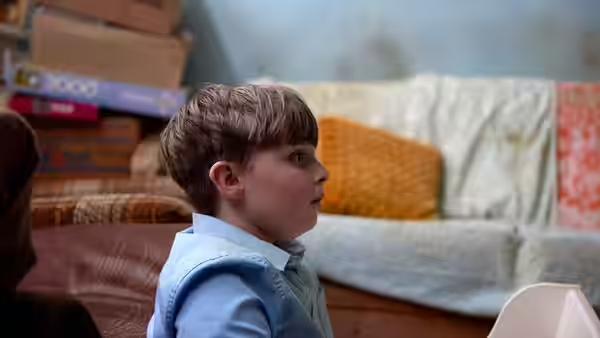
Joshua Millard-Lloyd’s Jason gives the film a welcome unpredictability. His performance has enough life to keep the child from becoming merely someone to worry about, and the attention to his experience broadens a film that can seem shut inside its rooms. Dramas about poverty sometimes press so insistently for pity that the children scarcely get to be people. Here we have a sense of a boy finding his own freedom, without being asked to forget how badly he needs care. Choose it for an evening when you can give it your full attention and do without much reassurance.