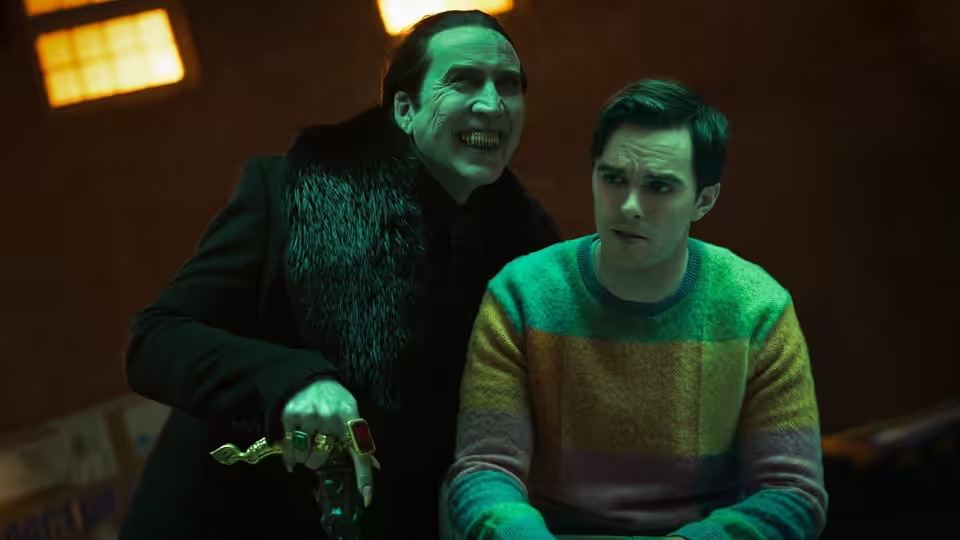
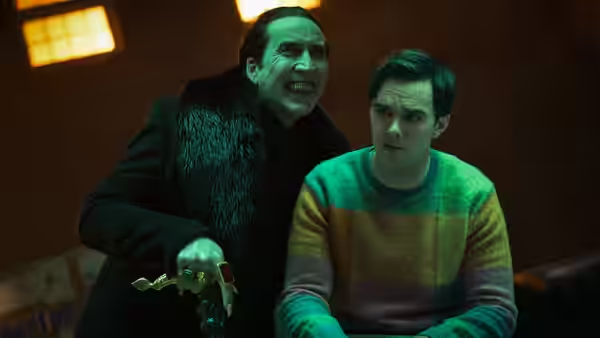
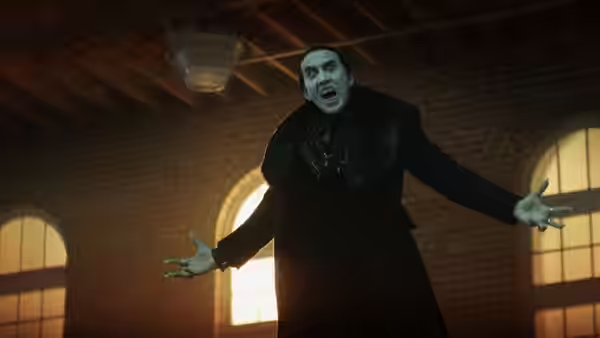
Nicolas Cage is a marvellous Dracula, all Lugosi vowels and wounded vanity, and Nicholas Hoult is exactly the put-upon familiar he needs. Around them Chris McKay has built a gory crime comedy that keeps the two of them apart for most of its 93 minutes.
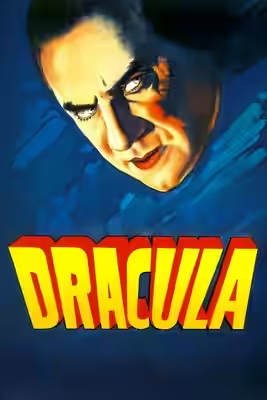
Universal made Dracula in 1931 and has spent most of the years since trying to work out what to do with him. Renfield is the latest answer: give the Count a servant with a grievance, move them both to present-day New Orleans, and treat the whole arrangement as a bad job with a bad boss. Ryan Ridley’s screenplay makes Renfield (Nicholas Hoult) an abused employee who has drifted into a support group for people in codependent relationships, where he is the only member whose partner drinks blood. It is a good idea. The film has about forty minutes of use for it and runs 93.
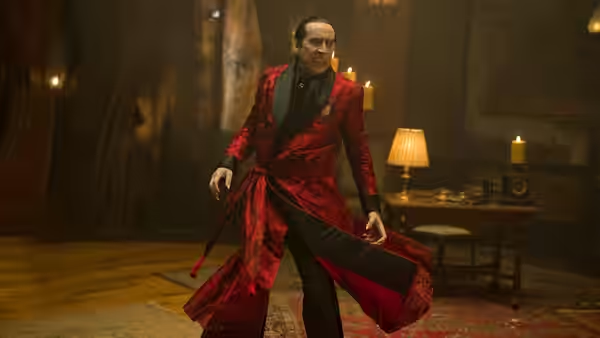
Nicolas Cage is the reason to see it, and he knows it. He plays Dracula with Bela Lugosi’s vowels and his own wounded vanity, a monster who wants to rule the world and also wants Renfield to tell him he looks well. The film opens in black and white, dropping Cage and Hoult into recreations of the 1931 picture, and we laughed out loud at his first entrance, at the relish of a man who has plainly waited decades for a cape and a coffin. Every scene with Cage in it is alive. There are not enough of them.
Hoult is the right foil. He plays Renfield as a decent man worn smooth by ninety years of fetching dinner, and his apologetic, faintly appalled delivery makes the support group the funniest room in the film after Dracula’s. Brandon Scott Jones runs the group with a therapist’s unbreakable calm and Adrian Martinez, Camille Chen and Bess Rous fill the chairs with people whose troubles are small and real. When master and servant are allowed to argue, the film bites: a squabble over the quality of the last delivery plays like marriage counselling with fangs.
Then the film goes off to arrest people. Awkwafina’s Rebecca is a traffic cop at war with the Lobo crime family, run by Shohreh Aghdashloo’s grand, unhurried matriarch and Ben Schwartz’s idiot heir, and the plot spends a great deal of its short running time on them: corrupt colleagues, a dead father, a stakeout. Awkwafina is game and Aghdashloo enjoys herself. But none of it has anything to do with a man trying to leave Dracula, and the film keeps promising that the two stories will meet and then tying them together with string. Somewhere past the hour we realised we were simply waiting for Cage to come back, and that the film had made us wait.
The other joke is the blood. Renfield eats a bug, gains the strength of ten men and removes limbs as if picking daisies. It is funny twice. Mitchell Amundsen shoots New Orleans in neon pinks and greens and lights the fights brightly enough that the digital gore, which arrives by the gallon, always reads. The film has three credited editors, Zene Baker, Giancarlo Ganziano and Ryan Fosley, and the action shows it: each fight is cut into fragments, and by the third one we could no longer tell who was hitting whom, or care. Marco Beltrami’s score plays it straight, gothic strings under comic business, which is the right choice and one the rest of the film rarely makes. Lisa Lovaas puts Hoult into pastel knitwear as he starts to improve himself, a visual gag the film sensibly does not explain.
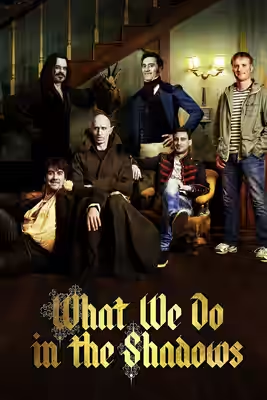
Chris McKay’s animated Lego Batman film (2017) knew exactly what it was: a fast, dense parody that never stopped for breath. Here he is directing a workplace comedy, a superhero origin and a crime thriller at once, and giving each the attention of a man with three phones ringing. What We Do in the Shadows (2014) got a whole film out of vampires quarrelling about the washing-up because it trusted the joke. Renfield does not trust anything for longer than a scene.
See it for Cage, who gives a comic performance of real size and precision to a film that treats him as a special effect, and for Hoult, who never lets him take the whole room. Watch it at home, where the stakeout can be skipped. It carries a 15, mostly for the arms.