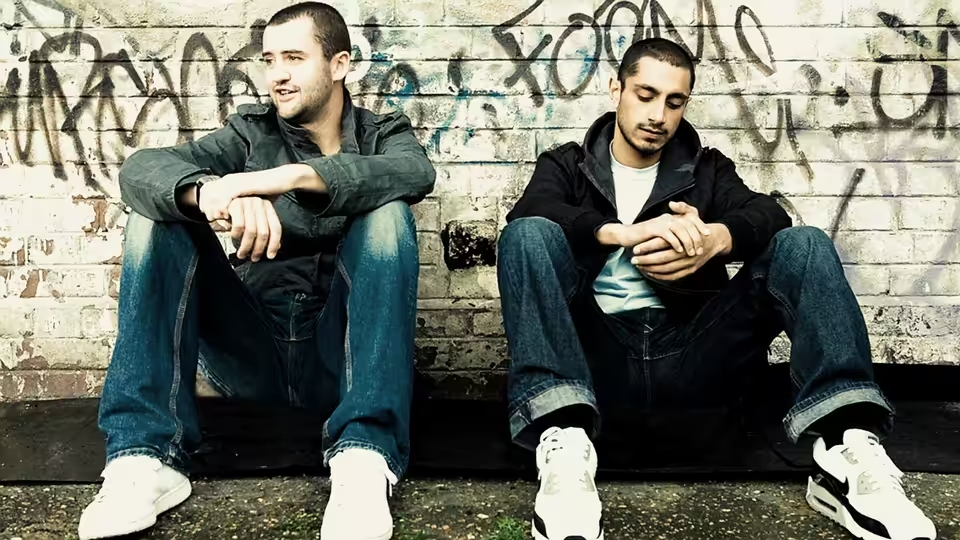
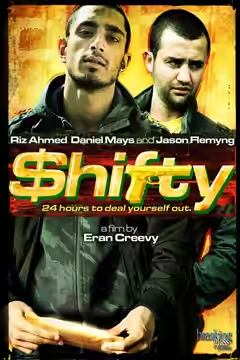
Riz Ahmed and Daniel Mays make this compact crime thriller worth the evening. Eran Creevy has a persuasive feel for people and place, though the plotting occasionally strains harder than the performances need it to.
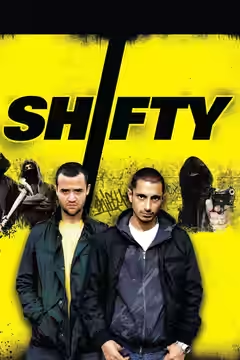
Shifty is a good crime thriller with the sense to spend time on the people involved. Writer-director Eran Creevy finds humour and affection in material that could easily have become another exercise in threatening behaviour. The film has its share of danger, but it also allows its central character to be intelligent, companionable and worth listening to. At 85 minutes, it gives those qualities room without making a lengthy business of introducing them.
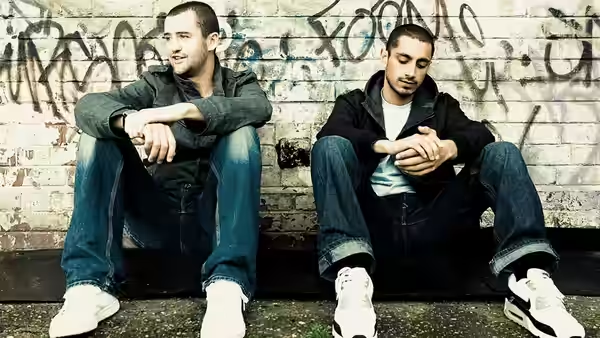
Riz Ahmed is the principal reason it works. His Shifty has a warmth that complicates our response to his involvement in drugs, and Ahmed makes his intelligence apparent without turning every exchange into a demonstration of cleverness. We warmed to him more than we expected, because Ahmed allows the pleasure of his company to survive our disapproval of his occupation. That matters: the suspense needs us to care about this particular person, rather than merely recognise that crime is dangerous.
Daniel Mays, as Chris, gives Ahmed someone with whom that ease feels persuasive. Their chemistry makes the friendship worth watching in its own right, without requiring the thriller machinery to keep intruding. Mays’s comparatively understated presence helps here; he leaves space for the exchanges to feel shared rather than competed over. Some viewers may find him too subdued, but we found the contrast useful, particularly when the humour lets both performances relax.
Creevy’s attention to London’s less celebrated surroundings gives the film a welcome sense of everyday life continuing beyond its central story. Ed Wild’s cinematography makes those places worth looking at without requiring them to become tourist attractions. The interest lies in making an ordinary urban landscape hold the screen, and the film manages that with assurance. Against the familiar habits of urban crime cinema, its reluctance to make drugs and violence look desirable is particularly welcome.
The dialogue is less consistently assured. Creevy sometimes leans on swearing when a more individual choice of words would tell us more about the speaker, and the accumulation can flatten otherwise distinctive company. The plotting, too, becomes conspicuous when it pushes for a complication the characters have not quite earned. We will not describe it, but it briefly makes us conscious of the writer arranging events, where the performances have been making everything seem unforced.
Kim Gaster’s editing helps keep the film moving, and the balance between suspense and odd humour is generally well judged. Molly Nyman and Harry Escott provide the music, with Erik Rehl responsible for production design. The film’s strongest claim remains the believable surroundings and the actors inhabiting them; its modest scale suits that concentration. It does not need a larger canvas, although the script could have trusted its quieter attractions more often.
Those reservations keep this from being an unqualified recommendation, but they do not spoil the company. Ahmed and Mays give Creevy something sturdier than a succession of threats: a relationship we want to keep watching when the immediate danger subsides. Choose it for the performances and the short running time, and allow the plotting a little more forgiveness than its people require.