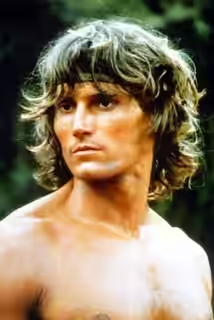
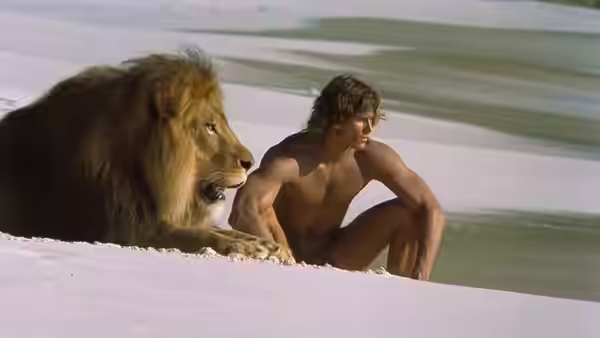
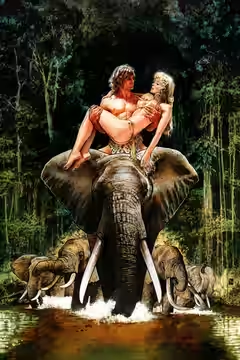
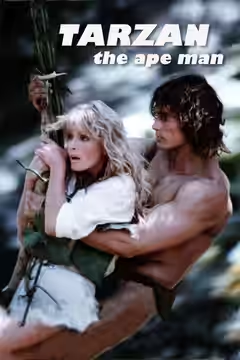
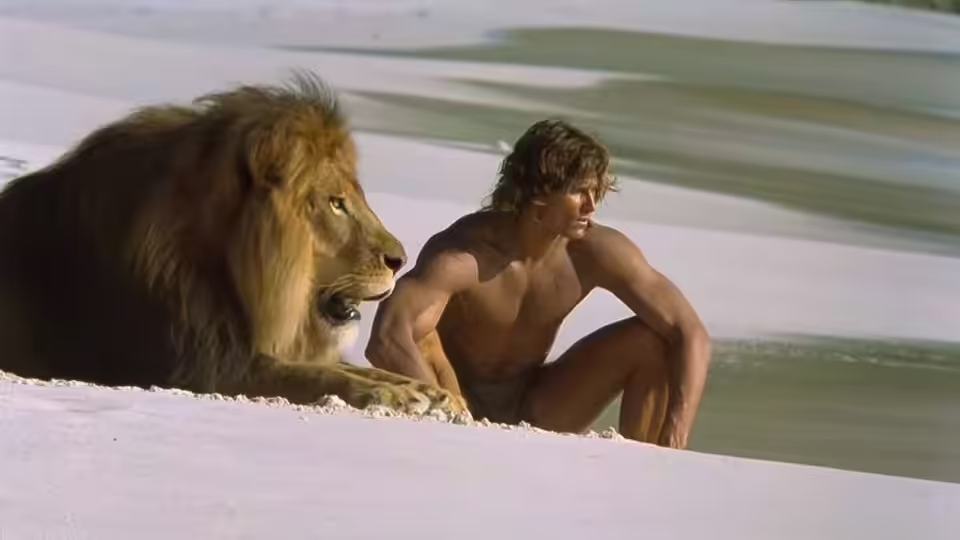
Tarzan (Miles O'Keeffe) crouches beside a lion on a sandy shore
Film review

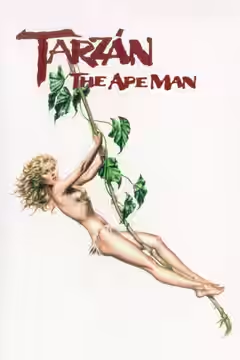
Tarzan the Ape Man

1981 · Directed by John Derek · 1h 55m

In a sentenceBo Derek swims, Richard Harris bellows, and the Ape Man waits two hours for a line that never comes

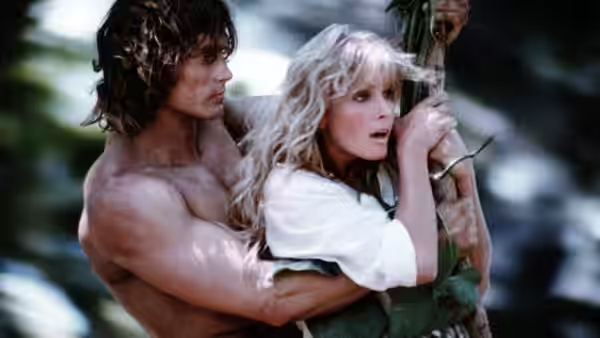
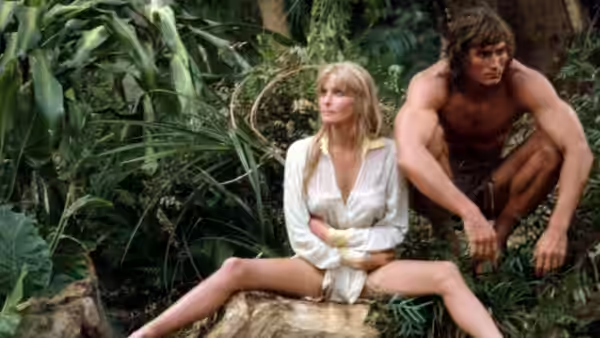
Jane Porter (Bo Derek) steps off a boat on the African coast to find the father she has barely met. James Porter (Richard Harris) is an explorer with a safari already loaded, bound inland for the elephants’ graveyard, a place the bearers will not talk about. His partner Harry Holt (John Phillip Law) handles the rifles and the camera. Jane announces she is coming too; Porter blusters, then gives in. As the column climbs through river country towards the escarpment, a cry comes out of the trees that none of them can name, and the bearers begin to slow. Above them is Tarzan (Miles O’Keeffe), a white man raised among apes, who has watched Jane bathing and has never seen anything like her. Before the expedition reaches the top, he has taken her.

Fi1m review

John Derek’s remake moves Jane to the centre of the Tarzan story and then gives her nothing to do but bathe. It is slow, soft-lit and strangely joyless, and Richard Harris shouting at the trees is the nearest thing to entertainment in it.

John Derek directs, photographs and, for most of its 115 minutes, gazes. Bo Derek stars and produces. The property is Edgar Rice Burroughs’s, by way of the 1932 MGM film that made Johnny Weissmuller a star, and the one real idea in Tom Rowe’s screenplay, with Gary Goddard also credited as writer, is to tell the story from Jane’s side and keep Tarzan at the edge of the frame. That is a fair idea. Jane is the one who travels, the one who chooses, the one with a father to argue with. Having moved her to the centre, though, the film cannot think of anything for her to do there except take her clothes off and get into the water.

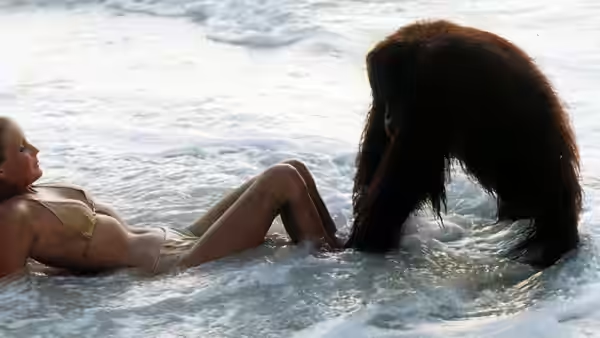
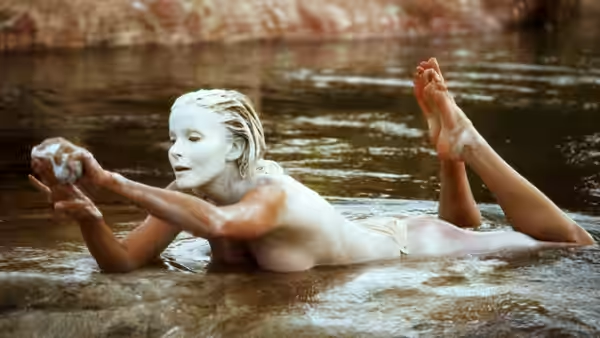
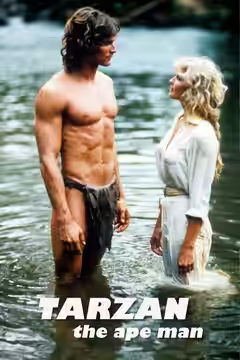
Derek shoots his own picture, and the look is long lenses, hazy backlight, the sun always behind somebody’s hair, and slow motion for anything that moves. The rivers and the escarpment are handsome. Then Jane goes for a swim. Then she goes for another. Jimmy Ling’s edit holds on each one long past the point of interest, and Perry Botkin Jr.’s score swells under the water as though something were happening in it. We were bored by the second bathe and, by the fourth, faintly embarrassed, not by the nudity but by the way the film stops dead for it, like a host who keeps bringing out the same photograph album.

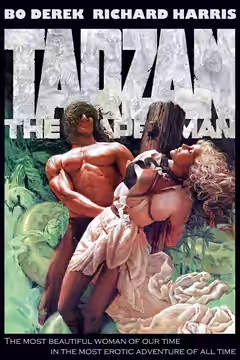
Bo Derek is not an actress of range, and the film does not pretend otherwise. It has cast her as a face and a body and asks nothing further. She says her lines evenly, as if reading out a list, and the camera adores her regardless. The tagline promises the most erotic adventure of all time, and the erotic part is delivered in bulk. It is the adventure that goes missing. For a woman who has crossed an ocean and half a continent, Jane is remarkably unbothered by anything, including being carried off by a stranger in a loincloth.

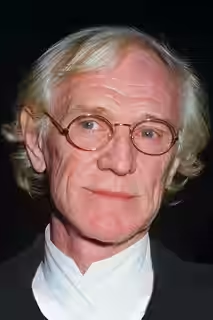
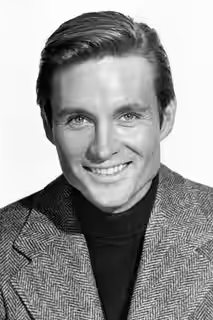
Richard Harris goes the other way entirely. As James Porter, the explorer father Jane has come to find, he bellows every line to the back of the jungle and delivers speeches about his dead wife and his undiscovered graveyard to anyone within range. He seems to be performing in a different and much louder film. We enjoyed him. It is not a good performance, but it is a living one, and in this company that counts for a great deal. John Phillip Law, as the partner Harry Holt, is handsome and sensible and leaves the memory as he leaves the frame.

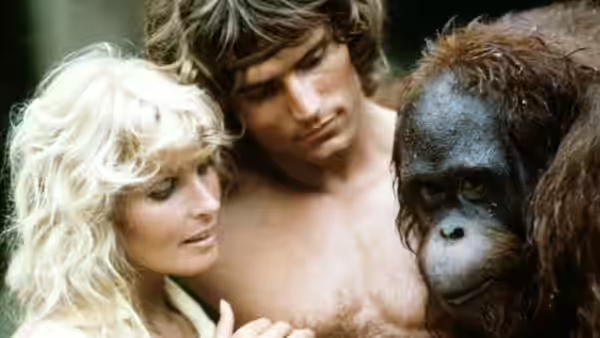
Then there is Tarzan. Miles O’Keeffe plays him with no dialogue at all, only the cry and a good deal of standing in profile, and he is on screen far less than his billing suggests. He wrestles a snake and a lion in sequences cut around the fact that he is not really wrestling them, and his orangutan companion gets more close-ups than he does. The second half brings Steve Strong’s Ivory King and his people, and takes a turn we will not describe, except to say that it takes a long time.

Patricia Edwards’s costumes amount to a white dress for Jane that loses a little more fabric with every reel, and a loincloth, which is a fair summary of the film’s priorities. Set against the Weissmuller pictures, which were cheap and silly and never stopped moving, this one looks expensive and does not move at all. The old films understood that Tarzan is a chase. Derek has made him a view.

The reviews so far are all negative, and we see why. The appeal here was always going to be Bo Derek, and anyone who has come for that will find a great deal of her, slowly, in good light. Everyone else will find a jungle film in which nobody is in any hurry to get anywhere, least of all the ape man. Watch it, if you must, for Harris, who at least seems to think he is in an adventure.
Critical consensus AI synthesised

3 of 6
Positive
0
Mixed
0
Negative
3
RogerEbert.com
19 June 1981 · ★½/4 · Roger Ebert
38

Ebert’s verdict is negative, criticizing the film’s focus on Jane rather than Tarzan. He singles out the emphasis on Bo Derek’s nudity as the film’s chief failing.

Read the full review →
Time Out
· MB
30*

The review is sharply critical of the film’s depiction of the jungle. It singles out the frequent swimming and artificial-looking setting for ridicule.

Read the full review →
Variety
31 December 1980 · Variety Staff
10*

The critic finds the film aimless and dull, disappointing both Tarzan fans and Bo Derek admirers. The review singles out Bo Derek’s wooden delivery and John Derek’s uninspired direction, while conceding that the Sri Lankan scenery is attractive.

Read the full review →

Straight answers AI written, from our review

Is Tarzan the Ape Man worth watching?
Tarzan the Ape Man is not worth watching unless you have come specifically for Bo Derek, and we scored it 30. John Derek's remake moves Jane to the centre of the story and then gives her nothing to do but bathe, slowly, in good light. Richard Harris bellowing at the trees is the only entertainment in it.
How long is Tarzan the Ape Man, and what is it rated?
Tarzan the Ape Man runs 1h 55m. It is an action and adventure film.
Where can I watch Tarzan the Ape Man in Bulgaria?
Tarzan the Ape Man is not on any streaming or rental service in Bulgaria at the moment. It is available in 1 other country; change your country at the top of the page to see where. Availability is checked daily.
How violent or frightening is Tarzan the Ape Man, and is it suitable for children?
Tarzan the Ape Man is not frightening and barely violent, but it is not for children. It has no UK certificate and carries an R rating in the United States, almost entirely for repeated and prolonged nudity in Bo Derek's bathing scenes. Tarzan wrestles a snake and a lion in sequences cut around the fact that he is not really wrestling them, so the squeamish have nothing to fear.
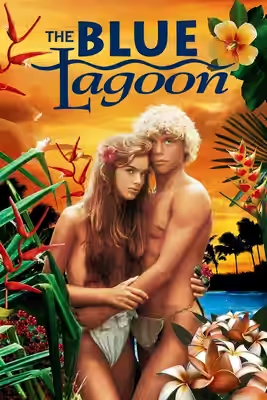
How does Tarzan the Ape Man compare to The Blue Lagoon?
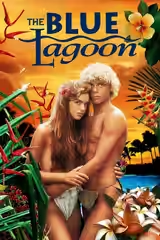
Tarzan the Ape Man is the weaker of the two soft-focus idylls, because The Blue Lagoon at least has a story that moves and photography worth forgiving it for. Both films are handsome and close to empty, but Randal Kleiser's children grow up, while Derek's Jane only swims. Choose the lagoon if you must choose one.
What should I watch after Tarzan the Ape Man?
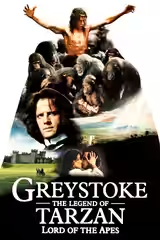
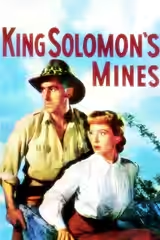
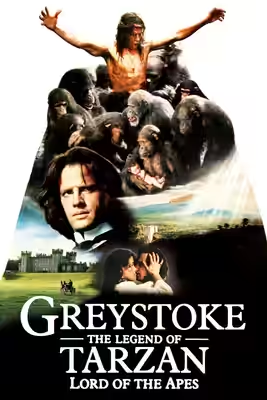
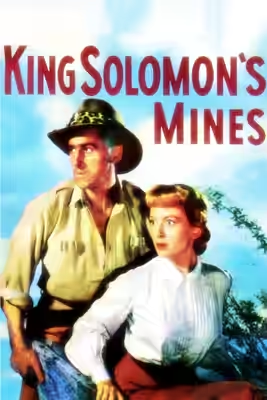
After Tarzan the Ape Man, try Greystoke: The Legend of Tarzan, Lord of the Apes (1984, Fi1m 65): The serious version, with Ralph Richardson and real grief; slow in a better way. Then The Blue Lagoon (1980, Fi1m 46): The same era’s other soft-focus idyll, and at least the children grow up; and King Solomon's Mines (1950, Fi1m 72): Stewart Granger and Deborah Kerr cross Africa with pace, purpose and a proper safari.

Cast

Awards

Golden Raspberry Award for Worst Actor, 1982

Nominated
Golden Raspberry Award for Worst Actor

Golden Raspberry Award for Worst Actress, 1982

Won
Golden Raspberry Award for Worst Actress

Golden Raspberry Award for Worst Director, 1982

Nominated
Golden Raspberry Award for Worst Director

Golden Raspberry Award for Worst New Star, 1982

Nominated
Golden Raspberry Award for Worst New Star

Golden Raspberry Award for Worst Picture, 1982

Nominated
Golden Raspberry Award for Worst Picture

Golden Raspberry Award for Worst Screenplay, 1982

Nominated
Golden Raspberry Award for Worst Screenplay

If you liked this, try…

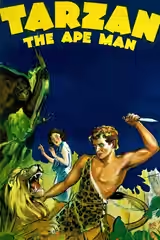
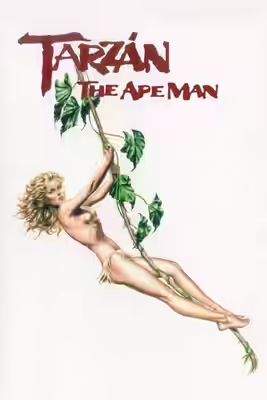
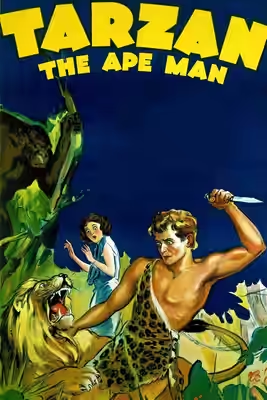
  1. Tarzan the Ape Man (1932) · not reviewed yetThe Weissmuller original: cheap, brisk and shameless, and it never stops moving.

  2. Greystoke: The Legend of Tarzan, Lord of the Apes (1984, Fi1m 65)The serious version, with Ralph Richardson and real grief; slow in a better way.

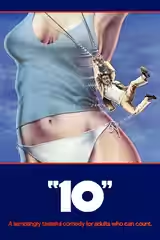
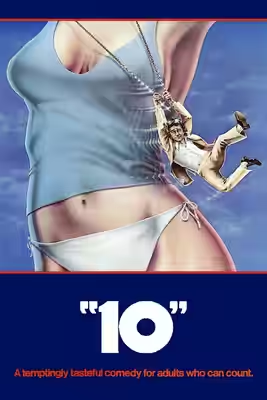
  3. 10 (1979) · not reviewed yetBlake Edwards knew what to do with Bo Derek: put Dudley Moore in the way.

  4. The Blue Lagoon (1980, Fi1m 46)The same era’s other soft-focus idyll, and at least the children grow up.

  5. King Solomon's Mines (1950, Fi1m 72)Stewart Granger and Deborah Kerr cross Africa with pace, purpose and a proper safari.

Free account

Know what to watch tonight

Two lists that know where things are streaming, collections you can share, your own score beside ours, and Discover that remembers what you have seen.

  • Want to see, sorted by what is streaming now
  • Seen, with your score out of ten
  • No adverts, ever