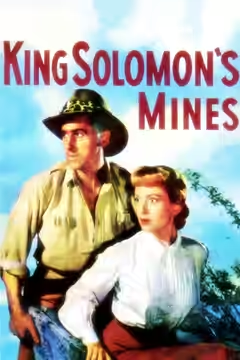
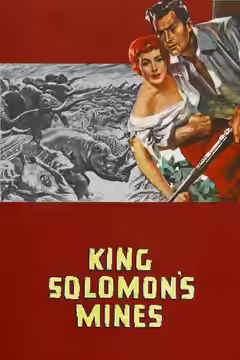
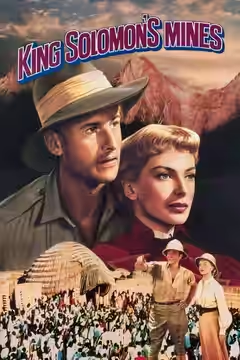
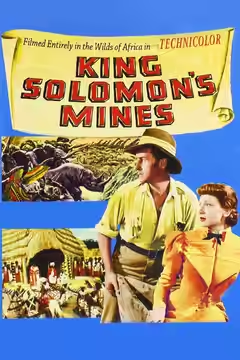
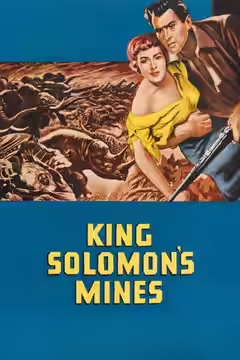
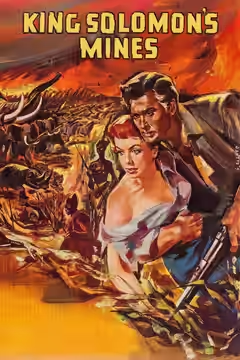
Two directors, a Rider Haggard novel and a great deal of real Africa produce a handsome, old-fashioned safari film whose animals are more interesting than its people. Come for Robert L. Surtees’s Technicolor and the stampede; the romance has been stitched on afterwards.
Sam Zimbalist, producing, took a cast and crew to Africa and shot a Victorian adventure story in the places where it is supposed to happen. The film that came back is, for long stretches, a travelogue with actors standing in front of it. That is a compliment and a complaint, and between them they are the whole review. Helen Deutsch’s screenplay, from H. Rider Haggard’s 1885 novel, is a washing line to hang pictures on, and the pictures are the point.
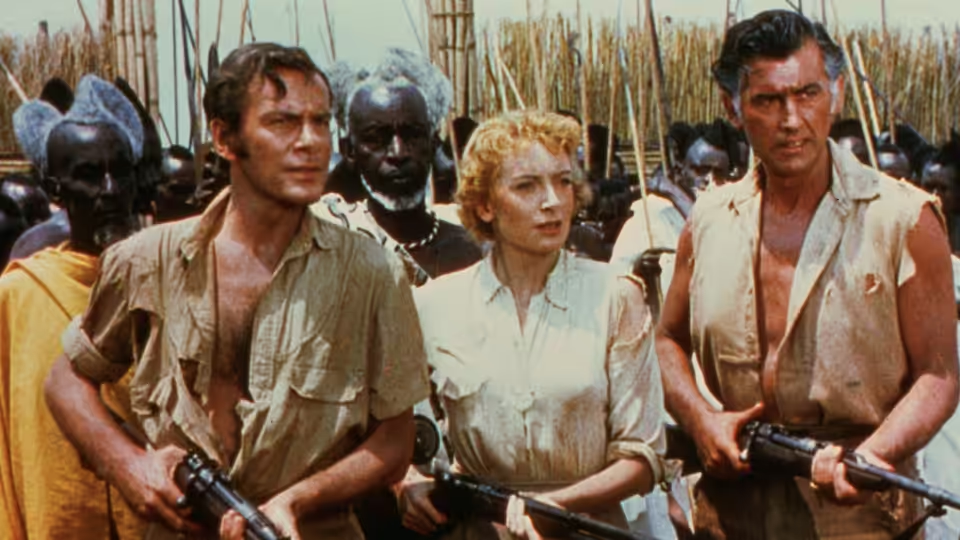
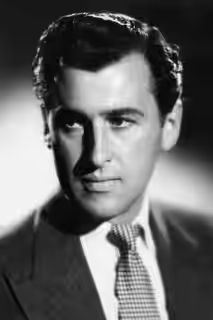
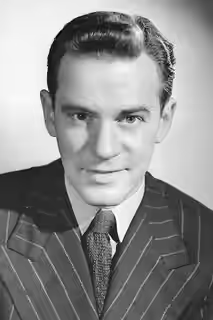
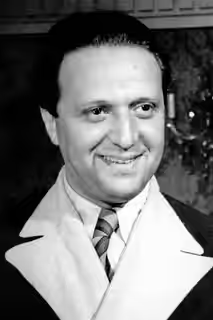
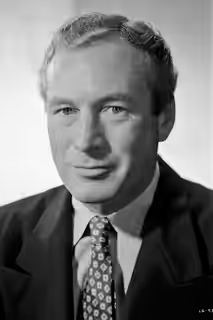
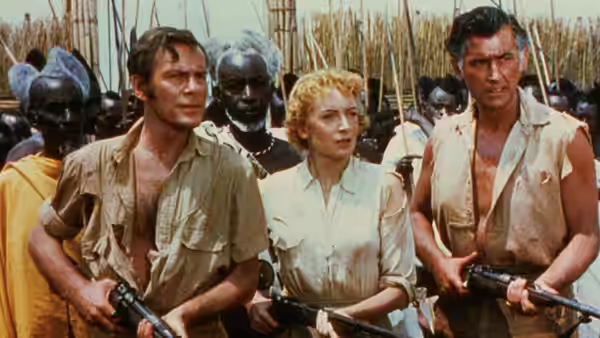
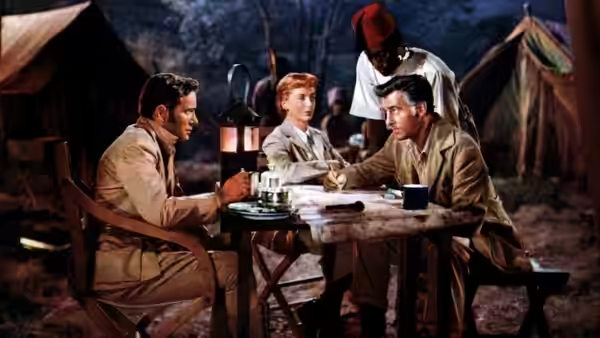
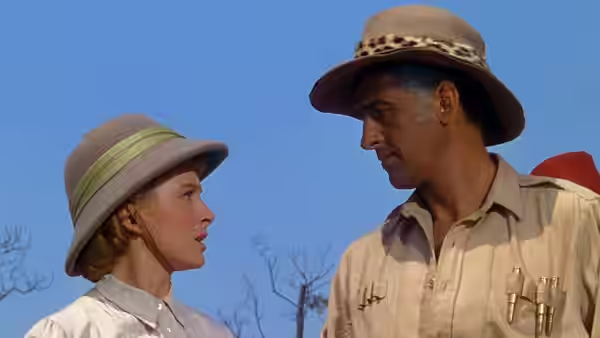
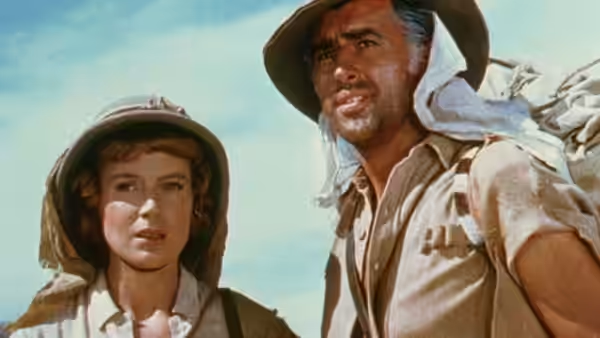
Stewart Granger is the best reason to stay with the people. His Quartermain is tired, dry and slightly ashamed of what he does for a living; he has a son in England to pay for and no wish to die for a stranger’s husband. Granger delivers the film’s sourest lines about the country and the men who come to shoot it as if he had said them many times before and stopped expecting anyone to listen. Richard Carlson, as the brother, is decent and forgettable, which is what the part asks. Hugo Haas arrives at the midpoint as Van Brun, a European who has gone to ground in the bush, and gives the film its only stretch of real menace between human beings.
Robert L. Surtees shot all of this on location, and it shows in ways a studio never could manage. The Technicolor is not the candy-box kind; the grass is yellow, the dust is white, the sky is a hard pale blue, and the faces of the cast go redder by the reel. The animal footage is the film’s fortune. Elephants, giraffes, zebra, crocodiles and a rhinoceros are photographed at length, close and unhurried, and the reviews of the day were right to make a fuss about them.
The stampede is the set piece the tagline promised, and it delivers. The party crouches on a rock as thousands of animals pour past through the dust, and Ralph E. Winters and Conrad A. Nervig cut between the herd and the actors so briskly that we only occasionally noticed nobody was ever in the frame with a buffalo. We flinched, more than once, and then were slightly annoyed with ourselves for flinching at a piece of editing. It is still the best few minutes in the film.
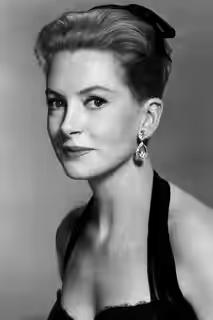
Deborah Kerr is asked to be luggage and does more than that. Walter Plunkett dresses her at the start in the full apparatus of a Victorian lady abroad, layers of it, and the film spends its first hour stripping it off her a piece at a time, until the scene where she gives up and has her hair cropped short. Kerr plays that as a small defeat and a larger relief, and it is the one moment where the romance feels earned rather than scheduled. Elsewhere she and Granger are given a quarrel, a rescue and a kiss, in roughly that order, and the script assumes that is enough.
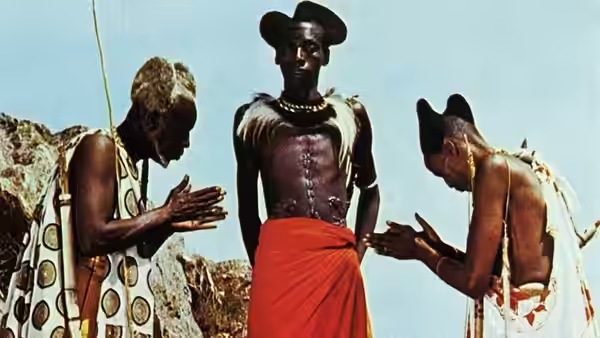
The African cast is photographed the way the giraffes are: with admiration, and from a distance. Siriaque, as Umbopa, walks through the whole film tall and silent and is given almost nothing to say, and the credits name him and his colleagues by a single name and a tribe. We were uneasy, and not only in the way one expects to be uneasy with a 1950 film about Africa. The film shows no sign of knowing there was anything to be uneasy about, and the last act, which we will not describe, leans on its Watussi performers for spectacle and gives them no more voice than it gave the elephants.
Compton Bennett and Andrew Marton share the directing credit, and the film does feel like two films: a brisk, plain one about a journey, and a stiffer one about a woman and a hunter learning to be civil. Mischa Spoliansky’s music is used sparingly, and the long stretches with nothing on the soundtrack but drums, birds and hooves are the ones that hold up. At 103 minutes it does not outstay its welcome.
Watch it for the country, forgive it the story, and expect to learn rather less than you would like about anyone who actually lives there.