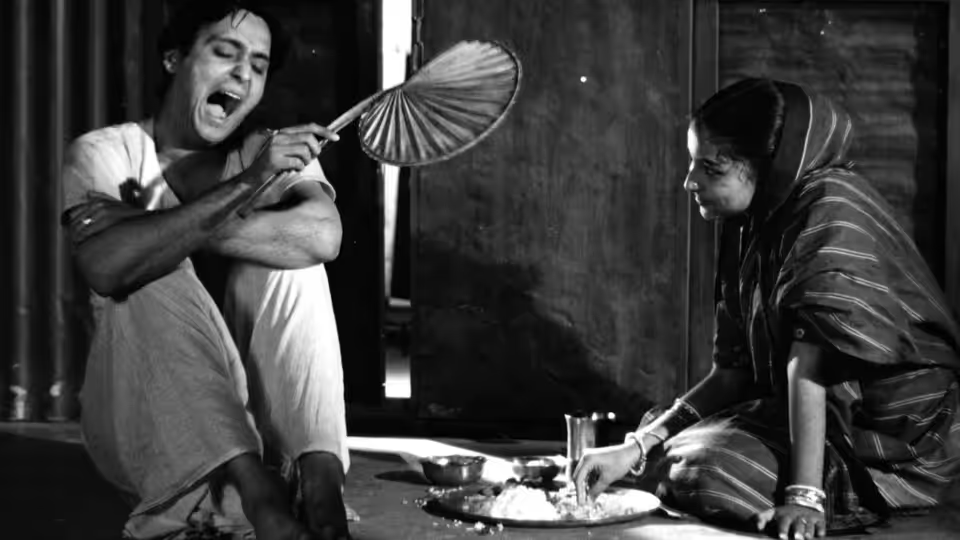
Satyajit Ray’s The World of Apu is tender, funny and worth anyone’s evening. Soumitra Chatterjee and Sharmila Tagore make its relationships persuasive, though we sometimes wish the film would give Aparna more room.
Satyajit Ray’s The World of Apu earns an unusually strong recommendation because it makes its people worth knowing. We care about Apu without needing to approve of him, and the film allows him enough vanity to keep the affection honest. Soumitra Chatterjee gives him intelligence without making him infallible or especially good at understanding anybody else. There is humour in that, and the humour matters: affection would become rather tiring if everyone behaved impeccably. The screenplay draws on a novel by Bibhutibhushan Bandyopadhyay.
Chatterjee is particularly good at the slight hesitation between thinking something and deciding to say it. Apu can appear absorbed in his own thoughts without becoming inaccessible, and the performance leaves room for awkwardness. We are allowed to notice when he is being irritating, which makes the film’s tenderness easier to accept. There is no demand to treat him as an exemplary person simply because his name is in the title.
Sharmila Tagore, as Aparna Roy, makes an equally strong impression with less apparent effort. Her attention to her fellow actor changes how we watch him; she can make an expression seem less assured than it first appeared. We were moved by how carefully these two listen to each other. Neither seems to be waiting politely for the next line, and that small distinction makes their closeness convincing. Aparna often seems to have noticed more than she chooses to say.
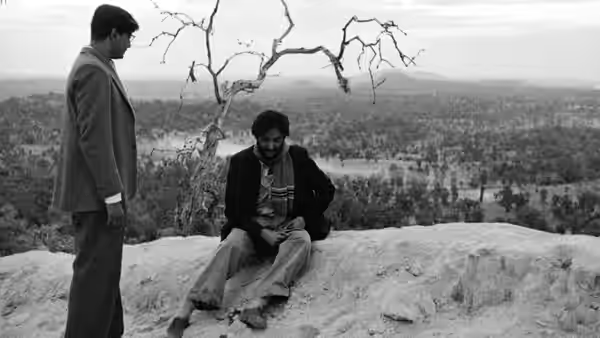
Subrata Mitra’s cinematography rewards that sort of watching; the faces hold our attention without seeming to have been arranged for our admiration. Bansi Chandragupta’s production design feels equally responsive to the actors, giving them surroundings that seem inhabited rather than displayed. We do not find ourselves looking past a performance to admire the setting. That restraint helps, because small changes of expression need to count in a film so interested in how people regard each other.
Dulal Dutta’s editing gives a reaction its proper weight, so that a scene need not belong only to the person speaking. We have time to register how a remark has landed without feeling that the film is waiting for us to catch up. Ravi Shankar’s music contributes warmth without making us feel pushed into sympathy. The emotion stays proportionate to the people we have come to know. At 105 minutes, the film does not need great length to make those people familiar.
The reservation is with how the screenplay distributes its attention. We wanted more of Aparna’s thoughts, and her performance makes that wish harder to dismiss as a request for a different film. Apu’s feelings receive a degree of consideration that can make everyone else’s seem secondary, however persuasively they are acted. His performance makes that concentration rewarding, but it cannot remove the slight frustration of seeing another interesting person chiefly through the leading man’s concerns.
The wit gives The World of Apu an advantage over relationship dramas that become solemn whenever affection matters. Its characters remain capable of amusing us, and the film rarely presses for a response before the actors have earned it. There is pleasure here in watching people gradually become familiar, including the things about them that we might find trying in company. Give the performances an uninterrupted evening; neither benefits from being watched between other things.