Alan Bleasdale writes angry, funny, talkative dramas about Liverpool and the men who run it, and in Boys from the Blackstuff and G.B.H. few writers for British television have made a joke and a wound land so reliably in the same line.
Fi1m perspective
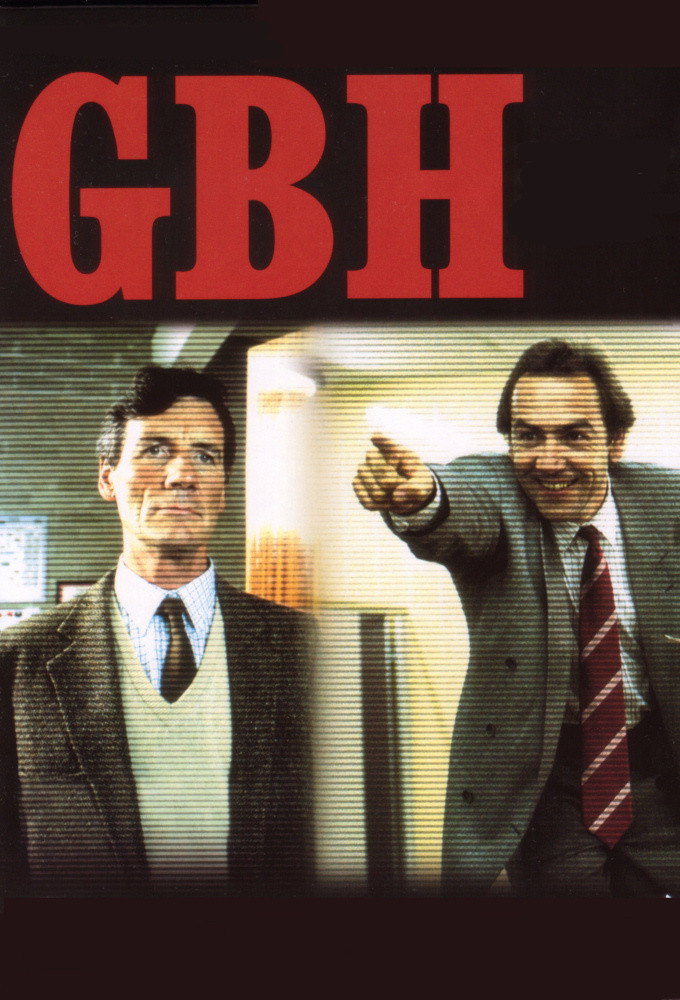
Michael Murray, the council leader in G.B.H. (1991), preens. Robert Lindsay plays him as a man who cannot pass a mirror or a microphone, and Bleasdale gives him a driver, Martin Niarchos, whose loyalty outlasts every reason for it, and an old comrade, Lou Barnes, who sees exactly what Murray is and cannot stop him. That is the Bleasdale method in one council chamber: put a talker at the centre, surround him with the people who have to live with what he says, and let the comedy and the damage arrive together. The series frightened us and made us laugh, often in the same scene, and Lindsay's Murray is a performance we have not stopped thinking about.
He was a teacher in Liverpool before he was a writer, which may be why the man who says no in G.B.H. is a headmaster. The television career begins with The Black Stuff (1980), a single Play for Today, and takes off with its sequel, Boys from the Blackstuff (1982), five episodes about unemployment in Liverpool told from the inside, with Yosser Hughes at their centre, a man whose predicament and catchphrase came to stand for a decade. Bleasdale has said of that time: "Walking around Liverpool, it was obvious mass unemployment was coming, but they didn’t realise in London." That is where his best work is written from: the street, addressed to the capital.
Then the work widens. No Surrender (1985), his only feature film, is a black comedy set in a Liverpool nightclub. The Monocled Mutineer (1986) took him into history and drew complaints about how loosely he had handled it. G.B.H. came in 1991, Jake's Progress in 1995, and later the adaptations, Oliver Twist (1999) and The Sinking of the Laconia (2011), where he is serving someone else's story rather than his own. Michael Wearing, as script editor and producer, worked with him twice; Lindsay has done so three times and Julie Walters twice, and both actors suit his dialogue, which runs long and fast and turns on a single word.
The fault is length. Boys from the Blackstuff said its piece in five episodes and left. G.B.H. runs to seven, each 81 minutes, and carries a conspiracy strand involving people far above the town hall that goes stiff and vague whenever the council scenes are not there to hold it up. Bleasdale writes more plot than he needs, and he does not seem able to cut it. The middle of G.B.H. slows to a walk, and an hour could have gone without anyone noticing.
Start with Boys from the Blackstuff if you have never seen it, then G.B.H., one episode a night. His work has lately been going back onto the stage, where it started, and the arguments in it have not gone anywhere.
Biography
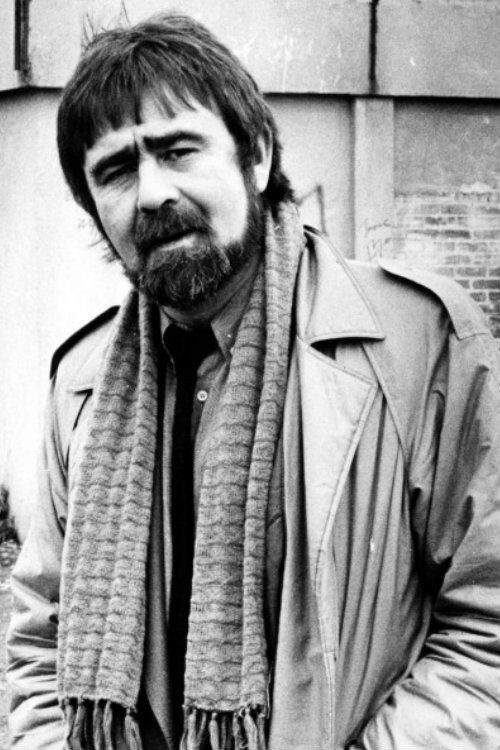
Alan Bleasdale is an English screenwriter and playwright. Born in Liverpool, he trained as a teacher and worked in secondary schools in England and the Gilbert and Ellice Islands before turning to writing.
He began with radio stories and stage plays in Liverpool and Manchester, later contributing to the BBC anthology series Play for Today. Bleasdale is best known for the five-part series Boys from the Blackstuff (1982) and the seven-part serial G.B.H. (1991), both of which he created and wrote. He has also written novels and other television dramas, including The Monocled Mutineer (1986).