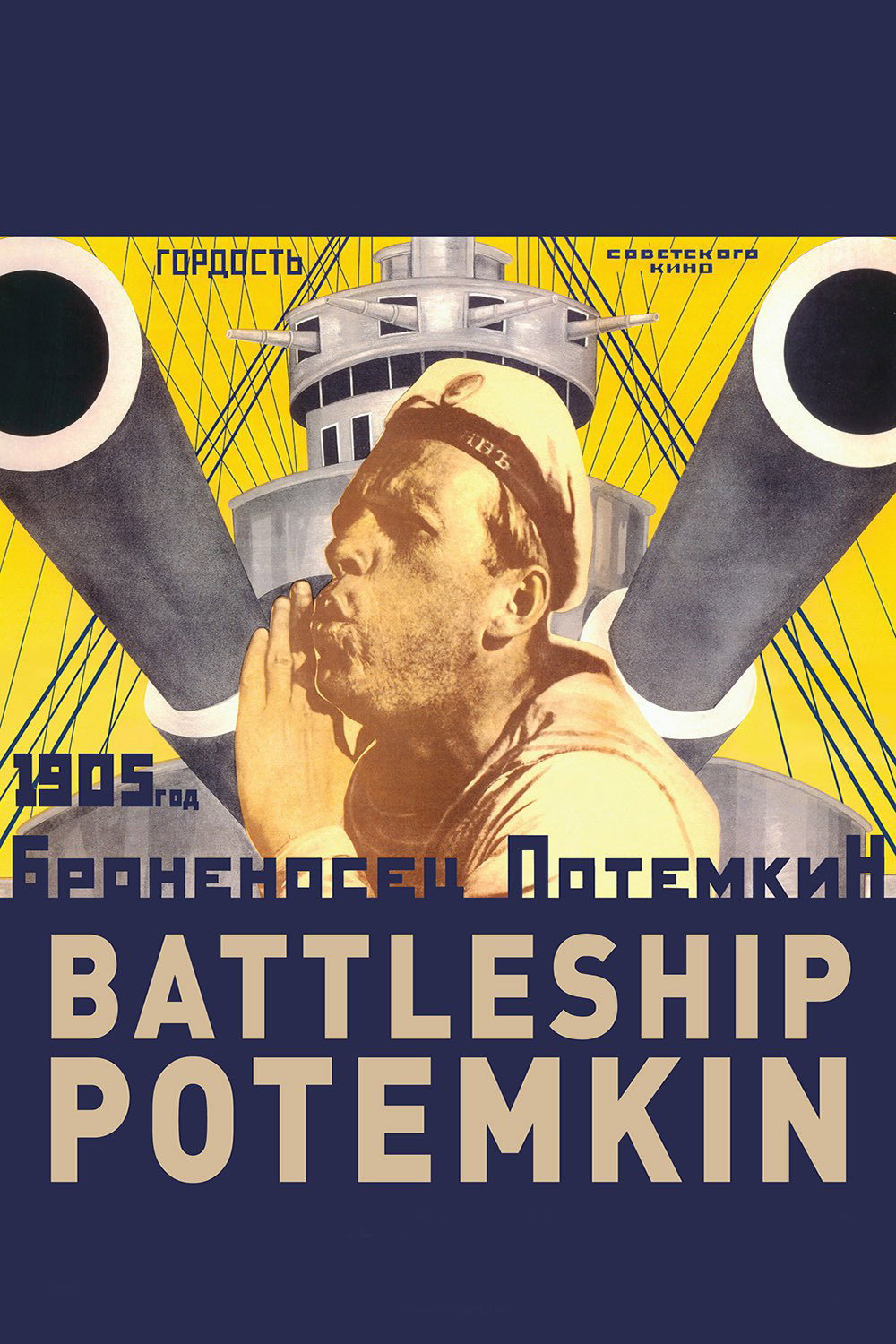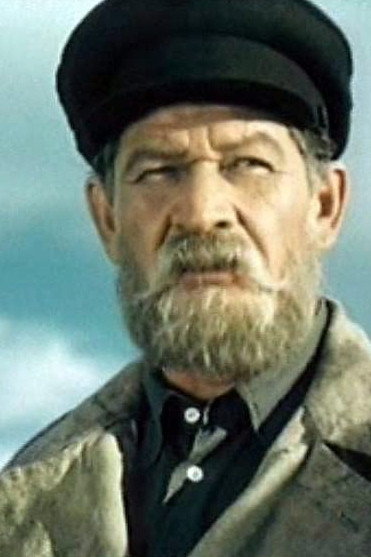
Aleksandr Pavlovich Antonov gives the sailors of Battleship Potemkin a recognisable individual without pulling the film away from the crowd. We value the restraint of a performance that makes room for the other faces around him.
Fi1m perspective
In Battleship Potemkin (1925), Aleksandr Pavlovich Antonov remains distinct among sailors whose faces keep drawing our attention away from him. As Grigory Vakulinchuk, he has the film’s most substantial individual role, but he does not play it as an invitation to ignore everybody else. His restraint matters because the cutting already supplies so much urgency. We were gripped by those crowded sailors’ scenes, partly because Antonov gives us a person to follow within them. He makes the attention he receives feel earned without demanding all of it.
Sergei Eisenstein had already cast him as Joffre in Glumov’s Diary (1923), Antonov’s first screen role, and as a strike committee member in Strike (1925). Those parts lead to the substantial opportunity of Vakulinchuk, rather than to a long succession of leading roles. After the mid-1920s, Antonov was usually cast in episodic parts, often as workers or sailors. The move from silent films into sound did not bring a comparable enlargement of his roles.
There is a useful comparison inside Battleship Potemkin itself. Vladimir Barsky’s Commander Golikov and Grigori Aleksandrov’s Chief Officer Giliarovsky are so firmly defined by rank that their performances have little room to suggest the men beneath it. Antonov benefits from Eisenstein’s greater attention to the different faces among the sailors, and his restrained performance makes good use of that attention. Vakulinchuk seems credible beside those more rigidly drawn officers. The limitation is that we learn more about what Antonov can do within this ensemble than what he might do with a film arranged around him.
Later parts took him to Ivan Pyryev’s A Rich Bride (1938), as Danilo Petrovich Budyak, and to Suvorov (1941), as Colonel Tyurin, with Vsevolod Pudovkin. These belong to the long supporting career that followed his early work with Eisenstein. We would be wary of reading that reduced prominence as proof that he had forgotten how to act. Begin with Battleship Potemkin, and watch Antonov without losing sight of the sailors beside him.
Biography
Aleksandr Pavlovich Antonov was a Soviet film actor. He was born on 13 February 1898 in Moscow and died there in November 1962.
Antonov was a member of the Moscow Proletarian Culture Theater from 1920 to 1924. There he met Sergei Eisenstein, who cast him in Glumov's Diary (1923) and as a member of the strike committee in Strike (1925). Eisenstein then gave him the role of Grigory Vakulinchuk in Battleship Potemkin (1925).
He continued acting until the 1950s, usually in episodic roles as proletarians or sailors. Antonov was named Merited Artist of the Russian Federation in 1950.