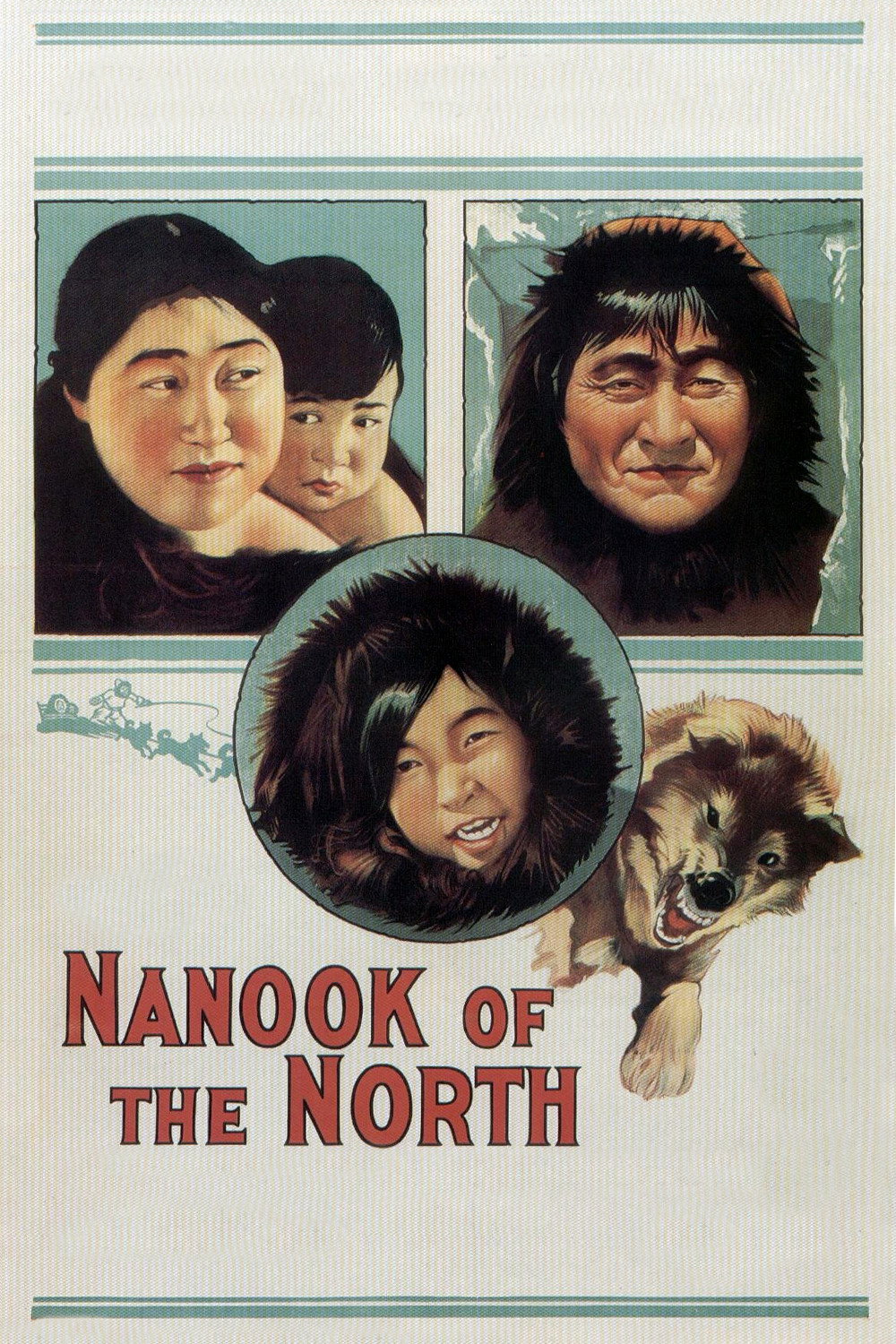
Allakariallak made one film, and he is the reason it still works. Flaherty arranged the igloo, the harpoon and the seal; the man who bites a gramophone record and then digs his heels into the ice is nobody's arrangement.
Fi1m perspective
At the trading post in Nanook of the North (1922), a man is handed a gramophone record. He listens, grins, and puts it in his mouth to find out what it is made of. The title card has already told us he is happy-go-lucky, and Robert J. Flaherty has set the joke up as carefully as any music-hall turn, and none of that accounts for the grin. Allakariallak looks at the camera the way he looks at the record: interested, unhurried, willing to be amused. Most actors spend years learning to be that still in front of a lens. He was not an actor at all.
There is no career to describe. He was a hunter of the Itivimuit, living near Port Harrison in what is now Inukjuak, and in 1920 Flaherty picked him to carry the film. He carried it, and made nothing else. That is the whole filmography, and it is worth writing about because the film is still watched a century on and he is still the reason.
What he does, put plainly, is work in front of a camera without changing how he works. The walrus hunt was shot in one take, and the men in it are hunting a walrus, not pretending to. We scored the film 84 knowing that a great deal of it was staged: the woman playing his wife (Alice Nevalinga) was not his wife, the harpoons were a generation out of date, the igloo had a wall missing so the camera could watch the family go to bed, and the seal at the end of his line was dead before the fight began, with men off camera pulling the other end. We knew all of that when he dropped the line through the ice. He waited, was yanked flat, dug in his heels, lost ground, and we leaned forward anyway. The knowing did not help. A body that has done a thing a thousand times cannot fake it badly, even when the thing on the other end is a rope.
Flaherty is the only director he ever had, and the arrangement was lopsided in a way the film never admits. The titles call him an Eskimo and a happy-go-lucky one; the staging asks him to play his own life as it was before the rifle arrived. He went along with it. "Yes, yes, the aggie [film] will come first," he said when asked to put filming ahead of a hunt. What he gave in return was the one thing Flaherty could not set up. The film is romantic about the Arctic. Allakariallak is not romantic about anything in it; he is simply good at it, and the camera can tell.
Watch him, then, and forgive the titles. He made no second film. Given how little of him the first one managed to arrange, we are not sure what a second could have added.
Biography
Allakariallak, also credited as Nanook, was an Inuk actor from Canada. He is best known for his leading role as Nanook in the 1922 film Nanook of the North, directed by Robert J. Flaherty.
A hunter selected by Flaherty for the production, Allakariallak died in 1924.