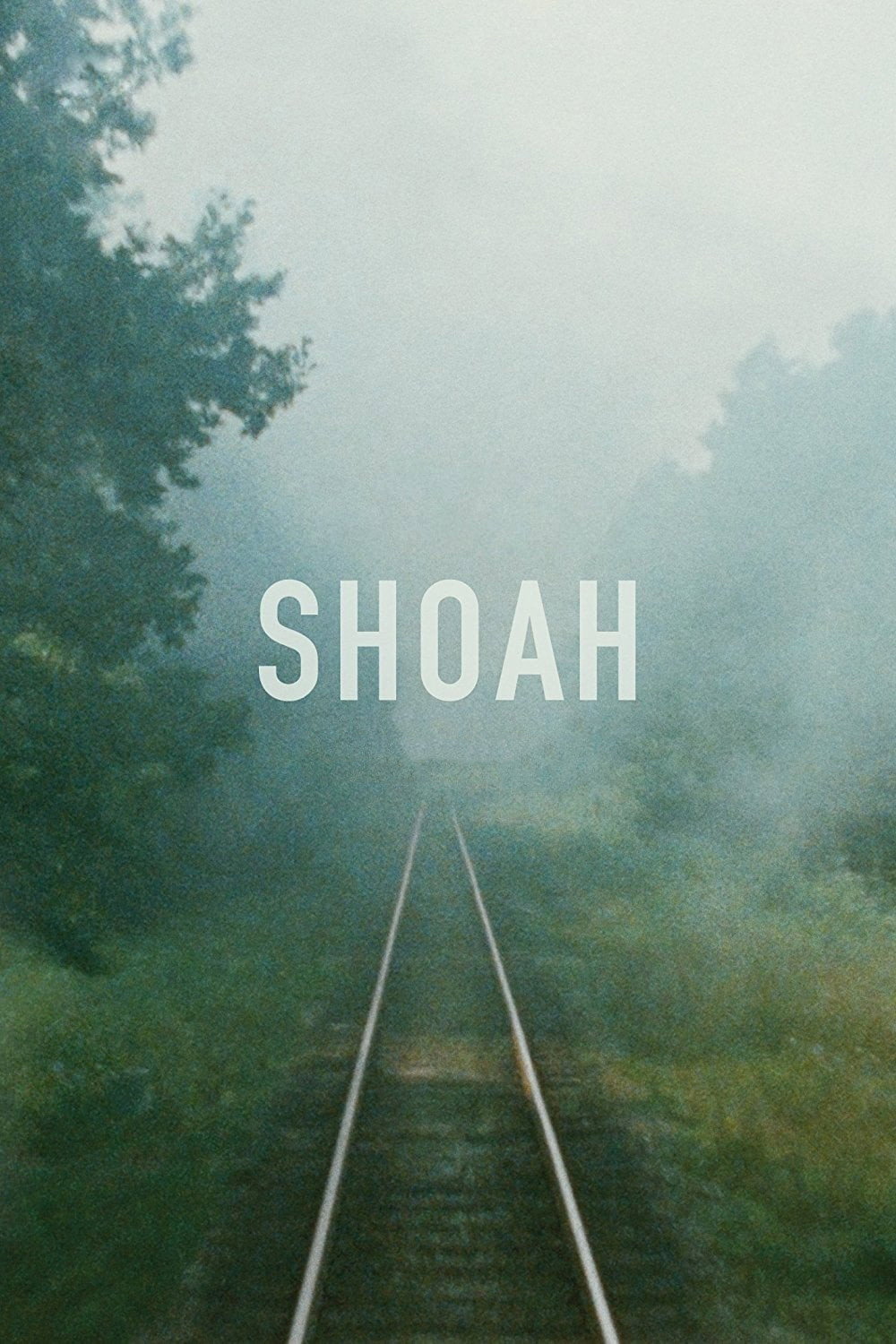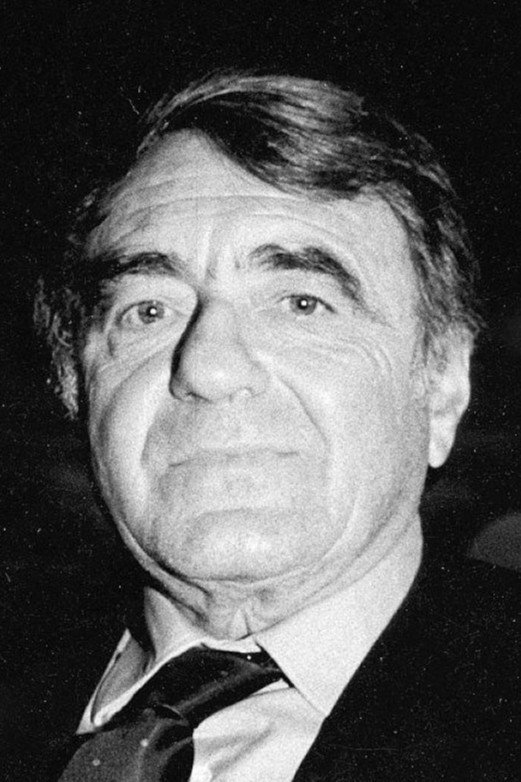
Claude Lanzmann spent eleven years making a single film out of people remembering and empty fields where the buildings used to be. Nothing else in documentary comes near Shoah, and we have never been comfortable with how he got it.
Fi1m perspective
A barber cuts a customer's hair and talks about cutting women's hair inside the gas chamber at Treblinka. He reaches a memory and stops. Off camera, Claude Lanzmann tells him he has to go on, and Abraham Bomba wipes his eyes and does. That minute of Shoah (1985) is Lanzmann's whole method in one room: a witness, a present-day place, no archive footage, and a director who will not let a silence stand. We have argued with ourselves about it for years and have not settled whether wanting him to stop was decency or squeamishness.
He came to film late and from journalism, after philosophy, Le Monde and Les Temps Modernes, and was in his late forties when he made his first feature, Israel, Why (1973), a set of interviews on Israeli society. That film brought a commission for a Holocaust documentary, which grew into eleven years of work and 566 minutes. Afterwards he kept to the same material and manner: Tsahal (1994), long interviews with Israeli soldiers and civilians, and The Last of the Unjust (2013), built from footage he had shot in 1975 of Benjamin Murmelstein, the last Jewish elder of Theresienstadt. He was directing until shortly before his death in 2018.
He asks a question in French, waits through the interpreter, and keeps the camera on a face that already knows what it said. Ziva Postec, who edited Shoah, cuts from the face to the place while the voice carries on, so the ramp is described over the empty ramp. William Lubtchansky, one of four cinematographers on Shoah and with him on three films in all, shoots a field of stone markers plainly and holds until the eye starts counting. Lanzmann put it himself: "The proof is not the corpses; the proof is the absence of corpses." With nothing from the archive to look at, the past has to happen to the man in front of us.
The costs are real. He pushed survivors to the edge, and with former perpetrators he used hidden cameras and false names. Most critics have made their peace with the deception because there was no other way in, and we mostly agree, while noticing that the Bomba scene needed no trickery, only a refusal to stop. The film is also narrow on purpose: the machinery of killing and almost nothing else, not the ideology that built it, not the war in the east, not the other victims. A viewer who wants the history will have to look elsewhere.
Start with Shoah, knowing it is nine and a half hours. Watch it at home over several evenings, and give it the whole of each one. The later films are for those who want more of the same voice. Lanzmann found one way of filming and never looked for another.
Biography
Claude Lanzmann (27 November 1925 – 5 July 2018) was a French filmmaker, journalist and writer. He is best known as the director of the documentary Shoah (1985), in which he also appears as the interviewer.
Lanzmann was born in Bois-Colombes, France, into a Jewish family. During the Second World War he joined the French Resistance. He later became chief editor of the journal Les Temps Modernes and published memoirs under the title Le lièvre de Patagonie (2009).
Shoah is a nine-and-a-half-hour oral history of the Holocaust, assembled from interviews with survivors, witnesses and perpetrators and filmed over eleven years without the use of archival footage. Lanzmann’s other films include Pourquoi Israël (1973) and Tsahal (1994).